Introduction: The Core Challenge of Air Heating
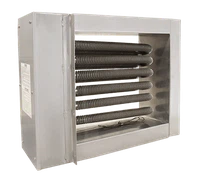
Finned heaters are engineered to solve a fundamental problem in thermal engineering: air is a poor conductor of heat. Unlike liquids, which can absorb and transfer thermal energy efficiently, air has low density and thermal conductivity. This means that without a specialized design, a standard heating element would struggle to transfer its energy into the surrounding air, leading to high internal temperatures and rapid failure.
The finned design mechanically increases the surface area of the heater, creating more "real estate" for heat to escape into the air. However, this design is only half of the solution. The fins create the potentialfor heat transfer, but it is the movement of air-the airflow-that realizesthis potential. Without adequate airflow, the heater operates in a state of thermal stagnation, where performance is severely compromised.
The Physics of Heat Transfer: Why Airflow is Non-Negotiable
The performance of a finned heater is governed by the principles of convective heat transfer. This process involves the movement of a fluid (in this case, air) carrying heat away from a surface. The rate of heat transfer is directly proportional to the velocity of the air moving across the fins.
The Boundary Layer Effect: When air is stationary or moving slowly, a thin layer of hot, stagnant air forms around the heater surface. This layer acts as an insulating blanket, drastically reducing the heater's ability to release heat. Adequate airflow disrupts this boundary layer, constantly replacing the hot, saturated air with cooler, denser air that is ready to absorb more energy.
Heat Sink Functionality: The fins act as a heat sink, drawing thermal energy away from the core heating element. For this to work effectively, the heat absorbed by the fins must be continuously removed. Airflow serves as the mechanism for this removal, preventing the fins from reaching thermal saturation and losing their effectiveness.
Key Benefits of Optimized Airflow
3.1. Maximizing Heat Dissipation and Efficiency
The primary function of airflow is to carry thermal energy away from the heater. When airflow is insufficient, heat accumulates, causing the heater's internal temperature to rise far above the desired outlet air temperature. This "overtemperature" condition is highly inefficient because the heater is working against itself-generating heat that it cannot release. Proper airflow ensures that the heat generated is immediately transferred to the process, resulting in lower energy consumption for the same heating output.
3.2. Preventing Thermal Degradation and Extending Service Life
Every heating element has a maximum allowable sheath temperature, beyond which the internal components (such as the resistance wire and magnesium oxide insulation) begin to degrade. When airflow is restricted, the heater cannot shed heat fast enough, causing it to exceed its safe operating temperature. This leads to:
Oxidation and Embrittlement: The metal sheath oxidizes faster, becoming brittle and prone to failure.
Insulation Breakdown: The dielectric insulation inside the tube can carbonize and lose its insulating properties, leading to short circuits.
By maintaining adequate airflow, the heater operates at a lower surface temperature, significantly extending its operational lifespan .
3.3. Eliminating Hot Spots for Uniform Temperature Distribution
In a system with poor airflow, certain areas of the heater may receive less cooling than others, creating localized "hot spots." These areas experience extreme thermal stress and are often the first points of failure. Properly designed airflow ensures that every part of the heater surface is exposed to a consistent flow of air, promoting even heat distribution and preventing the concentration of thermal energy that can melt or warp the fins and sheath.
Engineering Considerations for System Design
4.1. Air Velocity and Fin Density
The relationship between airflow and fin design is critical:
High-Velocity Systems: In applications with high air velocity (e.g., duct heaters), closer fin spacing is used. The high velocity ensures that air can penetrate the tight spaces between fins, maximizing turbulence and heat transfer.
Low-Velocity or Stagnant Air: In cabinet heating or environments with dust, wider fin spacing may be necessary to prevent clogging and ensure that air can flow freely through the heater bank.
4.2. The Role of Convection vs. Conduction
While the fins conduct heat away from the element, it is the convective action of the airflow that completes the energy transfer cycle. In forced-air systems, fans create this convection artificially. In natural convection applications (like some cabinet heaters), the design relies on the fact that hot air rises, creating a natural draft. However, for high-power applications, forced convection via a fan is essential to achieve the necessary air velocity for safe and efficient operation .
Conclusion: Airflow as a Performance Multiplier
Airflow is not merely an accessory to finned heater operation; it is the critical enabling factor that determines efficiency, safety, and longevity. The fins provide the surface area, but the airflow provides the mechanism for energy transfer.
A well-designed finned heater system is, therefore, a synergy between the heater's geometry and the dynamics of the air moving through it. Ensuring adequate and well-distributed airflow is the single most important step in unlocking the full thermal performance and achieving the extended service life that these heaters are designed to deliver.

One-stop Finned Heaters Factory in China
Jaye Heater Technology specializes in industrial heating elements, offering OEM/ODM services for global clients.