Introduction: The Physics of Self-Limiting Heat
Positive Temperature Coefficient (PTC) heaters represent a significant evolution in electric heating technology, distinguished by their unique material property: electrical resistance increases as temperature rises. This intrinsic characteristic, often achieved through ceramic or polymer composites, allows the heater to act as its own thermostat. Unlike traditional resistive wire heaters that require external controls to prevent overheating, PTC elements naturally limit their power output once they reach a specific temperature threshold (the Curie point), creating a system that is fundamentally safer and more adaptive to environmental conditions .
Core Advantages: Beyond Simple Resistance
2.1. Inherent Safety and Self-Regulation
The most critical advantage of PTC technology is its fail-safe nature. In the event of a fan failure or blocked airflow, a traditional metal-sheath heater would continue to draw full power, potentially leading to dangerous overheating, fire, or damage to surrounding components. A PTC heater, however, experiences a sharp increase in resistance under these conditions, causing its power consumption to drop dramatically. This self-regulating mechanism ensures that the surface temperature stabilizes, preventing thermal runaway without the need for complex external sensors or control circuits .
2.2. Energy Efficiency and Thermal Management
PTC heaters are highly efficient in maintaining a target temperature. During the initial heating phase, they draw high power to rapidly warm up. As the target temperature is approached, the resistance increases, and the power input automatically reduces to a maintenance level. This dynamic adjustment prevents the energy waste associated with constant on/off cycling in traditional thermostatically controlled heaters, leading to lower overall energy consumption in applications requiring sustained heat .
2.3. Design Flexibility and Manufacturing Scalability
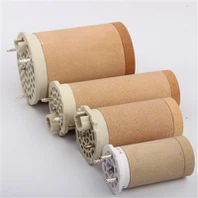
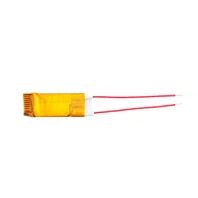
The construction of PTC heaters, often involving compact ceramic chips or flexible polymer films, allows for a high degree of design versatility. They can be manufactured into thin, flat panels or integrated into complex shapes, making them ideal for space-constrained applications like automotive seat warmers or compact consumer electronics. Furthermore, the assembly process is highly mechanizable, enabling fast production cycles and consistent quality control, which contributes to cost-effectiveness at scale .
Inherent Limitations and Trade-offs
3.1. Material Degradation and Power Attenuation
Despite their advanced properties, PTC heaters are not immune to the laws of thermodynamics. When operated continuously in high-temperature environments, the metallic components within the PTC composite (such as electrodes or conductive fillers) are susceptible to oxidation. This oxidation process can lead to a gradual increase in baseline resistance over time, resulting in power attenuation-a reduction in the maximum heat output the element can produce. This degradation can shorten the effective service life compared to some high-grade stainless steel heating elements designed for extreme conditions .
3.2. Mechanical and Environmental Vulnerabilities
The very structure that enables self-regulation can also be a weakness. Ceramic-based PTC elements are inherently brittle and can be damaged by physical shock or vibration. Additionally, while some PTC heaters are waterproof, prolonged exposure to moisture or corrosive chemicals can compromise the electrical insulation or corrode the terminals, leading to premature failure. The planar design, which offers a large surface area for heat exchange, also exposes more material to the ambient environment, potentially accelerating oxidation if not properly protected .
Comparative Analysis: PTC vs. Traditional Metal Elements
|
Feature |
PTC Heater |
Traditional Metal Sheath Heater |
|---|---|---|
|
Temperature Control |
Intrinsic self-regulation; no external thermostat needed. |
Requires external thermostat or controller; risk of overheating if control fails. |
|
Safety |
High; automatically limits temperature in fault conditions. |
Moderate to Low; dependent on external safety cut-offs. |
|
Lifespan (High Temp) |
Can be shorter due to oxidation of internal metals. |
Longer; high-quality alloys (e.g., Incoloy) resist oxidation well. |
|
Form Factor |
Flexible; can be made thin, flat, or conformable. |
Rigid; typically tubular or coiled, less adaptable to tight spaces. |
|
Cost Structure |
Higher initial component cost, but lower control system cost. |
Lower component cost, but higher total system cost with controls. |
Conclusion: Strategic Application for Optimal Performance
PTC heaters are not a universal replacement for all heating needs but are a superior solution for specific scenarios. Their strengths in safety, self-regulation, and compact design make them ideal for consumer appliances, automotive interiors, and medical devices where user safety and consistent temperature are paramount.
However, for industrial applications involving sustained extreme temperatures or harsh chemical environments, the potential for oxidation and power attenuation may make a well-protected metal-sheath heater a more durable, albeit less "smart," choice.
The decision ultimately hinges on whether the priority is intelligent, fail-safe operation or maximum longevity under duress .

One-stop PTC Heaters Factory in China
Jaye Heater Technology specializes in industrial heating elements, offering OEM/ODM services for global clients.