Introduction: The Engine of Controlled Airflow
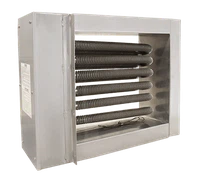
An air duct heater is a specialized electric heating device engineered to be installed directly within ventilation or process air ducts. Its primary mission is to elevate the temperature of moving air from an initial state to a precisely defined target temperature, which can range from ambient levels up to extreme highs of 850°C (1562°F).
Unlike standalone heaters that radiate heat into a space, duct heaters operate on the principle of forced convection, using the kinetic energy of moving air to distribute thermal energy efficiently and uniformly.
This makes them indispensable in scenarios where direct, localized heating is insufficient or where process conditions demand a continuous, high-volume flow of heated air .
Core Function: From Electrical Energy to Thermal Output
The fundamental operation of an air duct heater is a two-stage process: energy conversion and heat transfer.
Energy Conversion (Joule Heating): When electrical current is applied, the internal resistance of the heating elements (typically made from nickel-chromium alloys) causes them to generate heat. This is a direct application of Joule's Law, where electrical energy is converted into thermal energy with high efficiency .
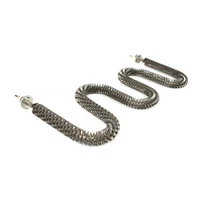
Heat Transfer (Convection): As air is forced through the duct by a blower or fan, it flows over the heated surfaces of the elements. The heat is absorbed by the air molecules, raising their temperature. The rate of heat transfer is directly influenced by the air velocity and the surface area of the heating elements, which is why many industrial models feature finned tubes to maximize contact with the airstream .
Anatomy of an Air Duct Heater: Key Components
A typical air duct heater is a sophisticated assembly of mechanical and electronic parts designed for durability and safety.
3.1. Heating Elements: The Heart of the System
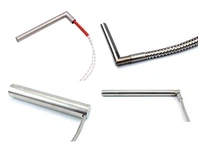
The heating elements are the core of the device. They are often constructed as tubular sheathed elements, where a high-resistance alloy wire is embedded within a metal tube (commonly stainless steel or Incoloy) filled with a thermally conductive but electrically insulating magnesium oxide powder. This construction protects the wire from oxidation and provides structural strength, allowing the heater to withstand high temperatures and mechanical stress .
3.2. Structural Framework: Ensuring Mechanical Integrity
The elements are mounted within a robust frame, typically made of carbon steel or stainless steel. This frame serves multiple purposes: it supports the elements against the force of high-velocity airflow, provides mounting points for installation within the duct, and houses the terminal connections. For high-temperature applications, the junction box is often insulated to protect electrical components from ambient heat .
3.3. Control and Safety Systems: The Brain and Nervous System
Modern air duct heaters are equipped with advanced control systems that ensure precise operation and prevent hazardous conditions.
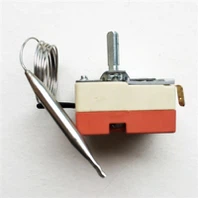
Temperature Control: Digital or PID (Proportional-Integral-Derivative) controllers regulate power output to maintain the air temperature within a tight tolerance of the setpoint .
Safety Interlocks: Critical safety features include airflow switches that prevent the heater from energizing unless air is moving (preventing element burnout), and high-limit thermostats that cut power if the temperature exceeds a safe threshold .
Diverse Applications Across Industries
The versatility of air duct heaters allows them to be deployed in a wide array of sectors, from heavy industry to controlled environments.
4.1. Industrial Process Heating: Precision in Manufacturing
In industrial settings, these heaters are crucial for processes that require specific thermal conditions.
Drying and Curing: Used in ovens and dryers to remove moisture from materials like textiles, paper, or food products.
Chemical Processing: Preheating air for chemical reactions or maintaining reactor temperatures.
Thermal Power Plants: A critical application is in the ash handling systems of coal-fired power plants. Here, duct heaters are used to heat "gasification air" that fluidizes fly ash, preventing it from clogging hoppers and transport chutes, thereby enabling efficient dry ash removal and reducing water consumption .
4.2. HVAC and Environmental Control: Comfort and Safety
In building management, duct heaters supplement central heating systems.
Space Heating: They provide supplemental heat in large commercial buildings, warehouses, and greenhouses.
Freeze Protection: In cold climates, they prevent water pipes from freezing by heating ventilation air in mechanical rooms or equipment enclosures .
4.3. Specialized Uses: From Power Plants to Cleanrooms
Laboratories and Cleanrooms: Maintaining strict temperature and humidity levels for sensitive experiments or manufacturing (e.g., semiconductor fabrication).
Explosion-Proof Environments: Specially designed models with ATEX or IECEx certification are used in the oil and gas industry to heat air in potentially hazardous atmospheres .
Technical Specifications and Performance Metrics
Air duct heaters are categorized based on their operating temperature range and construction:
Low-Temperature (up to 250°C): Typically used for comfort heating and general-purpose applications. Often installed directly in the duct without heavy insulation.
Medium-Temperature (250°C - 650°C): Common in industrial process heating. Feature insulated junction boxes and robust element support.
High-Temperature (650°C - 850°C+): Used in extreme industrial applications like furnace air preheating or high-temperature drying. Require specialized high-temperature alloy elements and heavy insulation .
Conclusion: A Versatile Solution for Dynamic Heating Needs
The air duct heater stands as a testament to engineering efficiency, transforming electrical power into controlled thermal energy with precision.
Its ability to integrate seamlessly into existing ductwork, coupled with its robust safety features and wide operational range, makes it an essential component not just for comfort, but for the very functionality of modern industrial processes.
From ensuring the smooth operation of a power plant's ash removal system to maintaining the perfect climate in a pharmaceutical lab, the air duct heater is a critical tool for achieving thermal mastery in a moving medium .

One-stop Finned Air Duct Heaters Factory in China
Jaye Heater Technology specializes in industrial heating elements, offering OEM/ODM services for global clients.