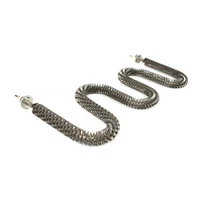
Tubular electric heating elements are widely used in industrial and commercial heating applications due to their efficiency and durability. However, their high-power operation and direct contact with various media necessitate strict adherence to safety protocols to prevent accidents, equipment damage, and ensure long-term reliability. This guide outlines the critical safety knowledge required for the proper handling, installation, and operation of these components.
Environmental and Electrical Safety Standards
The operational environment and electrical setup are foundational to safety. Failure to meet these conditions can lead to immediate hazards such as electric shock, short circuits, or fire.
Environmental Conditions: The components are designed to operate in environments where the relative humidity does not exceed 95%. The presence of explosive or corrosive gases is strictly prohibited, as these can compromise the sheath material and lead to catastrophic failure.
Electrical Parameters: The working voltage must not exceed 1.1 times the rated value. Over-voltage operation can cause overheating and rapid degradation of the heating element. The shell (sheath) of the heater must be effectively grounded to protect against electric shock in case of insulation failure.
Insulation Integrity: Before energizing, verify that the insulation resistance is ≥ 1 MΩ. The dielectric strength should withstand a test of 2KV for 1 minute to ensure the internal insulation (magnesium oxide) is intact and free from moisture.
Installation and Wiring Precautions
Proper installation is critical to prevent mechanical damage and electrical faults. The terminal area is particularly vulnerable and requires careful handling.
Terminal Protection: The wiring part must be placed outside the insulation layer and protected from direct contact with corrosive, explosive media, or moisture. Exposure to these elements can corrode the terminals, leading to poor connections and potential arcing.
Wiring Specifications: The lead wires used for connection must be rated to withstand the high temperatures and electrical load present at the terminal block. Using undersized or low-temperature-rated wires can cause insulation melting and short circuits.
Terminal Tightening: When tightening the terminal screws, avoid excessive force. Over-tightening can strip the threads, damage the terminal block, or even crack the ceramic insulator, creating a safety hazard.
Operational Procedures for Different Media
The heating medium (air, liquid, or solid) dictates specific operational rules. Ignoring these can result in "dry-firing" (burnout), explosions, or inefficient heating.
Heating Air (Convection): When used for air heating, the elements should be arranged in a crosswise and uniform pattern. This configuration ensures good airflow around each element, preventing localized overheating and providing even heat distribution.
Immersion Heating (Liquids/Metals): The element must be properly positioned and fixed. The effective heating area must be completely immersed in the liquid or metal solid. Empty burning (operating without immersion) is strictly prohibited, as it will cause the internal temperature to skyrocket, melting the element and causing immediate failure.
Surface Maintenance: If scale or carbon deposits are found on the surface of the pipe, they must be cleaned off before further use. These deposits act as an insulator, trapping heat inside the element and drastically shortening its service life.
Special Handling for Sensitive Materials
Certain materials require a phased approach to heating to manage physical state changes and chemical reactions safely.
Fusible Substances: When heating fusible metals (e.g., lead, tin) or solids like nitrates, alkalis, asphalt, or paraffin, always start with a reduced voltage. This allows the medium to melt gradually. Only after the medium has fully liquefied should the voltage be raised to the rated level. Applying full power to a solid block can cause thermal shock, splashing, or uneven melting that may damage the heater.
Nitrate Safety: Special safety measures must be implemented when heating nitrates due to their potential for explosive decomposition under high temperatures. Ensure adequate ventilation and temperature control to prevent runaway reactions.
Storage and Reactivation
Improper storage can render a new component unsafe to use. A simple reactivation process can often restore components that have been in storage.
Dry Storage: Components should be stored in a dry environment. Exposure to humidity during storage can cause the internal magnesium oxide powder to absorb moisture, lowering the insulation resistance.
Reactivation Procedure: If the insulation resistance drops below 1 MΩ due to long-term storage, the component can be restored. Place it in an oven and bake at approximately 200°C, or connect it to a power source at a reduced voltage and allow it to heat in air until the insulation resistance returns to normal levels. This process drives out the absorbed moisture.
Critical Component Protection
A specific area of the heating element requires extra attention to maintain electrical safety.
Seal Integrity: The magnesium oxide powder at the outlet end of the electric heating tube must be protected from infiltration by pollutants and moisture. The seal at this end is crucial for maintaining the dielectric strength between the internal coil and the outer sheath. Compromising this seal can lead to ground faults and leakage currents.
By meticulously following these guidelines, users can maximize the performance and lifespan of tubular electric heating elements while ensuring a safe operating environment for personnel and equipment.

One-stop Tubular Electric Heating Elements Factory in China
Jaye Heater Technology specializes in industrial heating elements, offering OEM/ODM services for global clients.