Introduction to Die Casting Technology for Heat Sinks
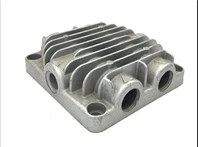
Die casting represents a high-precision manufacturing process specifically engineered for producing complex metal components with exceptional dimensional accuracy and surface finish. In the context of heat sink production, this technology enables the creation of intricate fin structures, complex geometries, and integrated mounting features that would be challenging or impossible to achieve through traditional machining or extrusion methods. The process involves injecting molten metal under high pressure into a precision-machined steel mold (die), where it rapidly solidifies to form the final component shape.
For aluminum alloy radiators, die casting offers a unique combination of design freedom, production efficiency, and material performance. The technology has become increasingly important in thermal management applications, particularly in electronics cooling, where heat dissipation requirements continue to escalate while space constraints become more stringent. This guide provides a comprehensive overview of the die casting process as applied to aluminum radiator manufacturing, detailing the operational principles, material considerations, and performance benefits that make this approach particularly suitable for modern thermal management challenges.
The Die Casting Process: Step-by-Step Operation
The production of aluminum alloy radiators through die casting follows a systematic sequence of operations, each critical to achieving the desired component quality and performance characteristics.
2.1 Mold Preparation and Clamping
Die Design: Precision-machined steel molds are manufactured with complex cavity geometries that define the radiator's fin structure, base plate, and mounting features
Surface Treatment: Die surfaces undergo specialized treatments (nitriding, chrome plating) to enhance wear resistance and facilitate part ejection
Temperature Control: The die is preheated to a specific temperature (typically 150-300°C) to ensure proper metal flow and prevent premature solidification
Clamping Force: Hydraulic or mechanical clamping systems apply substantial force (ranging from tens to thousands of tons) to keep the die halves securely closed during injection
2.2 Molten Metal Injection
Alloy Melting: Aluminum alloy ingots are melted in a furnace at temperatures between 650-750°C, depending on the specific alloy composition
Ladling or Shot Sleeve: Molten metal is transferred to the injection system either manually (for smaller machines) or through automated shot sleeves
High-Pressure Injection: A plunger forces the molten aluminum into the die cavity at pressures typically ranging from 20 to 100 MPa (200-1000 bar)
Filling Time: The entire cavity fills within milliseconds to seconds, depending on component size and complexity
2.3 Solidification and Cooling
Rapid Cooling: The molten metal begins solidifying immediately upon contact with the cooler die surfaces
Directional Solidification: Proper die design ensures solidification progresses from the extremities toward the gate area to minimize shrinkage defects
Cooling Time: Components remain in the die for a predetermined period (seconds to minutes) to achieve sufficient structural integrity before ejection
2.4 Ejection and Trimming
Ejection Pins: Hydraulic or mechanical pins push the solidified part from the die cavity
Flash Removal: Excess material (flash) around the parting line and overflow wells is trimmed using hydraulic presses or robotic trimming stations
Gate Removal: The injection gate (sprue) is cut or broken off from the main component
2.5 Secondary Operations
Heat Treatment: Some alloys may undergo solution heat treatment and aging to enhance mechanical properties
Surface Finishing: Components may receive surface treatments such as anodizing, powder coating, or chemical conversion coatings for corrosion protection and aesthetic purposes
Machining: Additional machining operations (drilling, tapping) may be performed to achieve final dimensional tolerances
Material Properties: Why Aluminum Alloy?
The selection of aluminum alloys for radiator die casting is driven by a combination of thermal, mechanical, and manufacturing considerations that collectively optimize heat sink performance.
3.1 Thermal Properties
Thermal Conductivity: Aluminum alloys typically exhibit thermal conductivity values between 90-220 W/m·K, significantly higher than many competing materials
Specific Heat Capacity: Approximately 900 J/kg·K, allowing efficient heat absorption and dissipation
Thermal Expansion: Coefficient of thermal expansion around 23×10⁻⁶/°C, which must be considered in thermal interface design
3.2 Mechanical Properties
Strength-to-Weight Ratio: Aluminum alloys offer excellent strength relative to their density (approximately 2.7 g/cm³), making them ideal for weight-sensitive applications
Hardness and Wear Resistance: Die-cast components achieve sufficient hardness for handling and mounting operations
Fatigue Resistance: Good resistance to thermal cycling and mechanical fatigue
3.3 Manufacturing Considerations
Fluidity: Aluminum alloys exhibit excellent flow characteristics in the molten state, enabling filling of thin sections and complex geometries
Shrinkage: Controlled shrinkage during solidification allows for predictable dimensional outcomes
Machinability: Good machinability for secondary operations
3.4 Common Alloy Grades
ADC12 (A383): Widely used for die casting, good fluidity and mechanical properties
A380: Excellent castability and mechanical strength
A360: Higher thermal conductivity but more challenging to cast
Specialty Alloys: Custom formulations with enhanced thermal or mechanical properties
Key Advantages and Performance Characteristics
Die-cast aluminum radiators offer several distinct advantages over alternative manufacturing methods and materials:
4.1 Structural and Weight Benefits
Lightweight Construction: The combination of aluminum's low density and die casting's ability to produce thin-walled structures results in components that are 30-50% lighter than equivalent machined or extruded parts
High Strength-to-Weight Ratio: Die-cast components maintain structural integrity while minimizing mass, critical for portable electronics and automotive applications
Complex Geometry Integration: The process allows integration of mounting features, heat pipe channels, and complex fin arrays in a single component
4.2 Thermal Performance Advantages
Enhanced Heat Transfer: The ability to create intricate fin structures with high aspect ratios increases surface area for convective heat transfer
Uniform Material Properties: Die casting produces components with consistent microstructure and thermal properties throughout
Optimized Thermal Interface: The base plate can be cast with flatness tolerances suitable for direct contact with heat-generating components
4.3 Manufacturing Efficiency
High Production Rates: Die casting cycles typically range from 15 seconds to 2 minutes, enabling high-volume production
Near-Net Shape Manufacturing: Components require minimal secondary machining, reducing material waste and production time
Dimensional Consistency: Tight tolerances (±0.1-0.2 mm) can be maintained across large production runs
Design Flexibility and Customization Capabilities
The die casting process offers exceptional design freedom for radiator applications:
5.1 Geometric Complexity
Thin-Wall Sections: Capable of producing walls as thin as 0.5-1.0 mm, enabling lightweight yet rigid structures
Complex Fin Arrays: Fins can be designed with varying heights, thicknesses, and spacing to optimize thermal performance for specific airflow conditions
Integrated Features: Mounting bosses, heat pipe grooves, and interface surfaces can be cast directly into the component
5.2 Customization Options
Fin Density Optimization: Fin spacing and thickness can be tailored to balance thermal performance and pressure drop
Base Plate Variations: Different base thicknesses and surface treatments to match thermal interface requirements
Form Factor Adaptation: Components can be designed to fit specific enclosure geometries and space constraints
5.3 Prototyping and Tooling
Rapid Prototyping: Soft tooling or 3D-printed dies can be used for low-volume prototyping before committing to production tooling
Tooling Investment: While initial die costs are significant, they are amortized over large production volumes
Design Iteration: CAD/CAM systems enable quick design modifications and tooling adjustments
Quality Control and Process Optimization
Ensuring consistent quality in die-cast radiators requires rigorous process control:
6.1 Process Monitoring
Temperature Control: Precise monitoring of melt temperature, die temperature, and cooling rates
Injection Parameters: Real-time monitoring of injection pressure, velocity, and fill time
Cycle Time Optimization: Balancing production speed with component quality
6.2 Defect Prevention
Porosity Control: Proper venting, vacuum assistance, and process parameters minimize gas entrapment
Shrinkage Defects: Die design and cooling channel optimization prevent shrinkage cavities
Surface Quality: Die surface finish and release agents affect component appearance
6.3 Inspection and Testing
Dimensional Verification: CMM (Coordinate Measuring Machine) inspection of critical features
X-ray Inspection: Detection of internal defects and porosity
Thermal Performance Testing: Verification of heat dissipation capacity under simulated operating conditions
Applications Across Industries
Die-cast aluminum radiators serve diverse thermal management needs:
7.1 Electronics Cooling
Computer Components: CPU coolers, GPU heat sinks, VRM cooling
Power Electronics: IGBT modules, power supplies, inverters
LED Lighting: High-power LED heat sinks
7.2 Automotive Applications
Electric Vehicle Components: Battery cooling, power electronics, motor controllers
Conventional Vehicles: Transmission coolers, engine control modules
Aerospace Electronics: Avionics cooling systems
7.3 Industrial Equipment
Industrial Automation: Servo drives, PLC cooling
Telecommunications: Base station equipment, network switches
Medical Devices: Diagnostic equipment, laser systems
Environmental and Sustainability Considerations
Die-cast aluminum radiators align with modern environmental priorities:
8.1 Material Sustainability
Recyclability: Aluminum is 100% recyclable without loss of material properties
Recycling Energy: Recycled aluminum requires only 5% of the energy needed for primary production
Closed-Loop Systems: Many manufacturers implement closed-loop recycling of scrap and trimmings
8.2 Manufacturing Efficiency
Material Utilization: Near-net shape manufacturing minimizes material waste compared to machining from solid billets
Energy Efficiency: Die casting is an energy-efficient process when optimized for high-volume production
Process Optimization: Modern die casting machines incorporate energy recovery systems
8.3 Lifecycle Assessment
Long Service Life: Durable components reduce replacement frequency
End-of-Life Recovery: Aluminum components have high scrap value and are readily recycled
Comparison with Alternative Manufacturing Methods
Understanding how die casting compares to other radiator production methods:
|
Parameter |
Die Casting |
Extrusion |
Machining |
Stamped Fins |
|---|---|---|---|---|
|
Complexity |
High (3D features) |
Limited (2D profiles) |
High (but costly) |
Low |
|
Production Volume |
High (10k+ units) |
Medium to High |
Low to Medium |
Very High |
|
Tooling Cost |
High |
Medium |
Low |
Low |
|
Material Waste |
Low (near-net shape) |
Medium |
High |
Low |
|
Thermal Performance |
Excellent (complex fins) |
Good |
Good |
Limited |
|
Weight |
Light (thin walls) |
Medium |
Heavy |
Light |
|
Lead Time |
Long (tooling) |
Medium |
Short |
Short |
Future Trends and Technological Developments
The die casting industry continues to evolve with several emerging trends:
10.1 Process Innovations
Vacuum Die Casting: Improved part quality with reduced porosity
Squeeze Casting: Enhanced mechanical properties through controlled solidification
High-Pressure Die Casting: Higher pressures for thinner walls and better surface finish
10.2 Material Advancements
High-Conductivity Alloys: New alloy formulations with thermal conductivity exceeding 200 W/m·K
Composite Materials: Aluminum matrix composites with enhanced properties
Additive Manufacturing Integration: Hybrid approaches combining die casting with 3D printing
10.3 Digitalization
Simulation Software: Advanced flow and solidification simulation for process optimization
Industry 4.0 Integration: Real-time monitoring and predictive maintenance
Digital Twins: Virtual process modeling for continuous improvement

One-stop Aluminum Alloy Radiator Die Casting Factory in China
Jaye Heater Technology specializes in industrial heating elements, offering OEM/ODM services for global clients.