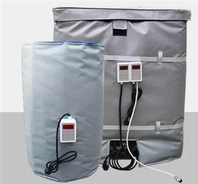
An IBC heating jacket (also known as a Tote Tank Heater or IBC Heater Cover) typically consists of four main layers/modules, arranged from the inside (against the tank wall) to the outside:

1. Inner Layer: Heating Element Layer
This is the core functional layer responsible for generating heat and transferring it to the IBC wall.
Heating Element Types:
Silicone Rubber Heating Pad: The most common type. An alloy wire or etched foil is laminated between two layers of high-strength fiberglass and silicone rubber. It is flexible, waterproof, and provides even heat distribution.
Carbon Fiber Heating Cloth: Used in some high-end models. Heats up faster and is lighter.
Sensor Pocket: A small pocket or sleeve is usually stitched or pressed onto this layer to hold the temperature sensor probe tightly against the tank wall for accurate temperature control.
2. Middle Layer: Insulation Layer
This layer does not generate heat. Its purpose is to retain heat, prevent energy loss, and protect the heating element.
Material: Typically made of closed-cell foam rubber (such as EPDM or NBR/PVC blend), fiberglass wool, or needle-punched felt.
Thickness: Usually ranges from 5mm to 20mm, depending on the environment (indoor vs. extreme outdoor cold).
Features: This layer must be flame-retardant and resistant to corrosion/chemicals.
3. Outer Layer: Protective Cover
This is the outermost shell that protects the internal insulation and heating elements from mechanical damage, water, oil, and UV radiation.
Material:
Waterproof Oxford Cloth / PVC Coated Fabric: The most common type; wear-resistant and water-resistant.
PU Coated Fabric: Lighter and more flexible in low temperatures.
Teflon / Fluoroplastic Fabric: Used in highly corrosive chemical environments or where extreme stain resistance is required.
Craftsmanship: As mentioned in your previous question, the outer layer must be double-stitched or triple-stitched with high-density sewing. High-quality jackets also apply glue or tape sealing over the stitch holes to ensure waterproofing.
4. Fixing & Accessory System
Although not a "layer," this system is essential for the jacket's structural integrity and usability.
Fastening Devices:
Velcro (Hook & Loop): The most common method; offers flexible adjustment.
Metal/Plastic Buckles and Ratchet Straps: Used for high-wind environments or applications requiring extremely tight fixation.
Electrical Components:
Power Cord: Usually exits from the lower side of the jacket and is equipped with a waterproof plug.
Control Box Pocket: Some all-in-one jackets have an external pocket sewn onto the outer layer to hold the thermostat controller.
Thermal Cutoff (Fuse): A non-resettable or auto-reset thermal fuse embedded in the circuit; this is a critical safety component.
Operational Openings: Customized jackets often feature flap windows or zippered openings at positions corresponding to the discharge valve, manhole, or level gauge, allowing operation without removing the jacket.
┌─────────────────────────────────────┐
│ L4: Straps / Velcro / Controller │ ← External Accessories
├─────────────────────────────────────┤
│ L3: Oxford / PVC Protective Shell │ ← Stitched, Waterproof
├─────────────────────────────────────┤
│ L2: Foam / Fiberglass Insulation │ ← Thick, Soft
├─────────────────────────────────────┤
│ L1: Silicone / Carbon Heater │ ← Flexible, with Sensor Pocket
├─────────────────────────────────────┤
│ IBC TANK WALL │ ← Surface Being Heated
└─────────────────────────────────────┘

One-stop Heating & Controllers Factory in China
Upgrade your heating systems with Jaye Heater's premium components. For reliable heating elements and precise thermal controllers that ensure performance and safety, contact our experts today for a quote and technical support. Let's find your perfect heating solution.