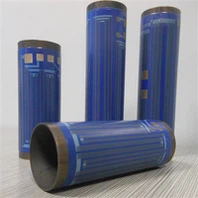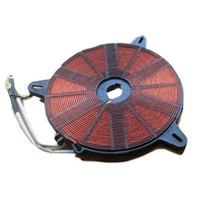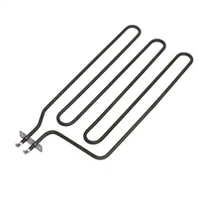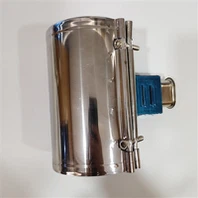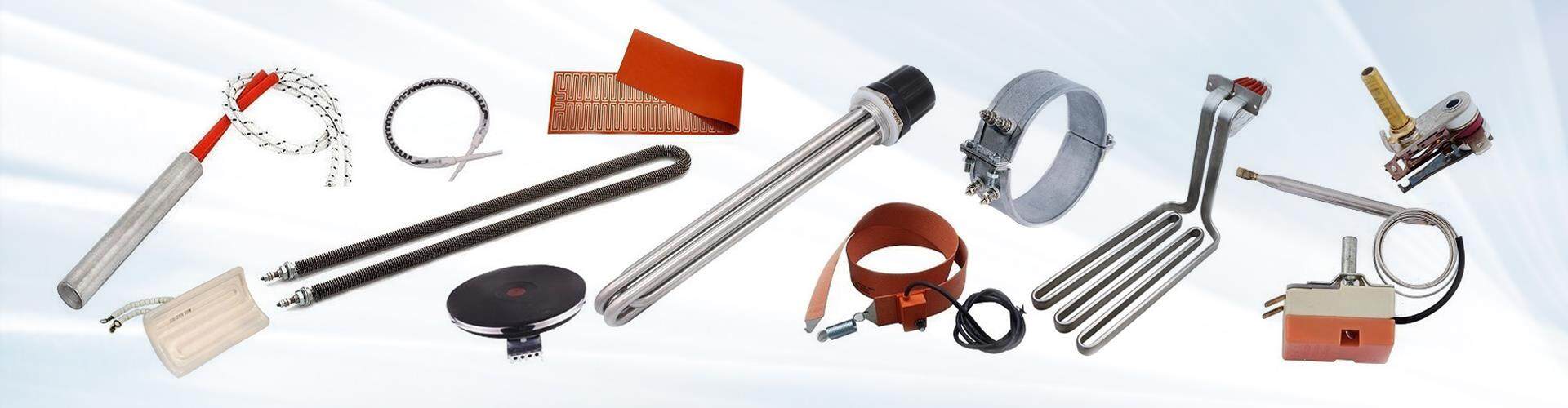
Thick film heating plays a critical role in dry oven chambers by providing the fast, uniform, and precise heat necessary for advanced manufacturing processes. Unlike conventional heating elements, thick film heaters are printed directly onto a substrate, allowing for a compact, efficient, and highly responsive heat source.


The table below summarizes the key contributions of this technology:
| Role | Key Benefits | Applications in Dry Ovens |
|---|---|---|
| High Efficiency | Rapid heat-up, low thermal mass, reduces energy consumption. | Semiconductor wafer preheating, thin-film baking (LCD/OLED). |
| Temperature Uniformity | Consistent heating across large surfaces, crucial for process stability. | Curing coatings on large substrates, tobacco leaf roasting. |
| Precision Control | Fast response time, enables sophisticated PID algorithms for high accuracy. | Semiconductor fabrication steps requiring tight temp. tolerances (e.g., ±3°C). |
| Clean Operation | No combustion, minimal particle generation, suitable for cleanroom environments. | Manufacturing of sensitive electronics, medical devices, and displays (OLED). |
| Compact Design | Low profile allows stacking for high-throughput processing of substrates. | Multi-slot bake chambers for parallel wafer processing in semiconductor fabs. |
How It Works in an Oven
While the heating principle is simple-electrical current passing through a resistive path generates heat -the implementation in a dry oven offers significant advantages:
Direct vs. Indirect Heating: Thick film heaters can be integrated directly into the oven's architecture. They can form the oven walls themselves or be arranged in a stacked configuration to heat multiple substrates simultaneously from both sides, which is far more efficient than heating an entire chamber volume with a conventional coil -8. Some ovens also use thick film heaters in conjunction with forced air systems, where a fan blows air over the heated elements and then circulates the hot air through a plenum for uniform distribution.
Superior Temperature Uniformity: For processes requiring extreme consistency, such as baking the alignment layers on a liquid-crystal display (LCD), the temperature across a massive 3-meter-wide substrate must be perfectly even. Thick film heaters excel here, as their design can be optimized to provide uniform heat distribution across large surface areas.
Precision and Cleanliness: Because they have very low thermal mass, thick film heaters can change temperature rapidly. When paired with a precise PID controller and feedback from thermocouples, they can maintain a target temperature with high accuracy. Additionally, their solid-state, non-combustion nature means they don't introduce contaminants, which is essential for cleanrooms rated Class 10 or higher.
Key Industries and Applications
You'll find thick film heating at the heart of dry oven chambers in industries where precision is paramount:
- Semiconductors and Electronics: Preheating silicon wafers before processing to prevent thermal shock and improve throughput. This is a critical application for 300mm wafer processing .
- Flat Panel Displays: Baking alignment layers, passivation films, and performing annealing processes for large LCD and OLED panels up to Gen 10 (approx. 3m x 3.2m) .
- Advanced Manufacturing: Curing thick films, drying coatings, and providing stable thermal environments for processes like atomic layer deposition (ALD)
Choose Jaye Heater
Turn theory into performance. Jaye Heater delivers custom thick film heaters engineered for your dry oven chamber-whether for semiconductor wafers or OLED displays.
- Custom designs – Power density, substrate, circuit pattern
- Built to last – High insulation, reinforced electrodes, thermal shock resistance
- Proven in cleanrooms – Semiconductor & display manufacturing