
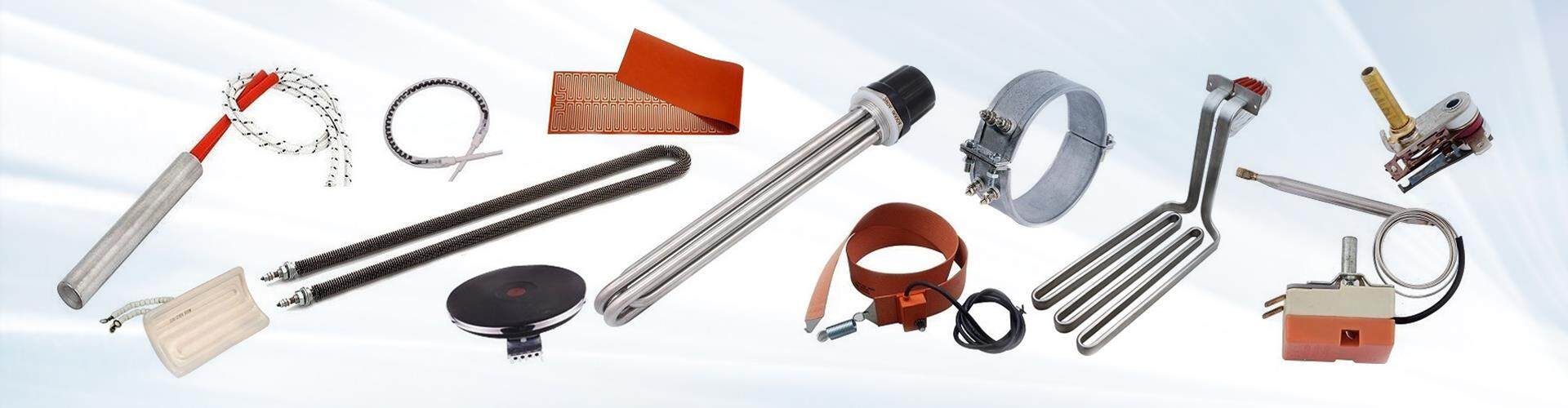
When heating water or other liquids, choosing the right heating element can have a direct impact on heating speed, energy efficiency, temperature control, and equipment design.
Tubular thick film heaters and Tubular immersion heaters are two heating technologies that can be used for liquid heating. Although both generate heat through electrical resistance, their structures, heat transfer methods, and typical applications are different.
Understanding these differences can help equipment manufacturers select a heating solution that better fits their application.

What Is a Tubular Thick Film Heater?
A tubular thick film heater uses a thick-film resistive heating layer printed onto the surface of a metal tube or specially designed substrate.
Instead of using a traditional resistance wire inside the tube, the heating circuit is formed directly on the surface. This allows the heater to have a compact structure and provides flexibility in designing the heating area and heating zones.
Tubular thick film heaters can be designed for water heating and other liquid-heating applications where space, heating speed, and temperature control are important.
Typical Applications
Tubular thick film heaters can be considered for:
- Instant water heaters
- Coffee machines
- Water dispensers
- Hot beverage equipment
- Household appliances
- Compact liquid heating systems
- Flow-through water heaters
- Industrial liquid heating equipment

What Is a Tubular Immersion Heater?
A tubular immersion heater normally consists of a metal sheath, resistance wire, and electrical insulation material.
The resistance wire generates heat when electricity passes through it. The heat then transfers through the metal sheath to the surrounding water or liquid.
This is a well-established heating method and is widely used in equipment where the heating element can be directly immersed in a liquid.
Typical Applications
Tubular immersion heaters are commonly used in:
- Electric water heaters
- Hot water tanks
- Boilers
- Industrial heating tanks
- Washing equipment
- Commercial water heating systems
- Large-volume liquid heating equipment

Tubular Thick Film Heater vs. Tubular Immersion Heater
| Feature | Tubular Thick Film Heater | Tubular Immersion Heater |
|---|---|---|
| Heating technology | Thick-film resistive layer | Resistance wire |
| Basic structure | Heating circuit formed on tube surface | Resistance wire inside metal sheath |
| Heating method | Surface heating | Heat transferred through metal sheath |
| Structure | Compact | Relatively conventional |
| Heating zones | Flexible design | Determined mainly by wire arrangement |
| Installation | Suitable for compact systems | Suitable for tanks and larger equipment |
| Typical applications | Flow-through and compact water heating | Tanks, boilers, and liquid heating |
| Customization | Heating zones, shape, size, power | Shape, length, diameter, power |
| Temperature control | Can be designed around the heating system | Usually works with external control |
| Best suited to | Compact or fast-response systems | Storage and larger-volume heating |
How to Choose the Right Heater for Your Application?
Before choosing a heating element, it is important to look beyond voltage and power. The liquid, heating method, available space, flow rate, and target temperature can all affect the appropriate heater design.
1. Consider the Available Space
If the equipment has limited internal space and requires a compact heating structure, a tubular thick film heater may be worth considering.
For larger tanks or water heaters where the element can be directly immersed in the liquid, a tubular immersion heater can be a practical solution.
2. Consider How the Liquid Is Heated
Ask whether the liquid is heated continuously as it flows through the equipment or stored and heated inside a tank.
For flow-through or instant water heating systems, a compact tubular thick film heater can be designed around the water flow path.
For storage tanks, tubular immersion heaters are commonly installed directly inside the tank to heat the surrounding liquid.
3. Consider Heating Speed
If the application requires water to reach the target temperature quickly, several parameters need to be considered together:
Water flow rate
Inlet temperature
Target temperature
Heating time
Heater power
A higher wattage does not automatically mean the heater is suitable. The power needs to match the actual heating load and equipment design.
4. Consider Temperature Control
Temperature control is another important factor.
Depending on the application, the heating system may use a thermostat, thermocouple, thermistor, or electronic temperature controller.
For customized heaters, the heating zones and temperature-sensor position can also be considered during the design stage.
5. Consider the Heating Medium
Water is one of the most common heating media, but some equipment needs to heat other liquids.
For non-water applications, factors such as liquid composition, viscosity, electrical conductivity, and operating temperature should be evaluated before selecting the heater material and structure.
6. Consider Installation and Customization
For OEM equipment, the physical dimensions of the heater can be just as important as its electrical specifications.
Useful information for a customized heater includes:
- Voltage
- Power
- Tube diameter
- Tube length
- Heating length
- Flow rate
- Inlet and outlet temperature
- Heating medium
- Installation dimensions
- Temperature-control requirements
- Providing a drawing or detailed dimensions can help the heater manufacturer evaluate the application more accurately.
FAQ About Tubular Heating Elements
-
What is the main difference between a tubular thick film heater and an immersion heater?
The main difference is their heating structure. A tubular thick film heater forms the resistive heating circuit on the tube surface, while a conventional tubular immersion heater uses a resistance wire inside a metal sheath.
-
Can tubular thick film heaters heat water directly?
They can be designed for water-heating applications, but the exact structure and materials need to be selected according to the water flow, temperature, power, and equipment design.
-
Are tubular immersion heaters suitable for instant water heating?
They can be used in some flow-through applications, but their suitability depends on the heater dimensions, power density, water flow rate, and available installation space.
Customized Tubular Heating Solutions from Jaye Heater
Different liquid-heating applications require different heater structures. Whether you are developing an instant water heater, coffee machine, water dispenser, boiler, or industrial liquid heating system, the heating element should be designed around the actual equipment.
Jaye Heater provides customized heating solutions based on your voltage, power, dimensions, heating requirements, and installation conditions.
Contact us to customize the right tubular heating element for your application.

One-stop Heating & Controllers Factory in China
Upgrade your heating systems with Jaye Heater's premium components. For reliable heating elements and precise thermal controllers that ensure performance and safety, contact our experts today for a quote and technical support. Let's find your perfect heating solution.


