
What is a U-Shaped Finned Tubular Heater?
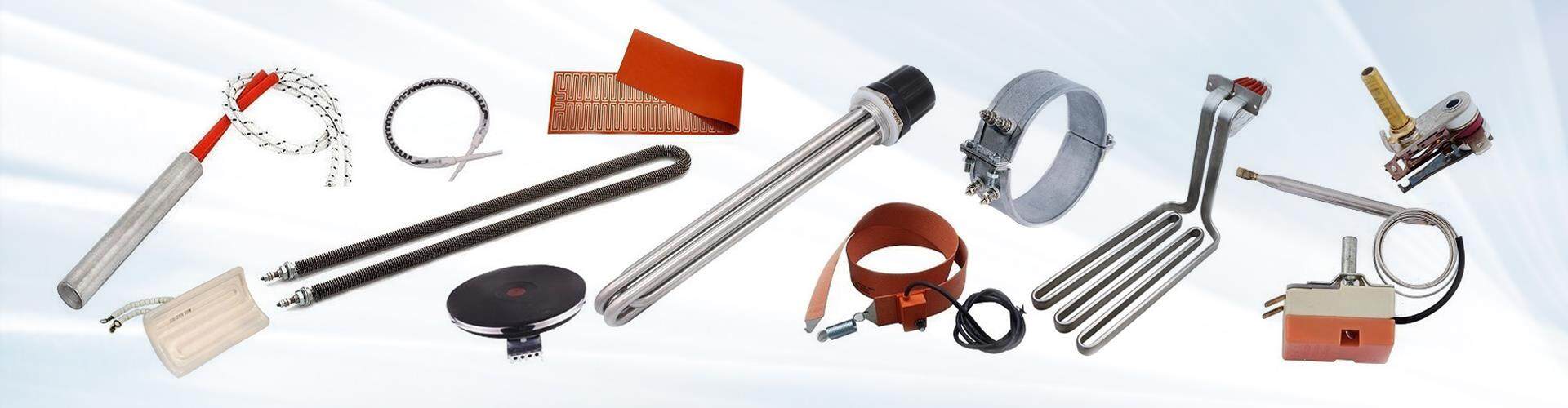
A U-shaped finned tubular heater consists of a heating tube bent into a U shape, with the two terminals generally positioned on the same side.
The simple structure makes it suitable for applications where the heating area has a relatively straightforward layout. The overall dimensions, tube diameter, power, voltage, fin specification, and terminal arrangement can be customized according to the equipment.
Typical applications include:
- Air heaters
- Industrial ovens
- Drying equipment
- Heating cabinets
- Air ducts

What Is a W-Shaped Finned Tubular Heater?
A W-shaped finned tubular heater uses multiple bends to form a W-shaped heating path. Compared with a simple U-shaped configuration, the heating tube can cover a longer heating path within a defined installation area.
The final shape can be customized according to the available space, required heating length, tube spacing, and terminal position.
W-shaped heaters are commonly considered for equipment where the heating area requires a more distributed arrangement.

What Is the Difference Between U-Shaped and W-Shaped Finned Tubular Heaters?
| Feature | U-Shaped Finned Tubular Heater | W-Shaped Finned Tubular Heater |
|---|---|---|
| Tube shape | U-shaped | W-shaped with multiple bends |
| Heating path | Relatively simple | Longer and more distributed |
| Installation layout | Suitable for straightforward layouts | Suitable for more compact layouts |
| Space utilization | Requires a relatively open installation area | Can fit a longer heating path into a defined area |
| Manufacturing | Relatively simple | Requires more precise bending |
| Heating coverage | Suitable for localized heating areas | Suitable for wider heating distribution |
| Terminal arrangement | Commonly located on the same side | Can be customized according to the design |
| Customization | High | High |
| Typical applications | Ovens, air heaters, ducts, cabinets | Industrial ovens, air heaters, drying equipment |
How Do Airflow and Heat Transfer Affect Finned Tubular Heaters?
Finned tubular heaters are often used to heat moving air. The fins increase the surface area of the heating tube, allowing heat to transfer from the heater to the surrounding air more effectively.
The actual heat transfer performance depends on more than the shape of the heating tube. Air velocity, airflow volume, fin diameter, fin spacing, heating surface temperature, and the arrangement of the heating elements all affect the result.
A U-shaped heater can provide a relatively straightforward heating path and is often used where the airflow passes through a defined heating section. A W-shaped heater can distribute the heated tube over a wider area, which can be useful when the heating section has limited dimensions or requires a more distributed arrangement.
The spacing between adjacent tube sections is also important. If the tubes are installed too close together, airflow may be restricted. If the spacing is too large, the available heating area may not be used efficiently.
For this reason, the heater geometry should be considered together with the airflow direction and the available heating space.
How Do Power and Surface Load Affect the Heater Design?
The electrical power of a finned tubular heater should not be determined simply by whether the heater is U-shaped or W-shaped.
Power is related to the required heating capacity and the overall design of the heating element. Important factors include tube diameter, heated length, tube material, operating temperature, airflow, fin dimensions, and the required air temperature rise.
Surface load is another important design parameter. It refers to the electrical power applied over the effective heating surface area of the element. An appropriate surface load helps balance the required heating output with the operating temperature of the heating element.
For example, two heaters with the same electrical power may have different designs if their tube lengths, diameters, or heating environments are different. Similarly, changing from a U-shaped configuration to a W-shaped configuration does not automatically mean that the heater should have a higher or lower wattage.
The required voltage and wattage should therefore be calculated according to the actual application rather than selected based only on the heater shape.
How Do Manufacturing and Dimensional Control Differ?
The manufacturing process also differs between U-shaped and W-shaped finned tubular heaters.
A U-shaped heater normally requires one main bending section. Its key dimensional requirements include the overall length, U-bend radius, distance between the two legs, and terminal position.
A W-shaped heater contains multiple bends. In addition to the overall dimensions, the manufacturer needs to control the length of each straight section, bending positions, center-to-center spacing, bend radius, and the final position of the terminals.
Dimensional consistency becomes particularly important when several heaters are installed together in the same equipment. Small differences in tube spacing or bend position can affect installation clearance and the alignment of the heating elements.
For custom W-shaped heaters, an accurate drawing showing the overall dimensions, bend locations, center distances, terminal positions, and mounting points is therefore useful during production.
The manufacturing design should also consider the tube material, tube diameter, fin specifications, bending radius, and required production quantity. These factors all affect the manufacturability and dimensional accuracy of the finished heater.
Which Parameters Need to Be Confirmed?
The shape is only one part of the heater design. For a custom finned tubular heater, the following information is normally required:
Heater shape: U-shaped or W-shaped
- Voltage
- Power
- Tube diameter
- Overall dimensions
- Heating length
- Fin diameter and fin spacing
- Heating temperature
- Airflow and heating medium
- Terminal type and position
- Mounting method
- Quantity
- 2D drawing or installation dimensions
For custom applications, the heater geometry should be designed around the actual equipment dimensions rather than selecting the shape separately from the installation requirements.

Conclusion
U-shaped and W-shaped finned tubular heaters are both used for air heating applications, but their different tube geometries provide different installation possibilities.
A U-shaped configuration is suitable for relatively simple heating layouts, while a W-shaped configuration can be used when a longer heating path needs to be distributed within a defined space.
The final design should consider the required power, heating length, installation space, airflow, temperature, terminal position, and mounting requirements.


