
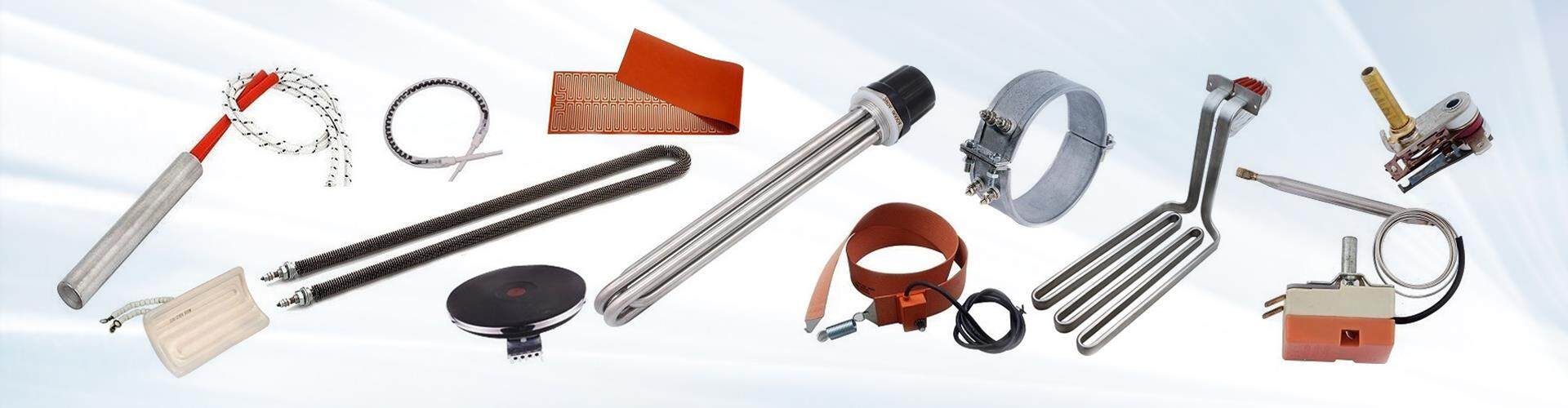
Choosing the right tubular heater for water heating is not simply a matter of selecting the required power. The heater needs to match the water flow, target temperature, heating time, installation space, and overall equipment design.
Different water heating applications may require different heater structures. For example, an instant water heater may need a compact heater designed around a continuous water flow, while a storage tank may use a longer immersion heater installed directly inside the tank.
So, how do you choose the right tubular heater for your application?
1. Start With the Water Heating Method
The first step is to determine how the water will be heated.
Flow-Through Water Heating
In a flow-through system, water passes through the equipment and is heated as it moves through the heating area.
Typical applications include:
- Instant water heaters
- Coffee machines
- Water dispensers
- Hot beverage equipment
- Compact household appliances
These applications usually require a compact heating structure and sufficient power to raise the water temperature within a short time.
A tubular thick film heater can be considered for this type of application when space is limited and the heating element needs to be integrated into a compact water flow path.
Storage Water Heating
In a storage system, water remains in a tank and is heated over a longer period.
Typical applications include:
- Electric water tanks
- Boilers
- Hot water storage systems
- Industrial water tanks
- Commercial water heating equipment
For these applications, a conventional tubular immersion heater is commonly used because it can be installed directly inside the water tank.
2. Calculate the Required Heating Power
Power is one of the most important parameters when selecting a water heating element.
The required power depends on factors such as:
- Water volume or flow rate
- Inlet water temperature
- Target water temperature
- Required heating time
- Heat loss from the equipment
For a flow-through system, the required heating power is closely related to the water flow rate and temperature rise.
For a storage tank, the required power also depends on the amount of water that needs to be heated and how quickly it needs to reach the target temperature.
Therefore, simply telling a heater manufacturer that you need a "2 kW water heater" may not be enough to determine the correct heater design.
Providing the flow rate, inlet temperature, target temperature, and heating time can help the manufacturer evaluate the heating requirement more accurately.
3. Consider the Water Flow Rate
For instant water heating, water flow rate is especially important.
When the water flows faster, the heater has less time to transfer heat to the water. The system may therefore require higher heating power or a different heating structure.
For example, a compact water heater used at a low flow rate may have very different requirements from an industrial system with a much higher flow rate.
When requesting a customized heater, it is useful to provide:
Water Flow Rate + Inlet Temperature + Target Temperature + Required Heating Power
These parameters provide a much clearer picture of the application.
4. Check the Available Installation Space
The physical space available inside the equipment can strongly influence the heater design.
A conventional tubular immersion heater may require sufficient space for the tube length, bending radius, terminals, and mounting structure.
For compact appliances, a smaller heating element may be required.
A tubular thick film heater can be considered when the equipment requires a compact tubular structure and flexible heating layout.
Before selecting a heater, check:
Maximum heater length
Tube diameter
Available installation space
Mounting position
Water inlet and outlet location
Electrical connection position
A heater that meets the electrical specifications but cannot fit into the equipment is obviously not the right solution.
5. Consider the Required Water Temperature
The target water temperature is another important factor.
Different applications may require different temperature ranges. For example, a coffee machine, domestic hot-water system, and industrial heating tank may have very different operating requirements.
The heater should therefore be selected according to:
Normal operating temperature
Maximum working temperature
Required heating speed
Temperature-control accuracy
The heating element should also work together with an appropriate temperature-control system where necessary.
6. Consider the Water Quality
The water itself can also affect heater selection.
Factors such as water hardness, mineral content, impurities, and chemical composition may influence the heater's operating environment and long-term performance.
For applications involving hard water or special liquids, the sheath material, surface structure, heating load, and installation method should be considered carefully.
For customized projects, it is helpful to tell the heater manufacturer what type of water or liquid will be heated.
7. Choose the Appropriate Heater Structure
There is no single tubular heater structure suitable for every water heating application.
Tubular Thick Film Heater
A tubular thick film heater may be considered when the application requires:
Compact construction
Flow-through heating
Flexible heating zones
Limited installation space
Fast heating within a compact system
Typical applications include instant water heaters, coffee machines, water dispensers, and other compact appliances.
Tubular Immersion Heater
A conventional tubular immersion heater may be suitable when:
The heater can be directly immersed in water
A storage tank is available
A relatively large volume of water needs to be heated
A conventional tubular heating structure is preferred
Typical applications include water tanks, boilers, industrial tanks, and commercial hot-water systems.
8. Consider Temperature Control
The heating element is only one part of a water heating system.
Depending on the equipment, temperature can be monitored and controlled using:
Thermostats
Thermocouples
Thermistors
Electronic temperature controllers
For customized heating elements, the position of a temperature sensor can sometimes be incorporated into the heater design.
This is particularly useful when the equipment requires more controlled water temperature rather than simply turning the heater on and off.
9. Consider Voltage and Electrical Connection
Before production, make sure the heater matches the electrical system of the equipment.
Important parameters include:
Rated voltage
Rated power
Resistance
AC or DC requirements
Lead wire specification
Terminal structure
Electrical connection position
For OEM projects, the connection position can often be customized according to the equipment layout.
10. Provide the Right Information for Customization
If you are developing a new water heating system, providing complete application information can make heater selection much easier.
A heater manufacturer will typically need information such as:
| Parameter | Example Requirement |
|---|---|
| Application | Instant water heater / water tank |
| Heating medium | Water |
| Voltage | 120 V / 230 V / 400 V |
| Power | Required heating power |
| Flow rate | L/min |
| Inlet temperature | °C |
| Target temperature | °C |
| Heating time | Seconds / minutes |
| Tube dimensions | Diameter / length |
| Installation space | Maximum available size |
| Temperature control | Thermostat / sensor / controller |
| Quantity | Prototype / mass production |
If you have a drawing, 3D model, or existing heater sample, providing it to the manufacturer can also help with the design evaluation.
FAQ About Tubular Heaters for Water Heating
What information do I need to choose a tubular water heater?
At minimum, it is helpful to provide the voltage, power, water flow rate or water volume, inlet temperature, target temperature, heating time, and available installation space.
How do I calculate the required heater power?
The required power depends mainly on the amount or flow rate of water, temperature increase, heating time, and system heat loss. For flow-through systems, water flow rate and temperature rise are particularly important.
Can tubular heaters be used for instant water heating?
Yes. Depending on the system design, tubular heating elements can be used for instant or flow-through water heating. A compact tubular thick film heater can be considered when installation space is limited.
How do I choose between a thick film heater and a tubular immersion heater?
Start with the equipment structure. Compact flow-through systems may benefit from a tubular thick film heating solution, while storage tanks and larger liquid-heating systems commonly use tubular immersion heaters.
The final selection should also consider power, flow rate, temperature, water quality, installation space, and temperature-control requirements.
Choosing a water heating element requires more than matching voltage and wattage. The heater needs to work together with the water flow, temperature requirements, equipment structure, and control system.
At Jaye Heater, we can develop customized tubular heating solutions according to your application, including voltage, power, dimensions, heating requirements, electrical connections, and installation conditions.
Have a water heating project? Contact us to customize the right tubular heater for your application.


