
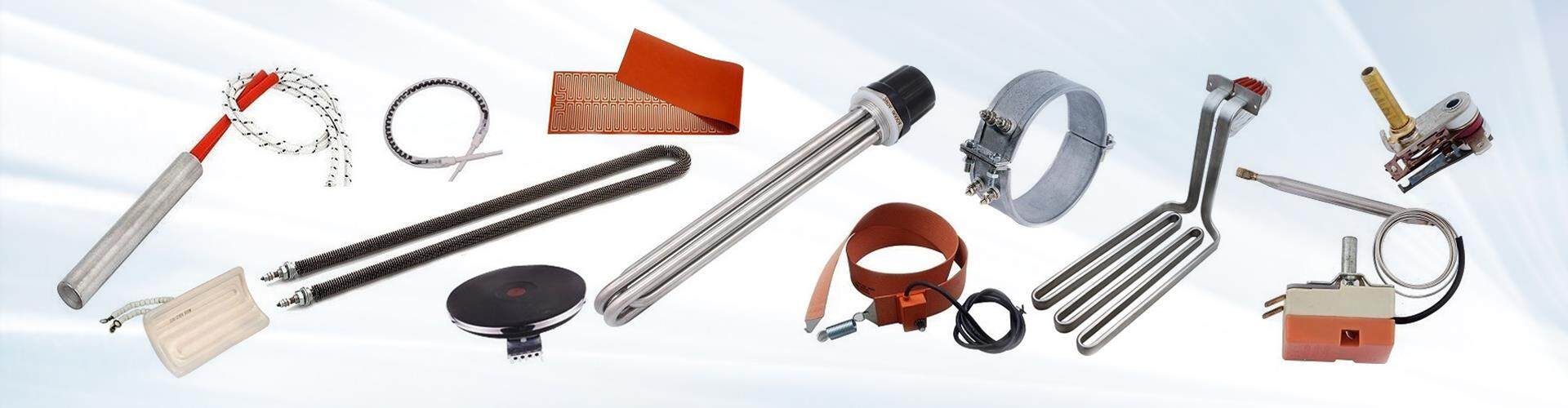
How to Choose Between U-Shaped and Straight Tubular Heating Elements?
Tubular heating elements can be manufactured in different shapes to fit the available installation space and heating requirements. Straight and U-shaped designs are common configurations, while more complex shapes can be used when a particular mounting arrangement or heat distribution pattern is required.
The right configuration depends on the available space, heated length, required wattage, mounting method, and the medium being heated. The shape alone does not determine heating performance; the electrical design and heat-transfer conditions are equally important.

What Is the Difference Between Straight and U-Shaped Heating Elements?
A straight tubular heating element has a linear configuration and is often used where sufficient installation length is available. A U-shaped element bends back on itself, allowing a longer heating length to fit into a more compact area.
| Feature | Straight Tubular Heater | U-Shaped Tubular Heater |
|---|---|---|
| Geometry | Linear | Two parallel legs joined by a bend |
| Installation space | Requires sufficient linear space | Can fit a longer element into a shorter overall length |
| Typical applications | Ducts, ovens, selected process equipment | Tanks, ovens, heating assemblies, and compact installations |
| Mounting | Depends on terminals and support points | Often designed around a flange, bracket, or terminal arrangement |
| Customization | Length, diameter, wattage, and terminals | Leg length, bend radius, spacing, wattage, and terminals |
When Should You Choose a Straight Tubular Heater?
Straight elements are suitable when the installation provides enough linear space and the heating surface can be positioned effectively.
Common applications include:
- Industrial ovens and heating cabinets
- Air-heating equipment
- Selected liquid-heating assemblies
- Machinery requiring a linear heating element
The heated length, sheath material, wattage, and mounting method should be selected according to the application. For air heating, airflow and surface heat transfer must also be evaluated.
When Is a U-Shaped Tubular Heater More Suitable?
U-shaped heaters are often selected when the available space is limited but a longer heating element is required. The two legs can be arranged within a compact area, making the design useful for selected immersion heaters, oven assemblies, and industrial heating equipment.
Important design considerations include:
- Leg length and spacing
- Bend radius
- Overall dimensions
- Heated and unheated sections
- Terminal orientation
- Mounting and support requirements
The bend must be designed within the manufacturing limits of the selected tube diameter, sheath material, and internal construction. The configuration must also provide sufficient clearance from surrounding components.
FAQ
1. Is a U-shaped heater more powerful than a straight heater?
Not necessarily. Power depends on the electrical design, voltage, and resistance. A U-shaped configuration primarily changes the geometry and available heated length.
2. Can tubular heating elements be custom bent?
Yes, subject to the manufacturing limits of the tube diameter, sheath material, bend radius, and internal construction. A drawing should be provided to confirm feasibility.
3. Which shape is better for liquid heating?
Both configurations can be used in suitable liquid-heating designs. The choice depends on tank geometry, immersion depth, mounting, liquid compatibility, and required heating power.


