Principle of Operation
A round hot plate is an electrically powered laboratory heating device used to provide controlled heat to laboratory glassware such as beakers, flasks, and evaporation dishes. It is commonly used for heating liquids, dissolving chemicals, and maintaining samples at a constant temperature.

The hot plate operates based on the principle of electrical resistance heating:
Power Supply
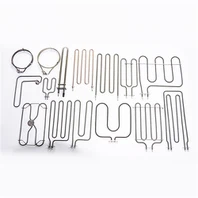
When the hot plate is switched on, electrical current flows through an internal heating element.
Heat Generation
The heating element has electrical resistance. As current passes through it, electrical energy is converted into thermal energy (heat) through the Joule heating effect.
Heat Transfer
The generated heat is conducted to the circular metal or ceramic heating surface (the round plate).
The heated surface then transfers heat by conduction to the laboratory container placed on top.
Temperature Control
A built-in temperature controller or thermostat regulates the power supplied to the heating element.
The controller maintains the selected temperature by cycling the heating element on and off or by adjusting the electrical power.
Safety Features
Many hot plates include over-temperature protection to prevent overheating.
Indicator lights often remain illuminated while the surface is hot, warning users to avoid burns.
Jaye Heater makes standard and customized Hotplates, the below is the data of our standard hotplates:
|
Item No. |
Description |
Diameter |
Power |
|
HP-80S-3 |
Standard Hotplate |
80mm |
450W |
|
HP-145S-4 |
Standard Hotplate |
145mm |
1000W |
|
HP-145R-4 |
Rapid Hotplate |
145mm |
1500W |
|
HP-180S-4 |
Standard Hotplate |
180mm |
1500W |
|
HP-180R-4 |
Rapid Hotplate |
180mm |
2000W |
|
HP-220S-4 |
Standard Hotplate |
220mm |
2000W |
|
HP-220R-4 |
Rapid Hotplate |
220mm |
2600W |

Applications
- Heating chemical solutions
- Sample preparation
- Evaporation of solvents
- Maintaining constant temperatures during experiments
- General laboratory heating
Operating Precautions
- Use only heat-resistant laboratory glassware.
- Ensure the hot plate is placed on a stable, dry, and level surface.
- Do not heat flammable solvents unless using equipment designed for hazardous environments.
- Avoid touching the heating surface during or immediately after use.
- Turn off the power after use and allow the hot plate to cool completely before cleaning.

Round Hot Plate – Frequently Asked Questions (FAQ)
FAQ 1: Why is the hot plate not heating up?
Possible Causes:
The power supply is not connected properly.
The power switch is turned off.
The temperature setting is too low.
The heating element or internal fuse is faulty.
Recommended Action:
Verify the power connection and electrical outlet.
Ensure the power switch is ON.
Increase the temperature setting.
If the problem persists, stop using the instrument and contact qualified maintenance personnel.
FAQ 2: Why does the hot plate heat unevenly?
Possible Causes:
The laboratory vessel does not have a flat bottom.
The vessel is not centered on the heating surface.
The heating surface is dirty or damaged.
Recommended Action:
Use flat-bottom laboratory glassware.
Position the vessel in the center of the hot plate.
Clean the heating surface after it has completely cooled.
Replace the heating plate if it is damaged.