JAYE vs Backer Tubular Heating Element: Quick Comparison
The following comparison focuses on published product scope and the type of requirements that engineers and purchasing teams may need to evaluate.
| Evaluation Area | Backer Tubular Heating Element | JAYE Tubular Heating Element |
|---|---|---|
| Tubular heating technology | Tubular elements for air, radiation and liquid heating | Straight and formed tubular heating elements |
| Appliance applications | Home appliances and commercial equipment | Domestic, commercial and appliance applications |
| Industrial applications | Industrial and process heating | Industrial and process heating |
| Air heating | Tubular air heating elements | Finned and tubular air heating elements |
| Liquid heating | Tubular and immersion-related solutions | Tubular and customized liquid-heating solutions |
| Customization | Customized products available | Customized dimensions and configurations |
| Shapes | Straight and formed configurations | Straight, bent and formed configurations |
| Terminations | Multiple connection options depending on design | Terminal and lead configurations can be customized |
| OEM replacement evaluation | Product/design dependent | Evaluation based on drawing, sample and specifications |
| Technical comparison | Based on the specific product model and application | Based on the specific product requirements and application |
| Sample evaluation | Depends on the specific project | Sample evaluation can be discussed based on technical requirements |
| Best comparison method | Application and product specification | Application and product specification |
This table is intended as a technical starting point, not a statement that every product from either company has the same specifications. Individual models should always be compared using their actual datasheets or drawings.
What Is a Backer Tubular Heating Element?
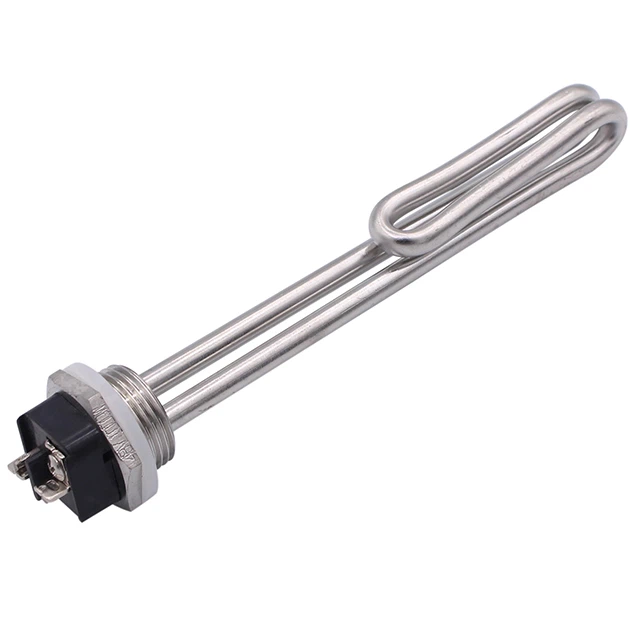
Backer describes tubular elements as heating components used for air, radiation and liquid heating. Its published applications include radiators, ovens, heat pumps, washing machines and other equipment.
Backer also publishes tubular air heating elements with different sheath materials and electrical connection options. Its published material examples include stainless steel grades, Incoloy and aluminium, depending on the product design.
For industrial buyers, this means that the correct comparison should be made against the specific Backer model, rather than against the Backer brand in general.
Useful information includes:
• Part number
• Voltage
• Wattage
• Overall length
• Heated length
• Tube diameter
• Sheath material
• Bend configuration
• Terminal type
• Application
• Operating temperature
Where Can JAYE Be Considered as an Alternative?
JAYE can evaluate tubular heating element requirements based on drawings, samples, dimensions, electrical specifications, and installation conditions.
The evaluation may be relevant when a customer needs:
3.1 A Replacement for an Existing Element
If you already have a Backer tubular heating element, you can provide the original:
• Part number
• Drawing
• Dimensions
• Photos
• Voltage
• Wattage
• Material
• Quantity
The existing design can then be reviewed to determine whether a corresponding JAYE configuration is technically feasible.
A direct replacement should not be assumed before the dimensions, electrical characteristics, materials, and application conditions have been reviewed.
3.2 A Second Supplier
Some OEM customers do not necessarily want to replace their existing supplier.
Instead, they may want:
• A second source
• Additional production capacity
• Another quotation
• Supply-chain flexibility
• A customized version of an existing heater
In this situation, the existing Backer specification can be used as the technical reference for supplier evaluation.
This can be particularly useful for recurring OEM projects where both engineering compatibility and purchasing flexibility matter.
3.3 A Customized Tubular Heater
A standard tubular heater may not always fit the available installation space.
JAYE's published tubular heating element information includes straight and formed configurations, with designs evaluated according to customer requirements.
Customization may involve:
• Overall length
• Heated length
• Tube diameter
• Bending shape
• Terminal position
• Lead length
• Voltage
• Wattage
• Sheath material
• Mounting configuration
The final design depends on manufacturing feasibility and the application requirements.
Appliance Applications: What Should You Compare?
For appliance applications, physical installation and heat distribution are often important.
Examples include:
• Ovens
• Washing machines
• Drying equipment
• Dishwashers
• Coffee machines
• Food equipment
• Refrigeration equipment
• Other domestic or commercial appliances
Backer lists applications such as tumble dryers, dishwashers, washing machines, ovens, fryers, warming equipment, coffee machines and other commercial equipment.
For an appliance replacement project, compare:
Electrical
• Voltage
• Wattage
• Resistance
• Phase
Mechanical
• Overall dimensions
• Tube diameter
• Bend position
• Mounting points
• Terminal position
Thermal
• Target temperature
• Heating time
• Heated area
• Operating environment
Material
• Sheath material
• Terminal material
• Lead wire insulation
For appliance applications, matching only voltage and wattage may not be enough if the heater geometry or heated area changes.
Industrial Applications: What Should You Compare?
Industrial tubular heating elements may operate under different conditions from household appliances.
Typical applications include:
• Air heating
• Industrial ovens
• Drying equipment
• Tanks
• Pipes
• Process heating
• Heating systems
• Machinery
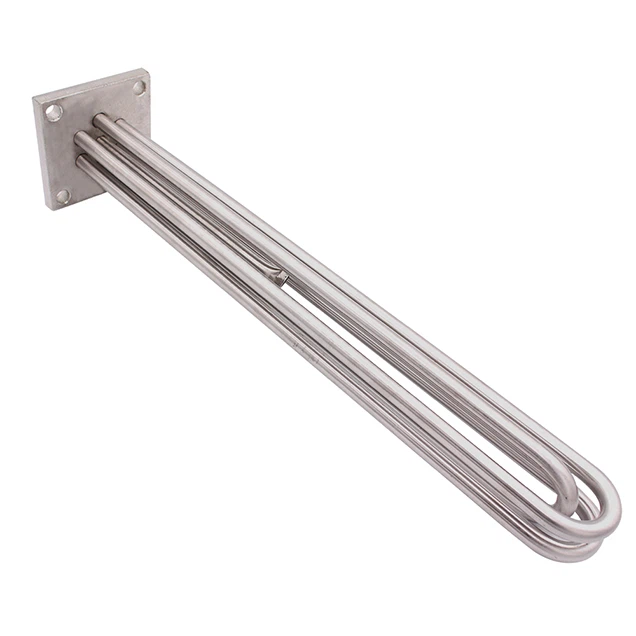
JAYE's tubular heating element documentation lists applications including forced-air heating, thermal forming machines, direct immersion in liquids, radiant heating, tanks and pipes, ovens and dryers.
For industrial applications, additional questions may become important:
What is being heated?
Air, water, oil, chemicals, metal surfaces or another medium?
What is the operating temperature?
The heater material and construction should be evaluated against the actual operating conditions.
What is the heat-transfer condition?
Airflow, liquid flow, contact area and installation position can influence heater selection.
What is the required production quantity?
Prototype requirements and recurring OEM production may require different commercial considerations.
The Most Important Technical Parameters to Compare
When comparing a Backer tubular heating element with a JAYE alternative, the following checklist can help.
Electrical Specifications
• Voltage
• Wattage
• Resistance
• Phase
• Circuit configuration
Mechanical Specifications
• Overall length
• Heated length
• Tube diameter
• Bend dimensions
• Bend radius
• Terminal position
• Mounting dimensions
Material Specifications
• Sheath material
• Insulation system
• Terminal material
• Lead wire specification
Application Specifications
• Heating medium
• Operating temperature
• Target temperature
• Airflow or liquid flow
• Installation environment
Commercial Specifications
• Sample quantity
• Production quantity
• Annual demand
• Required certification
• Target delivery schedule
This provides a more useful basis for supplier comparison than simply comparing two unit prices.
How to Evaluate a JAYE Alternative Before Bulk Production
A replacement project can follow a simple process:
Step 1 - Specification Review
Review the original heater's:
Electrical + Mechanical + Thermal + Material requirements
Step 2 - Engineering Evaluation
Determine whether the requested dimensions, materials, power and configuration are manufacturable.
Step 3 - Sample Production
Produce a sample according to the agreed specification.
Step 4 - Customer Testing
Check:
• Installation
• Resistance
• Power
• Heating behavior
• Temperature
• Heat distribution
Step 5 - Final Drawing Approval
Once the sample has been evaluated, confirm the final drawing and specifications before production.
This approach allows the customer to evaluate the actual product rather than making a purchasing decision based only on a quotation.
When Should You Request a Tubular Heating Element Quote?
If you are currently sourcing a Backer tubular heating element and want to evaluate another supplier, you can send the following information to JAYE:
1. Existing model
Backer part number, if available.
2. Drawing or sample
Original drawing, CAD file, photo or physical sample.
3. Electrical requirements
Voltage and wattage.
4. Dimensions
Overall length, heated length, diameter and bending dimensions.
5. Material
Existing sheath material, if known.
6. Application
For example:
• Oven
• Air heater
• Washing machine
• Tank
• Industrial process equipment
• Drying equipment
• Other machinery
7. Quantity
Sample quantity and estimated production quantity.
With these details, JAYE can review the requirement and determine whether a customized tubular heating element can be developed.
FAQ: Backer Tubular Heating Element
Q1. Can JAYE manufacture an alternative to a Backer tubular heating element?
JAYE can evaluate selected Backer tubular heating element requirements based on the original drawing, sample, dimensions, electrical specifications and application conditions.
Whether a direct replacement is possible depends on the specific heater design.
Q2. Can JAYE copy a Backer tubular heating element?
A replacement should be evaluated based on the customer's technical requirements rather than assuming that every Backer model can be reproduced.
Providing the original drawing or sample allows the structure, dimensions, electrical requirements and manufacturing feasibility to be reviewed.
Q3. Is a JAYE tubular heating element suitable for appliance applications?
JAYE provides tubular heating elements for domestic and industrial applications. The suitability of a specific design depends on the appliance structure, electrical requirements, temperature conditions and installation requirements.
Q4. Can JAYE customize the shape of a tubular heating element?
Yes. Straight and formed tubular heating elements can be evaluated according to the required dimensions and application.
Q5. What information should I provide for a Backer replacement inquiry?
The most useful starting information is:
Part number + drawing/photo/sample + voltage + wattage + dimensions + application + quantity.
Q6. Do I need the original Backer part number?
It is helpful, but it is not always essential. If the part number is unavailable, a drawing, sample, dimensions, photographs and electrical specifications can also be used for technical evaluation.
Q7. Can JAYE provide a sample before bulk production?
Sample production can be discussed after the technical requirements have been reviewed. For replacement projects, sample testing is useful for confirming installation and heating performance before larger production quantities.
Q8. Should I compare price first or specifications first?
For a replacement heating element, specifications should normally be reviewed first. Once technical compatibility has been established, price, MOQ, lead time, testing and other commercial factors can be compared.
Conclusion
A Backer tubular heating element can be evaluated against a JAYE tubular heating element based on the actual requirements of the equipment.
The useful comparison is not simply:
Backer vs. JAYE
but:
Electrical requirements + dimensions + material + thermal conditions + installation + application + production requirements.
If you are looking for a replacement, second-source supplier, or customized tubular heating element, the easiest way to start is to send the original Backer part number, drawing, photo or sample, together with the required voltage, wattage, dimensions and quantity.
JAYE can then review the available information and determine whether a corresponding tubular heating element can be developed for your application.
Need to evaluate a Backer tubular heating element replacement? Send us the drawing, sample, or specifications for a technical review and quotation.
References
1. Backer Group - Tubular Elements
Backer's official product information covering tubular elements for air, radiation and liquid heating, including standard and customized products. Backer Group – Tubular Elements
2. JAYE Heater Technology - Straight & Formed Tubular Heating Elements
JAYE's technical information covering tubular element construction, configurations and typical applications. JAYE – Straight & Formed Tubular Heating Elements