How to Choose the Right Cartridge Heater for Industrial Equipment?
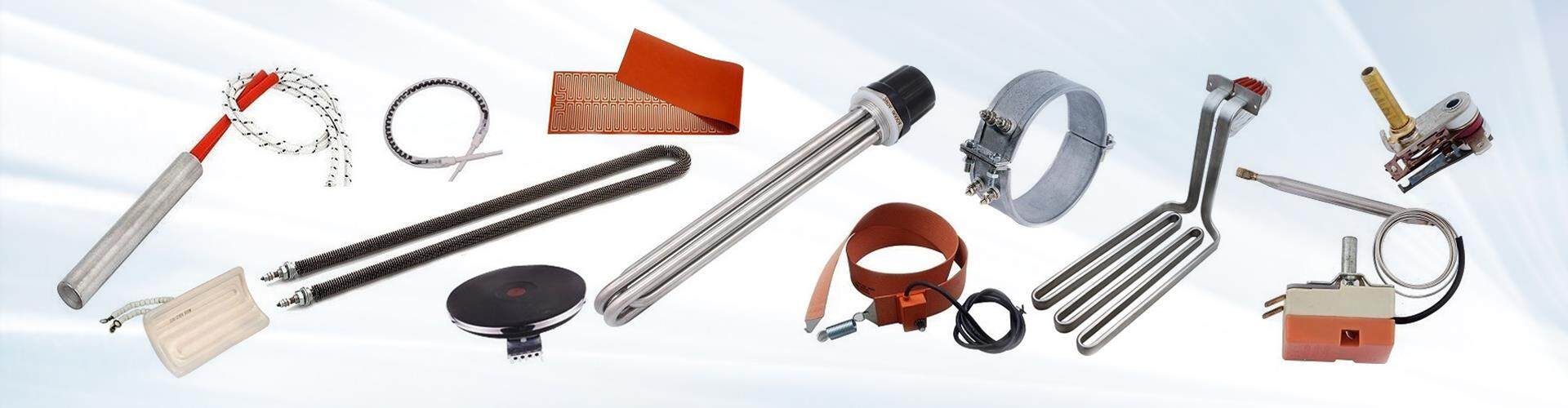
Cartridge heaters are compact electric heating elements designed to heat metal parts, molds, dies, and industrial tooling. They are commonly installed in drilled holes, allowing heat to transfer directly from the heater sheath to the surrounding metal.
Choosing the right cartridge heater requires more than matching its diameter and length. Wattage, watt density, hole tolerance, sheath material, operating temperature, and lead wire configuration all affect heating performance and service life.
How Does a Cartridge Heater Work?
A typical cartridge heater contains a resistance wire surrounded by electrical insulation, usually magnesium oxide (MgO), inside a metal sheath. When energized, the resistance wire generates heat, which passes through the sheath to the component being heated.
This design makes cartridge heaters suitable for applications requiring localized heating and compact installation.

What Should You Consider When Selecting a Cartridge Heater?
|
Parameter |
Why It Matters |
|---|---|
| Diameter and length | Must match the installation hole and heated area |
| Voltage and wattage | Determine electrical input and heating capacity |
| Watt density | Affects sheath temperature and heater life |
| Sheath material | Must suit the operating temperature and environment |
| Lead wire and terminals | Must match the installation and electrical connection |
| Hole fit | A suitable fit improves heat transfer to the surrounding metal |
Custom Cartridge Heaters from Jaye Heater
Jaye Heater provides customized cartridge heaters according to application requirements. To evaluate a suitable design, provide the diameter, length, voltage, wattage, operating temperature, installation details, and required quantity.
FAQ
1. Can cartridge heaters be customized?
Yes. Dimensions, electrical ratings, sheath materials, lead wires, and terminal configurations can be specified according to the application.
2. Why is the fit between the heater and hole important?
Excessive clearance can reduce heat transfer and increase the heater sheath temperature. The hole dimensions and tolerance should be considered during design.
3. Does higher watt density always mean faster heating?
Not necessarily. Higher watt density can increase surface temperature, but it must remain compatible with the installation, heat load, and material limits.
4. What information is needed for a quotation?
Provide a drawing or sample, heater dimensions, voltage, wattage, operating conditions, and order quantity.