What Is a Capillary Thermostat?
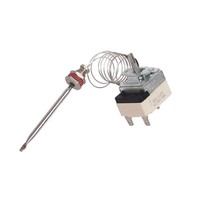
A capillary thermostat is a mechanical temperature-sensing device consisting of three main components:
A sensing bulb
A capillary tube
A switch mechanism
The sensing bulb contains a temperature-sensitive fluid or gas and is positioned where temperature monitoring is required. The bulb is connected to the thermostat body through a thin capillary tube.
As temperature changes, the fluid or gas inside the bulb expands or contracts, creating pressure changes that activate the thermostat's internal switching mechanism.

How a Capillary Thermostat Works in a Water Distiller
1. Temperature Detection
The sensing bulb is installed near the boiling chamber or heating surface of the water distiller. As the water temperature rises, the fluid inside the sensing bulb expands.
2. Pressure Transmission
The expansion creates pressure within the sealed capillary tube. This pressure is transmitted from the sensing bulb to the thermostat's switching assembly.
3. Switch Activation
When the preset temperature is reached, the pressure causes the internal diaphragm or bellows mechanism to move. This movement opens or closes an electrical contact.
4. Heater Control
Depending on the design of the distiller:
The thermostat may switch off the heating element when a target temperature is reached.
It may cycle the heater on and off to maintain a stable operating temperature.
It may function as a high-temperature safety cut-out.
5. Automatic Reset
As the temperature drops, the pressure inside the capillary system decreases. The thermostat returns to its original position and can automatically restore power to the heating element if required.

Role in Water Distillation Systems
Capillary thermostats perform several important functions:
Temperature Regulation
They maintain the correct boiling temperature, ensuring efficient steam generation and consistent distilled water production.
Overheat Protection
When the water reservoir becomes empty, the temperature of the heating surface rises rapidly. The thermostat detects this abnormal condition and disconnects power to prevent damage.
Equipment Safety
By preventing excessive temperatures, capillary thermostats protect:
Heating elements
Stainless steel boiling chambers
Electrical wiring
Plastic components and seals
Energy Efficiency
Accurate temperature control reduces unnecessary power consumption and extends the service life of the distiller.

Advantages of Capillary Thermostats
Capillary thermostats offer several benefits for water distiller manufacturers and users:
Reliable mechanical operation
No external power required for temperature sensing
Fast response to temperature changes
High durability in hot environments
Cost-effective design
Easy installation and maintenance
Conclusion
Capillary thermostats are essential components in water distiller devices. They use temperature-induced pressure changes within a sealed bulb and capillary tube to control electrical contacts. This simple yet effective mechanism regulates heating, improves energy efficiency, and provides critical protection against overheating. Their reliability and mechanical simplicity make them a preferred temperature control solution in many commercial and residential water distillation systems.

FAQ: Capillary Thermostats in Water Distiller Devices
1. What temperature is typically used in a water distiller thermostat?
Most water distillers operate around 100°C for boiling water. Over-temperature protection thermostats are commonly set between 110°C and 180°C depending on the equipment design.
2. Can a capillary thermostat prevent dry boiling?
Yes. When the water reservoir becomes empty, the heating surface temperature rises rapidly. The capillary thermostat detects the abnormal temperature increase and disconnects power to prevent dry boiling and equipment damage.
3. What is the difference between a capillary thermostat and an electronic thermostat?
A capillary thermostat uses a mechanical sensing system filled with liquid or gas, while an electronic thermostat relies on sensors and electronic circuits. Capillary thermostats are generally simpler, more robust, and suitable for high-temperature applications.