Mica strip heaters provide targeted, uniform heating for industrial equipment requiring direct surface contact. Their unique layered design combines thermal efficiency with mechanical durability, making them ideal for applications from plastic processing to food warming. Here's how they're built and why they're so effective.

Construction & Operating Principle
These heaters feature a metal-sheathed design with a resistance heating coil insulated by high-grade mica.
The layered structure includes:
- A resistance wire core that generates heat when energized
- Multiple mica insulation layers that withstand high temperatures while transferring heat efficiently
- An outer metal shell (typically stainless steel) that protects the interior and ensures uniform heat conduction
- This construction enables direct heat transfer to adjacent surfaces, with operating temperatures reaching 480°C (900°F).
Key Advantages
- Quick Response: Low thermal mass allows fast heating and cooling cycles
- Customizable: Available in various shapes, sizes, and power ratings
- Durable: Robust construction resists physical and thermal stress
- Energy-Efficient: Provides even heat distribution with minimal losses
Typical Applications
Common uses include industrial hot plates, plastic extruders and molds, packaging sealers, food warming equipment, and specialized ovens.
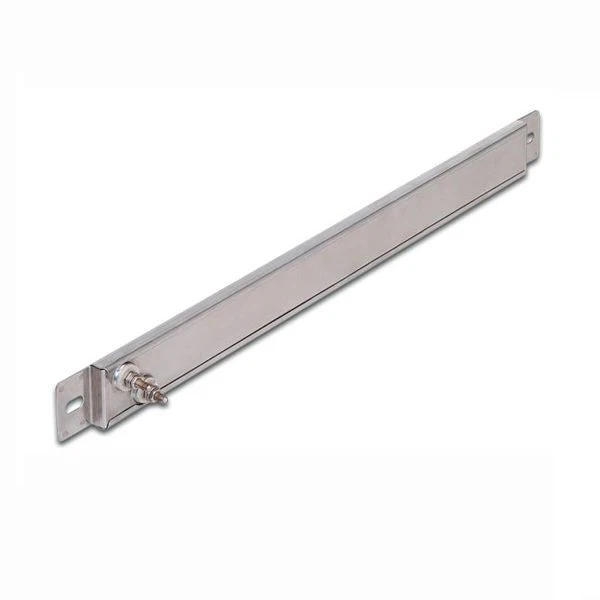
Mica strip heaters deliver reliable, controllable heat through a simple yet effective layered design. Their adaptability and efficient performance make them a preferred heating solution for numerous industrial processes requiring direct surface heating.