
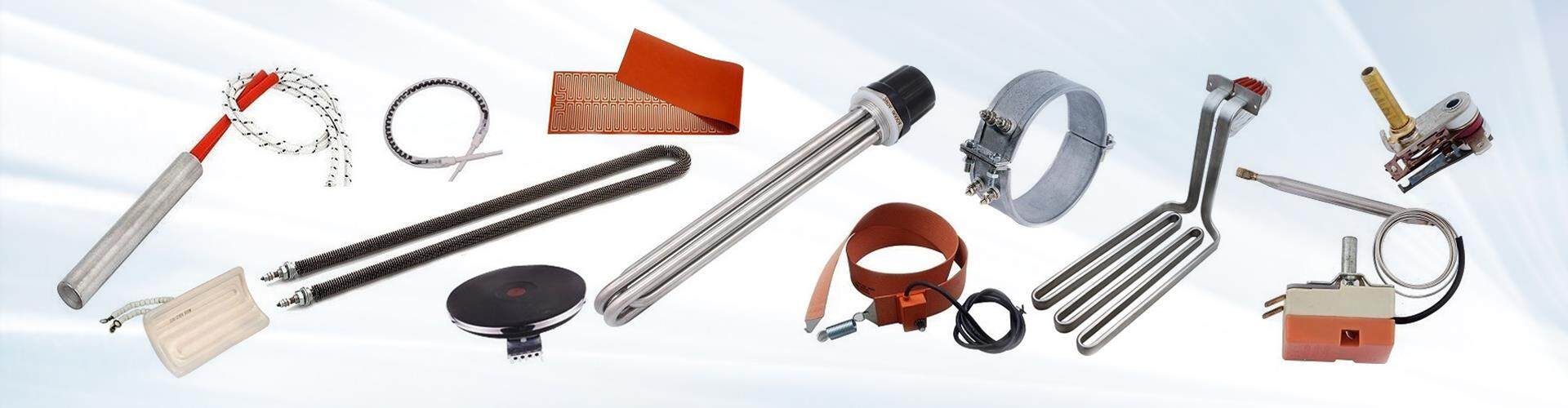
If you specify cartridge heaters for equipment that operates in humid, washdown, or condensing environments, you have probably seen the failure mode: a heater that worked fine on the bench fails in the field after a few weeks or months. The resistance wire shorts to the sheath. The breaker trips. The equipment goes down.
In most of those cases, moisture is the root cause. Not a manufacturing defect in the resistance wire, not a wrong wattage calculation-moisture ingress into the heater body.
We have been making cartridge heaters for equipment OEMs at Jaye Heater for over a decade. Here is what we have learned about why moisture protection is not optional in demanding applications.
Why Moisture Destroys Cartridge Heaters
A cartridge heater is a compact assembly: a resistance coil wound on a ceramic core, embedded in magnesium oxide (MgO) powder, and enclosed in a metal sheath. The MgO provides electrical insulation between the coil and the sheath while conducting heat outward.
The problem is that MgO is hygroscopic. It absorbs moisture from the surrounding air. When dry, MgO has excellent dielectric strength-it can withstand high voltages without breaking down. When it absorbs water, that dielectric strength collapses. The insulation resistance drops from hundreds of megohms to kilohms or less. At that point, the heater is no longer electrically safe. Current can leak from the resistance wire to the sheath, and from the sheath to the equipment frame.
This is not a gradual performance degradation. It is a binary failure. The heater either insulates or it does not. And when it does not, the consequences range from a tripped breaker to a grounded heating circuit to an electric shock hazard.
How Moisture Gets In
Moisture ingress follows a few predictable paths.
The terminal end. This is the most common entry point. The leads exit the sheath at one end, and that exit point is a potential leak path unless it is properly sealed. In a humid environment, moisture migrates through the terminal end over time, especially if the heater cycles between hot and cold. Each cooling cycle can draw moist air into the heater body through capillary action and condensation.
The sheath itself. A quality sheath is seamless or welded to be leak-tight. But low-cost heaters may have pinholes, weld defects, or micro-cracks that only show up after thermal cycling. Once moisture enters through the sheath, the heater is compromised.
Condensation during thermal cycling. Even a well-sealed heater can be vulnerable if it operates in an environment where the surrounding air is humid and the heater cycles off. When the heater cools, the internal pressure drops and moist air can be drawn in through any imperfect seal. This is why "it worked fine in the lab" does not guarantee field reliability. The lab does not always reproduce the thermal cycling and humidity combination of the real installation.
Why the Application Determines the Risk
Not every cartridge heater application needs the same level of moisture protection. The risk depends on the operating environment.
Food processing and packaging. Equipment is washed down with water or steam daily. Heaters operate in high humidity and frequent temperature cycling. Moisture ingress is almost guaranteed without sealed construction.
Medical and laboratory equipment. Autoclaves, sterilizers, and humidified incubators expose heaters to saturated steam and condensation. Electrical safety is critical because the equipment operates near patients or operators.
Refrigeration and condensate management. Condensate pans and defrost circuits operate in wet, condensing environments. The heater may be submerged part of the time and dry the rest. That wet-dry cycling is exactly the condition that drives moisture into an unsealed heater.
Outdoor and marine equipment. Ambient humidity, rain, and salt spray all create moisture exposure. Even if the heater is inside an enclosure, temperature cycling can draw moist air into the heater body.
Any application with thermal cycling. Even in a clean, dry-looking environment, a heater that cycles on and off repeatedly creates a pump effect. The internal air expands when hot and contracts when cold. If the terminal seal is not tight, moisture-laden air enters on every cooling cycle.
How Moisture-Proof Construction Works
A moisture-proof cartridge heater is not just a standard heater with a coating sprayed on the outside. The protection has to address the actual ingress paths.
How Sealed Terminal Ends Block the Main Entry Path
The terminal end is where most moisture enters. A moisture-proof design uses a sealed termination-typically an epoxy or silicone seal, or a ceramic-to-metal seal, that closes the gap between the leads and the sheath. The seal has to remain flexible through thermal cycling and bond to both the sheath and the lead insulation. A hard, brittle seal can crack as the heater expands and contracts.
How Sheath Integrity Prevents Long-Term Ingress
The sheath itself must be leak-tight. Stainless steel 304 or 316L is the standard for moisture-exposed applications, with welded end caps and a seamless tube body. The sheath material also has to resist corrosion. In a humid environment, a low-grade steel sheath can rust through and create a leak path even if the terminal end is sealed.
How Lead Protection Completes the Seal
The leads themselves are part of the moisture path. If the lead insulation is compromised or the lead exit is not sealed, moisture can travel along the lead into the heater body. Moisture-proof cartridge heaters typically use sealed lead exits and may include a protective sleeve or shrink boot over the lead-to-heater junction.
What to Verify When Sourcing Moisture-Proof Cartridge Heaters
If your application involves humidity, washdown, condensation, or thermal cycling, here is what to check before you specify.
Insulation resistance specification. Ask for the minimum insulation resistance at operating temperature, not just at room temperature. A heater that passes a room-temperature megohmmeter test can still fail when hot and humid.
Seal type and material. Confirm how the terminal end is sealed-epoxy, silicone, ceramic-to-metal-and that the seal material is rated for your operating temperature range.
Sheath material and construction. Stainless steel 304 or 316L, with welded end caps and a seamless body. Confirm the sheath is suitable for the specific environment.
Dielectric strength. Verify the heater's dielectric withstand voltage. A moisture-proof design should maintain its dielectric strength after humidity exposure, not just when new and dry.
Cycle testing. Ask whether the heater has been tested through wet-dry or thermal cycling. A sample that passes a single dielectric test is not proof of long-term moisture resistance.
FAQ: Common Questions About Moisture-Proof Cartridge Heaters
What happens if moisture gets inside a cartridge heater?
The magnesium oxide insulation absorbs water and loses dielectric strength. Insulation resistance drops, current can leak to the sheath, and the heater may short or trip the circuit protection. In severe cases it creates a shock or fire hazard.
Can a standard cartridge heater be made moisture-proof after installation?
No. Moisture protection is built into the heater construction-sealed terminal ends, sheath integrity, and lead sealing. A standard heater cannot be retrofitted to the same level of protection.
Is moisture protection necessary if the heater is inside a sealed enclosure?
It depends on the enclosure and the thermal cycling. If the enclosure is truly sealed and the internal air is dry, the risk is low. But many "sealed" enclosures still allow moisture ingress through cable glands, gaskets, or during maintenance. Thermal cycling can draw moist air into the heater even inside a partially sealed enclosure.
If you are specifying cartridge heaters for equipment that operates in humid, washdown, or condensing environments, send us your operating temperature, humidity exposure, thermal cycling profile, and electrical requirements. Our engineering team at Jaye Heater will recommend the right moisture-proof construction-seal type, sheath material, and lead protection-provide samples for your humidity and insulation testing, and quote production pricing. We have been making moisture-proof cartridge heaters for equipment OEMs for over a decade.
Click here to know more


