In an era of increasingly complex and automated machinery, understanding why this component is non-negotiable is key to designing reliable and efficient systems. Let's break down the core reasons for its indispensability.
1. The Fundamental Role: Beyond a Simple Connection
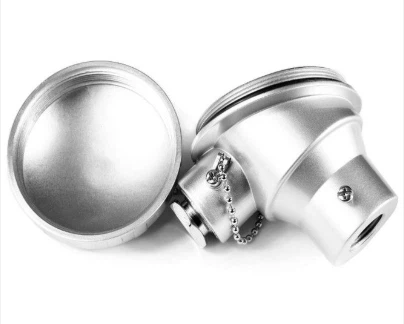
At its most basic, a KNE Head is designed to terminate a wire and connect it securely to a terminal block, usually of the PCB-mounted type. But its job starts where a simple crimp terminal ends.
- Secure Termination: It provides a robust, insulated housing for the crimped wire, protecting it from stress and strain. This prevents the wire from fraying or loosening, a common cause of failure in vibrating environments.
- Polarization and Guidance: KNE Heads are keyed. This means they are designed to fit onto the terminal block in only one, correct orientation. This prevents reverse installation, which can lead to short circuits, equipment damage, or even safety hazards during maintenance.
- Contact Protection: The housing shields the live metal contact from accidental touch, a fundamental requirement for meeting international safety standards (e.g., IEC, UL).

2. Ensuring Electrical Integrity: The Battle Against Interference
- In panels filled with a mix of power and signal lines, electrical noise is a constant threat. A poorly designed connection point can act as an antenna, picking up or emitting electromagnetic interference (EMI), which corrupts sensitive signals to PLCs, sensors, and drives.
- Quality KNE Heads, especially shielded variants, are engineered to combat this. They are typically made from high-grade, flame-retardant plastics (like PA66) and can incorporate metal shells or coatings that create a Faraday cage around the connection. This effectively channels EMI to ground, ensuring the signal passing through is clean and accurate. In systems controlling servo motors or processing precise analog signals, this isn't a luxury-it's a necessity.
3. Mechanical Resilience: Built to Endure
Industrial environments are harsh. Constant vibration, thermal cycling, and occasional mechanical impact can shake loose inferior connections.
- Vibration Resistance: A KNE Head locks securely onto its terminal block, often with an audible "click." This positive locking mechanism, combined with a high-quality crimp on the wire, ensures the connection remains intact even in high-vibration applications like robotics, conveyor systems, or heavy machinery.
- Strain Relief: The design of the housing often includes features that absorb physical stress on the cable, preventing it from being transferred directly to the fragile crimp point or the terminal on the PCB. This dramatically extends the service life of the connection.
- Durability: The materials used can withstand a wide temperature range and are resistant to chemicals, oils, and UV exposure, making them suitable for everything from factory floors to outdoor applications.

4. Operational Safety and Efficiency
This is where the KNE Head transitions from a functional component to a critical safety device.
- Touch-Safe Design: The housing completely encloses the live terminal, protecting personnel from accidental electric shock during operation, troubleshooting, or when connections are made adjacent to live circuits.
- Foolproof Installation: The polarization feature mentioned earlier is a huge time-saver and error-preventer. It eliminates guesswork during the wiring process, reducing installation time and virtually eliminating wiring errors that can lead to costly downtime or damage.
- Maintenance and Troubleshooting: A well-organized panel, where each wire is clearly connected via a labeled KNE Head, is exponentially easier to troubleshoot and maintain. It allows for quick and safe disconnection of individual circuits without disturbing others.

Conclusion: More Than a Cap, It's a Commitment
To view a KNE Head as a mere accessory is to underestimate its role in the ecosystem of your electrical system. It is the final, critical link in the chain of reliability. It is the guardian of signal integrity, the enforcer of safety, and the key to maintenance efficiency.
In a world that demands zero downtime and absolute reliability, compromising on this fundamental component is a risk no serious business can afford. It is not just indispensable; it is the foundation upon which stable and safe electrical connections are built.
Partner with JAYE-HETAERIA. Let us provide you with the KNE Heads that your systems deserve-not just standard parts, but engineered solutions.