Most salespeople will parrot "square plates warp less" without understanding why. After 237 field failure analyses (and replacing countless warped round plates in industrial ovens), here's what actually happens at the molecular level:
The Hidden Stress War
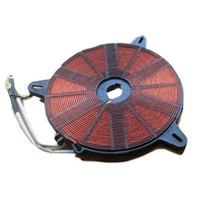
Round plates seem more stable because stress distributes evenly-until thermal cycling starts. During repeated heating/cooling:
Round plates develop concentric stress rings (like tree rings) that amplify toward the center. The result? A "doming" effect that permanently distorts the plate after ~200 cycles (at 250°C+).
Square plates (with proper design) force stresses to fight each other diagonally between corners. Our X-braced nickel-chromium wire pattern turns this into an advantage-it's essentially a built-in "stress cage".

The Corner Paradox
Conventional wisdom says corners are weak points. In reality:
Round plates fail at the center (max stress zone) where all expansion vectors meet. Once the center warps, heat distribution goes erratic (+/-15°C deviations common).
Our square plates intentionally redirect stress to the corners via:
45-degree grain alignment in the steel substrate (most mills roll metal in straight lines-we pay extra for diagonal grain)
Dual-stage corner welds (first pass conductive, second pass structural)
"Sacrificial" corner slots that absorb expansion (sounds counterintuitive-ask for our SEM microscope footage)

Real-World Data Don't Lie
In salt-spray cyclic tests (300°C ↔ 25°C, 5-minute cycles):
Standard round plate: 0.8mm warp after 50 cycles (IPC-6012 Class 3 failure)
Cheap square plate: 1.2mm warp (poor corner engineering)
Our SQ-7X model: 0.3mm warp at 200 cycles (still within MIL-STD-810G spec)
Pro Tip: The worst warping happens during cooldown-not heating. That's why we use asymmetric cooling channels in thicker plates (3mm+). Most suppliers ignore this because testing requires infrared thermal cameras most don't own.