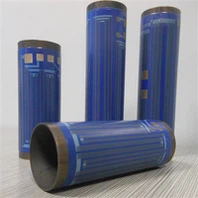
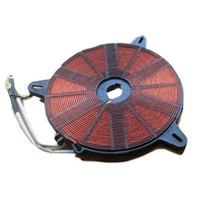
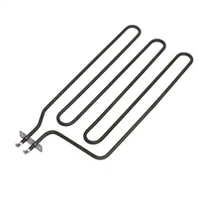
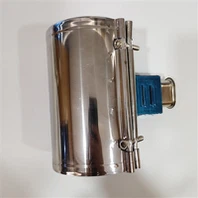
Silicone rubber heaters are chosen because of their blend of material properties and functionality.
There are a large number of rubbers on the market today for engineers and designers to choose from.

The number of different choices can make it confusing to know which rubber is best for certain applications. Properties such as tear strength, compression deflection, temperature resistance and elongation may all influence the choice.
Silicone rubber is ideal for outdoor use because it is highly resistant to environmental conditions, such as weathering from frost, snow and rain, as well as UV and ozone stress.
Another benefit of silicone (especially sponge) is the low compression rate. This means that if silicone is compressed over time, it will recover and retain its original shape. This is particularly useful when used in pipework, valves and tight spaces around flanges.
Because silicone is an inert polymer that is primarily non-reactive, it is popular in the food and beverage industry because it has little to no effect on the product itself. It is used worldwide in a variety of applications from dairy piping to brewery hoses. It is approved to meet FDA, BfR and WRAS standards, allowing it to come into contact with food or beverages without causing contamination.
Benefits of using silicone heating:
Although silicone is a popular material in many applications, it is not as widely used as some other cheaper materials, so there are not as many economies of scale. However, for many companies, the cost of using silicone makes sense because it is the most flexible material for extreme temperature environments where other rubbers simply do not work, and it is also non-reactive, stable and resistant to harsh environments.
Because it is a flexible material, silicone heaters can fit into tight spaces that other mainstream heaters cannot reach. Silicone heaters are often used in residential and commercial applications where space is an issue. What makes silicone so popular in so many heating products and applications is its ability to withstand a wide range of temperatures while maintaining its physical structure and properties. Silicone is an ideal material to withstand temperatures as low as -60°C and as high as 230°C continuously.
Spiral Pipe Heating Silicone Heaters have good resistance to weather & ageing, fungus & bacteria, acetone, alcohol, formic acid, brake fluid, acetic acid, greases, hydrochloric acid 10%, sulphuric Acid 10%, waxes and plasticisers. There are a wide range of uses for spiral heaters where a pipe surface temperature of up to 200°C is required as they are well suited to fit both straight or curved pipework. Spiral type silicone heaters are designed to suit a range of either rigid or flexible, small diameter pipes and are suitable for many applications including gas or fluid delivery, semi conductor processes, frost protection, anti condensation and heat loss maintenance.