Silicone spiral heating belts represent a significant advancement in thermal technology, specifically engineered to overcome the limitations of traditional flat heating elements. Here's why they are the optimal choice for challenging industrial, medical, and commercial applications:
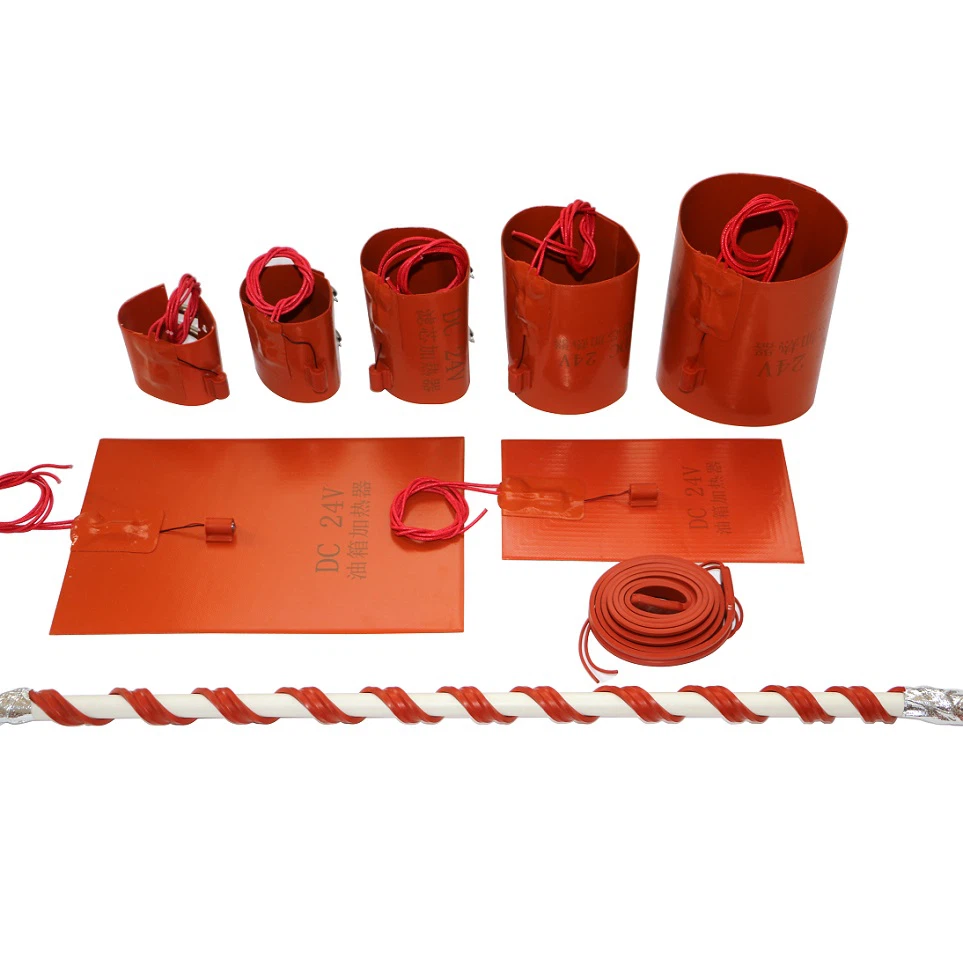
1. Unmatched Flexibility & Durability
Unlike conventional heaters with straight wire elements, spiral belts use coiled resistance wires. This spring-like structure allows them to withstand repeated bending, twisting, and vibration without failure-making them ideal for robotic arms, moving machinery parts, and irregular surfaces.
2. Superior Performance on Complex Geometries
Standard heaters often create air gaps on curved or uneven surfaces, leading to inefficient heating and hotspots. Spiral belts conform tightly to pipes, valves, cylinders, and contours, ensuring uniform heat distribution and energy efficiency.
3. Resilience in Extreme Conditions
Encapsulated in high-grade silicone rubber, these belts offer:
Excellent thermal conductivity
Resistance to moisture, chemicals, and corrosion
Stability across a wide temperature range (-60°C to 250°C)
They thrive in harsh environments like chemical processing, food production, and outdoor equipment.
4. Long-Term Reliability & Cost Efficiency
The spiral design disperses mechanical stress, drastically reducing wire fatigue and premature breakdown. This translates to:
Reduced downtime and maintenance
Lower lifetime costs compared to frequently replaced standard heaters
5. Customizable Solutions for Unique Needs
Available in various power densities, voltages, and sizes-and with integrated sensors or custom shapes-spiral belts can be tailored for specialized tasks in:
Aerospace (avionics heating)
Medical (diagnostic equipment warming)
Energy (solar panel de-icing)
Conclusion:
For applications where reliability, flexibility, and efficiency are non-negotiable, silicone spiral heating belts deliver unparalleled performance. They are not just a component but a strategic upgrade for any system requiring robust and adaptive thermal management.