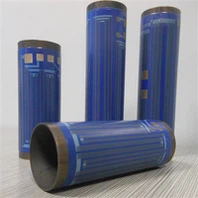
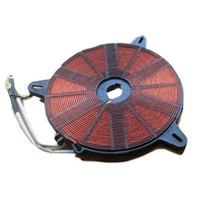
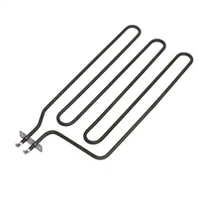
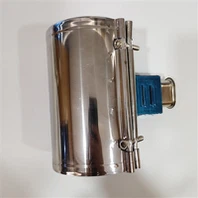
In the world of high-speed tissue packaging, temperature control is everything. Too hot, and the packaging film melts through or sticks to the seal jaws. Too cold, and the seal fails-resulting in loose packs, product waste, and costly downtime.
But what component actually makes that precision temperature control possible?
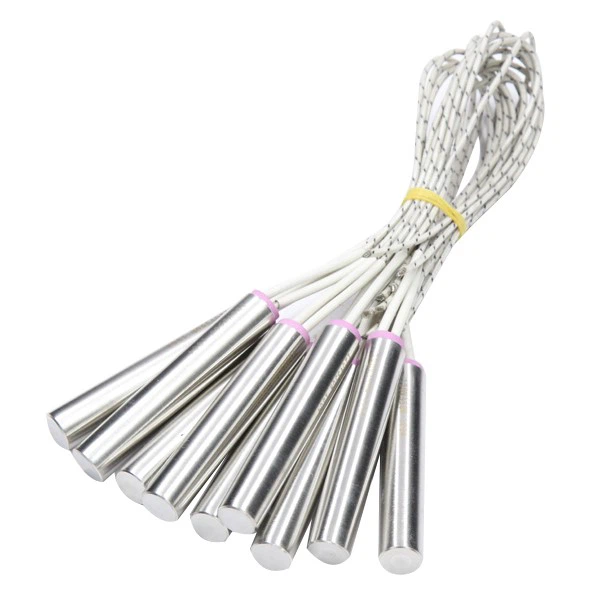
The answer is the Cartridge Heater.
Often hidden inside the seal jaws, rotary bars, or forming tubes, cartridge heaters are the unsung heroes of the tissue packaging industry. Without them, consistent, high-speed sealing would be impossible.
In this article, we'll explore why cartridge heaters are truly the "heart" of your tissue packager's thermal system-and how choosing the right one can transform your production line.
1. They Deliver Heat Exactly Where It's Needed
Unlike external heating elements that lose energy to the surrounding air, cartridge heaters are inserted directly into the sealing tooling.
Precision placement: The heater sits inside a precisely drilled hole in the seal jaw or rotary bar, transferring heat directly to the sealing surface.
Minimal heat loss: Because the heat is generated inside the metal mass, energy is used efficiently-warming the tooling quickly without wasting power.
💡 Why this matters for tissue packaging: Tissue lines run at high speeds. Any delay in reaching set temperature means wasted film and rejected packs. Cartridge heaters minimize warm-up time and ensure the sealing surface is ready the moment production starts.
2. They Enable Consistent Temperature Across the Seal Width
Tissue packaging machines often have wide sealing jaws-sometimes 400mm or more across. Uneven temperature across that width leads to:
Seals that are strong on one end and weak on the other
Film wrinkling or tearing
Increased scrap rates
High-quality cartridge heaters-especially those with uniform watt density and precise straightness tolerances-ensure that heat is distributed evenly along the entire length of the seal jaw.
Technical note: A cartridge heater that is even slightly bent or has uneven internal resistance distribution will create hot spots, compromising seal integrity. This is why precision manufacturing matters.
3. They Respond Rapidly to Temperature Control Loops
Modern tissue packaging machines use PID controllers to maintain exact temperatures-often within ±1°C. Cartridge heaters are ideal for this application because of their low thermal mass and fast response time.
Rapid heat-up: Get from cold start to operating temperature in minutes, not hours.
Quick recovery: After a seal cycle draws heat away from the jaw, a quality cartridge heater brings the temperature back to setpoint almost instantly.
Minimal overshoot: Precision-wound heaters allow for tighter control, preventing the temperature spikes that cause film burn-through.
⚙️ Operational impact: Faster response means higher machine speeds without sacrificing seal quality. For high-speed tissue lines running at 80–120 packs per minute, this is critical.
4. They Withstand the Demands of High-Vibration Environments
Tissue packaging machines are not gentle equipment. Vibrations from:
High-speed servo motors
Reciprocating seal jaws
Continuous film unwinding
…all take a toll on heating elements.
Cartridge heaters designed for packaging applications feature:
Heavy-duty cold ends to absorb vibration stress
Strain-relieved lead wires to prevent fatigue fractures
Swaged construction that compacts the internal insulation, making the element more resistant to shock
Without these features, standard heaters fail prematurely-often within weeks or months. A rugged cartridge heater, by contrast, can last years in the same application.
📊 Cost impact: Replacing a failed heater may cost only $50–100 in parts, but the downtime can cost thousands per hour. Investing in reliable cartridge heaters directly improves OEE (Overall Equipment Effectiveness).
5. They Enable Versatility Across Different Packaging Materials
Tissue manufacturers often run multiple product types on the same packaging line:
Plain tissue – standard heat-seal films
Wax-coated (greaseproof) tissue – requires lower, more stable temperatures to prevent wax transfer
Laminated films – needs higher temperatures for proper bonding
Non-woven materials – demands gentle, uniform heat to avoid melting
Cartridge heaters allow operators to dial in the exact temperature profile needed for each material. With the right heater design (watt density, surface finish, and thermocouple integration), a single machine can switch between materials with minimal changeover time.
Conclusion: Choose the Right "Heart" for Your Machine
Just as the heart must be strong, reliable, and responsive to keep a body healthy, your cartridge heater must be all of these things to keep your tissue packaging machine running at peak performance.
Standard off-the-shelf heaters may fit the hole, but they won't deliver the:
Temperature uniformity
Vibration resistance
Rapid response
Long service life
…that high-speed tissue packaging demands.
When selecting cartridge heaters for your tissue packager, look for:
✅ Precision-ground diameters for optimal fit
✅ Uniform watt density for even heating
✅ Heavy-duty lead wire strain relief
✅ Custom lengths and wattages matched to your application
Want to Learn More?
If you're experiencing:
Inconsistent seals
Frequent heater burnouts
Long warm-up times
Temperature overshoot issues
…it may be time to reevaluate your cartridge heater specification.
📞 Contact us to discuss your tissue packaging application. We'll help you select the right cartridge heater to keep your line running smoothly, pack after pack.

One-stop Heating & Controllers Factory in China
Upgrade your heating systems with Jaye Heater's premium components. For reliable heating elements and precise thermal controllers that ensure performance and safety, contact our experts today for a quote and technical support. Let's find your perfect heating solution.