finned heater, also known as a finned tubular heater or a finned element, is an electrical heating element designed to maximize surface area and improve convective heat transfer to air or gas. The "fins" are metal discs (aluminum, stainless steel, etc.) pressed or wound onto a tubular sheathed element. This design drastically increases the surface area compared to a bare tubular element, allowing for more efficient heat dissipation and lower operating temperatures for the same wattage.
They are primarily categorized based on several key factors:
1. By Heating Element Construction & Sheath Material
The core of the finned heater is the resistance wire inside a metal tube (sheath), packed with magnesium oxide (MgO) for electrical insulation and thermal conductivity.
- Standard Nickel-Chromium (NiCr) Alloy Wire: The most common type. Offers a good balance of cost, performance, and longevity for general-purpose heating.
- Iron-Chromium-Aluminum (FeCrAl) Alloy Wire: Can operate at higher temperatures than NiCr and offer longer life in certain applications but are less ductile and can be more brittle.
- Sheath Material: Incoloy 800 / 840/ Stainless Steel (SS 304, SS 316, SS 321)/Carbon Steel

2. By Fin Type and Attachment Method
The fin design is critical for air flow and heat transfer efficiency.
- G-Type (Wrapped Fins): A continuous strip of fin material is helically wound onto the tubular sheath. This is the most common and cost-effective type. It provides a good balance of surface area and structural integrity.
- L-Type (Pressed Fins): Individual square or round fin discs are mechanically pressed (or "crimped") onto the sheath. This creates a tighter mechanical bond and often better thermal contact than wrapped fins, leading to slightly higher efficiency. Common in applications with vibration.
- LL-Type / Embedded Fins: A more advanced version where the fins are pressed into a pre-grooved sheath, creating an exceptionally strong mechanical lock and optimal heat transfer. Ideal for high-temperature applications or where thermal cycling could loosen other fin types.
- Aluminum Fins: The standard choice for heating air. Aluminum's high thermal conductivity makes it extremely efficient.
- Stainless Steel Fins: Used when the environment is corrosive, or the operating temperature exceeds the limits of aluminum. Less efficient than aluminum but more durable in harsh conditions.
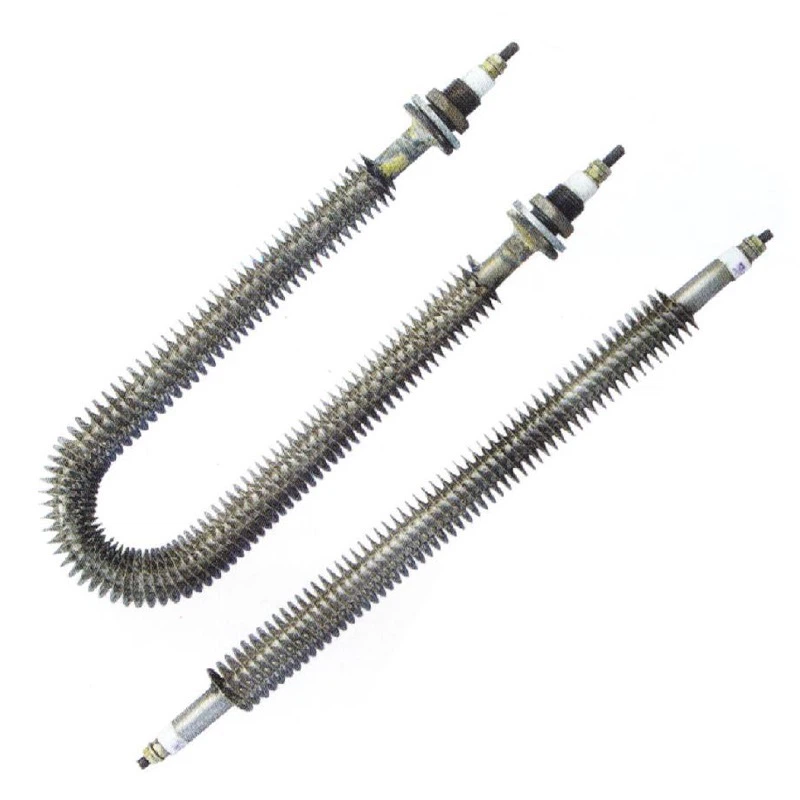
3. By Overall Physical Configuration
This refers to the shape and housing of the finned element assembly.
- Single Finned Tube: A straight length of finned tubular element. It is the basic building block.
- U-Bend / Hairpin Finned Heaters: A single tube bent into a "U" shape. This allows for a more compact design with two heating legs connected by a single return bend.
- Finned Strip Heaters: Multiple finned tubes are arranged in a flat, rectangular frame with mounting brackets. This creates a uniform, large heating surface ideal for mounting on walls or ductwork.
- Finned Ring Heaters: Finned elements are bent into a circular configuration to fit around a specific pipe, nozzle, or part for process heating.
- Custom Coils & Assemblies: Finned tubes can be bent into complex shapes (serpentine, zig-zag) and assembled into custom cabinets or plenums with integrated fans for forced-air convection.

4. By Application and Special Features
- Duct Heaters: Typically finned strip heaters designed to be mounted inside HVAC ductwork for space heating. Often include over-temperature protection and airflow switches.
- Process Air Heaters: Heavy-duty industrial heaters, often with Incoloy sheaths and stainless fins, designed for high temperatures in ovens, furnaces, and manufacturing processes.
- Explosion-Proof Finned Heaters: Housed in enclosures designed to contain any internal explosion and prevent ignition of flammable gases or dust in the surrounding atmosphere.
- Weatherproof / IP-Rated Heaters: Housed in enclosures with ingress protection (e.g., IP54, IP66) for outdoor use or washdown environments.


In conclusion, the selection of a finned heater type depends on a careful analysis of the operating temperature, environment (corrosive, clean), required airflow, spatial constraints, and necessary safety certifications. The combination of sheath material, fin type, and physical configuration allows for precise engineering to meet a vast array of heating challenges.