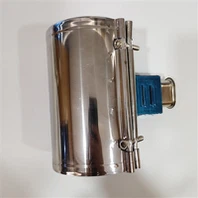
Choosing the right ceramic band heater for packaging machinery is critical for reliability, product quality, and energy efficiency. Packaging machines often require precise, consistent heat for processes like sealing, shrinking, welding, or forming.

Here's a detailed guide on what to look for, broken down into key considerations:
1. Temperature Requirements & Thermal Profile
Maximum Operating Temperature: Ceramic heaters typically range from 750°F to 1400°F (400°C to 760°C). Know the exact temperature needed for your packaging material (e.g., PE, PVC, PET shrink tunnels, foil sealing).
Heat Uniformity: The ceramic elements should be evenly spaced and the wiring should promote a consistent thermal profile across the entire band. Hot spots can ruin product, while cold spots cause sealing failures.
Heat-Up Time: How quickly does the heater need to reach setpoint? This affects wire gauge and watt density choices.
2. Electrical Specifications
Watt Density (W/in²): This is the most critical factor after temperature. For packaging machinery, lower to medium watt densities are often safer and more durable.
Low Density (10-15 W/in²): Excellent for uniform heat, long life, and delicate materials. Ideal for most sealing applications.
Medium Density (15-25 W/in²): For faster heat-up or higher temperature processes.
Avoid high watt density (>30 W/in²) unless absolutely necessary, as it stresses the element and insulation, leading to shorter life.
Voltage & Phase: Match your plant's power supply (e.g., 120V, 240V, 480V single or three-phase).
Wattage: Correctly sized for the thermal mass of your machine part (sealing jaw, bar, tube) and the required process temperature.
3. Mechanical & Physical Design
Dimensions & Fit:
Inner Diameter (ID): Must snugly fit the sealing bar, tube, or horn. A tight fit ensures efficient heat transfer.
Band Width & Thickness: Must cover the intended heating area without interfering with other machine components.
Construction Quality:
Ceramic Segments: High-purity, alumina-based ceramics resist thermal shock and cracking.
Termination & Wiring: Look for high-temp lead wire (fiberglass or silicone), robust terminals, and strain relief. This is a common failure point on packaging machines due to constant vibration and movement.
Clamping Mechanism: Stainless steel banding with a secure, easy-to-tighten latch. It should apply even pressure without cracking the ceramics.
Customization: Can the supplier provide cut-outs for sensors, bolts, or irregular shapes? Packaging machine designs are often space-constrained.
4. Material & Environmental Compatibility
Process Contaminants: Will plastic film, adhesive, or ink residue drip or fume onto the heater? A stainless steel sheath or radiant face plate adds protection and eases cleaning. Inert coatings can also help.
Atmosphere: Standard units are for clean, dry air. If used near coolers or in humid environments, discuss this with the supplier.
Cycling & Vibration: Packaging machines cycle continuously. The heater must withstand constant thermal expansion/contraction and mechanical vibration without failing.
5. Safety & Compliance
Insulation Resistance: Proper insulation between the heating coil and the sheath/casing is non-negotiable to prevent electrical shorts.
Certifications: Look for heaters that are UL/cUL recognized, CE marked, or comply with other relevant regional safety standards. This is crucial for OEMs and plant safety.
Grounding: A proper, reliable grounding point must be included.
6. Supplier & Support Factors
Application Expertise: Choose a supplier who asks detailed questions about your machine, process, and material. They should understand packaging applications.
Lead Time & Availability: Can they deliver quickly or provide spares to minimize costly downtime?
Warranty & Technical Support: A clear warranty and accessible technical support are invaluable.
Application-Specific Checklist for Packaging Machinery
- For Shrink Tunnels & Sleeve Applicators: Focus on uniformity and length. Bands are often long; ensure the heater maintains temperature across the entire entrance/exit.
- For Impulse Sealers & Continuous Band Sealers: Fast response time and precise temperature control are key. The heater must cycle with the jaw movement. Durability against mechanical impact is critical.
- For Hot Air Sealers/Welders: Often use custom-shaped platen heaters. Ensure the design matches the weld head exactly.
- For Foil Induction Cap Sealing: The band heater heats the sealing head. Temperature stability is paramount for a consistent seal.
At Jaye Heater, we specialize in providing precisely that. We understand the critical demands of packaging machinery. Our ceramic band heaters are not only built to the highest standards for durability and performance, but they are also fully customizable to your exact requirements-whether it's specific dimensions, cut-outs, wattage, or special materials to handle tough environments. We work with you to ensure a perfect fit and optimal performance for your unique application.

One-stop Heating & Controllers Factory in China
Upgrade your heating systems with Jaye Heater's premium components. For reliable heating elements and precise thermal controllers that ensure performance and safety, contact our experts today for a quote and technical support. Let's find your perfect heating solution.