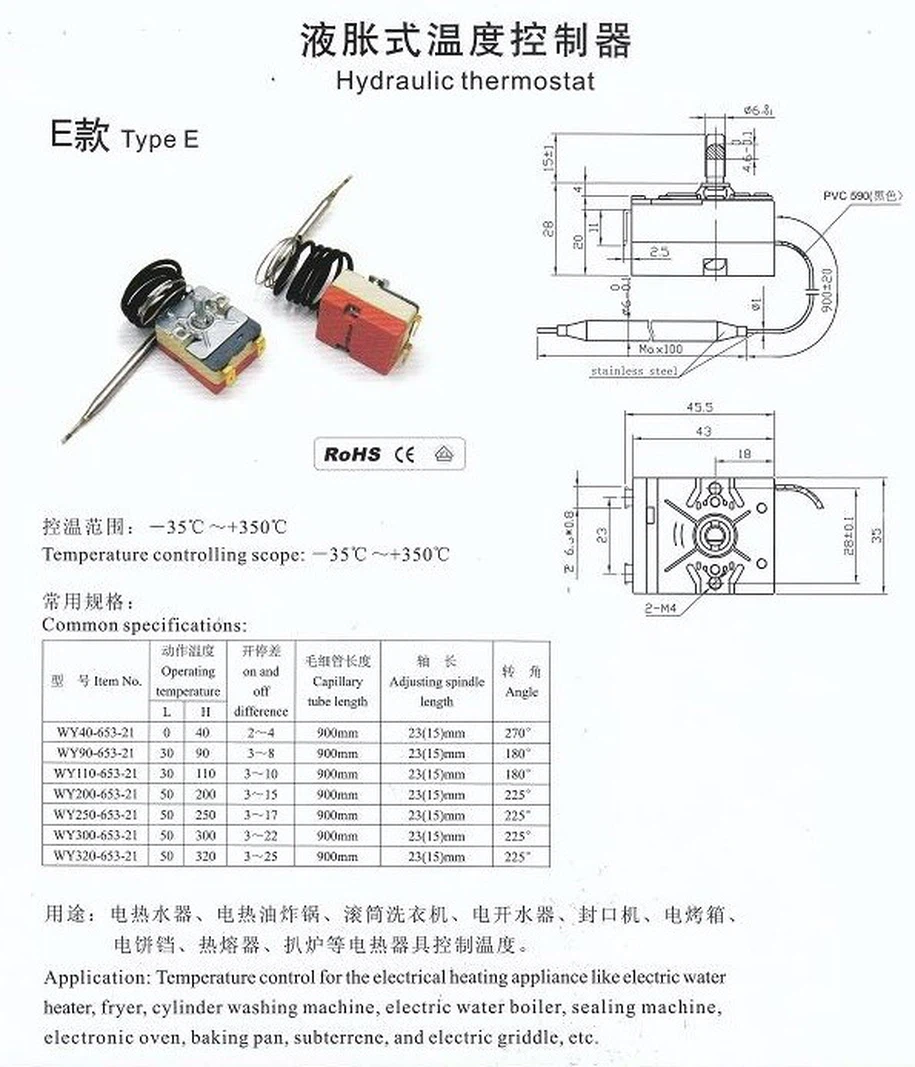
A capillary thermostat is a temperature control device with a specific structure designed to regulate temperature based on the expansion and contraction of a temperature-sensitive fluid within a capillary tube.
Here's an overview of the typical structure of a capillary thermostat:
1. Capillary Tube: The capillary tube is a thin, flexible, and elongated tube usually made of materials like copper or stainless steel. It is filled with a temperature-sensitive fluid, often a gas or liquid. The length of the capillary tube can vary depending on the application and the desired location for temperature sensing.
2. Sensing Element or Bulb: At the end of the capillary tube, there is a sensing element or bulb. This is the part of the thermostat that is placed in the area where temperature control is needed, such as inside an oven, a water heater, or an industrial process. The bulb is in direct contact with the environment whose temperature is to be controlled.
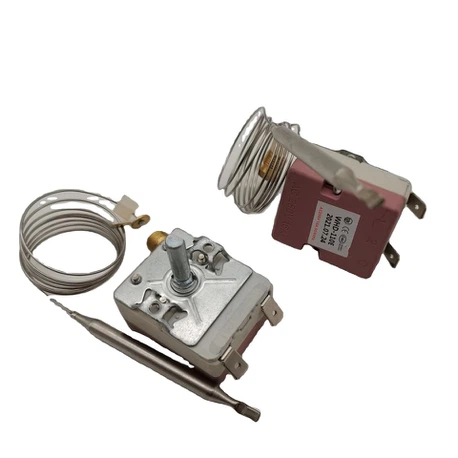
3. Control Mechanism: The control mechanism is responsible for interpreting the temperature changes detected by the sensing element and taking action to regulate the temperature. The specific control mechanism can vary, but it typically includes one of the following components:
- Bimetallic Strip: This strip consists of two different metals with different coefficients of thermal expansion bonded together. When heated or cooled, the metals expand or contract at different rates, causing the strip to bend. This bending movement is used to open or close an electrical circuit, controlling the heating or cooling element.
- Diaphragm: Some capillary thermostats use a diaphragm instead of a bimetallic strip. The diaphragm responds to changes in pressure caused by the temperature-sensitive fluid's expansion and contraction within the capillary tube. This pressure change activates a switch that controls the temperature.
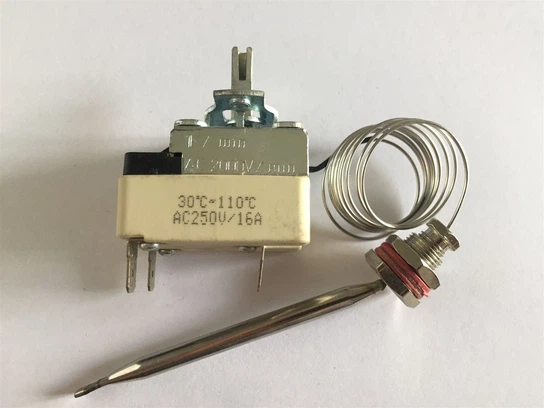
4. Temperature Setting: Many capillary thermostats have an external dial or knob that allows users to set the desired temperature. Adjusting this dial changes the reference point for the thermostat's control mechanism, so it knows when to turn the heating or cooling element on or off.
5. Housing: The thermostat components, including the capillary tube, sensing element, and control mechanism, are housed within a protective casing. This housing ensures the thermostat's durability and protection from environmental factors.
6. Electrical Connections: Capillary thermostats are connected to the electrical circuit of the heating or cooling element they control. They typically have electrical terminals or connectors for wiring.
The basic principle of operation for capillary thermostats involves the expansion and contraction of the temperature-sensitive fluid in the capillary tube, which leads to mechanical movement in the sensing element. This movement is then translated into electrical control signals to maintain the desired temperature in the controlled environment. The specific design and features of a capillary thermostat can vary depending on the intended application and manufacturer specifications.