As an air fryer manufacturer, you know that even heating is the key to delivering crispy, golden, and delicious results. The design of your heating element-especially the convection coil heater-plays a vital role in how effectively heat is distributed throughout the cooking chamber.
So, what's the best shape and layout of a convection coil heater to achieve optimal performance?
Let's break it down from an engineering and practical perspective:
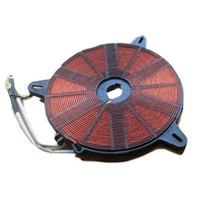
🔁 1. Circular Spiral Layout – The Industry Favorite
A flat spiral (coil) layout arranged in a circular or oval pattern is widely considered the most efficient shape for air fryer convection heating. Here's why:
360° Heat Distribution: The circular design allows hot air to circulate evenly from the center outwards.
Fits Perfectly Above or Around the Fan Blade: This shape aligns with the airflow design of most air fryers, enhancing convection.
Minimizes Cold Spots: Heat is evenly spread across the cooking basket area, ensuring uniform cooking on all sides.
Compact Design: The spiral layout is space-saving, allowing for a slim upper chamber while delivering high power density.
🛠️ Common Specs:
Outer diameter: 90–140mm | Coil spacing: 3–5mm | Mounting: Center bolt or 3-point bracket.
🔄 2. 3D Ring or Multi-Layer Spiral for High Power Models
For larger-capacity or multi-functional air fryers, a 3D coil layout (such as a stacked spiral or curved U-shape) is sometimes used to:
Deliver higher wattage in the same footprint.
Add depth to the heating zone, allowing for vertical airflow layers.
Achieve more intense browning and faster preheat cycles.
⚙️ Example Application:
In commercial air fryers or hybrid oven-fryer models that require fast, high-intensity heating (1500W+).
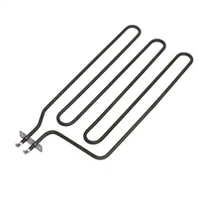
↔️ 3. Linear Zig-Zag Coil – Less Common, Lower Efficiency
While some legacy air fryers still use straight or zig-zag coil designs, these layouts tend to suffer from:
Uneven airflow around coil corners.
Larger dead zones where food may not cook evenly.
Higher thermal loss at edges of the chamber.
This layout is not recommended unless your product design constraints prevent a spiral shape.
📏 Key Coil Design Factors for Even Heating:
| Factor | Impact on Air Frying |
|---|---|
| Coil Diameter | Determines heat spread radius; must match chamber size |
| Pitch (spacing) | Affects airflow and surface temperature distribution |
| Height of coil | Higher coils can support multi-layer air circulation |
| Position vs. fan | Must align closely to fan blades for max airflow contact |
| Mounting angle | A slight tilt can direct airflow toward basket edges |
✅ Best Practices for Coil Layout in Air Fryers:
✔️ Position the coil directly above the fan for maximum convection lift.
✔️ Use a uniform spiral gap to allow consistent airflow between coils.
✔️ Ensure mounting brackets do not block airflow or radiated heat.
✔️ Choose corrosion-resistant materials like SUS304 or SUS316 for long-term performance in greasy environments.
🔚 Final Thoughts
Choosing the right convection coil shape and layout isn't just about fitting a heater into a case-it's about enhancing cooking performance, user satisfaction, and energy efficiency.
If you're developing your next-generation air fryer, our team can help you design a custom spiral coil heater optimized for your chamber size, power specs, and airflow structure.
👉 Let us help you build it smarter, smaller, and faster.
📩 Contact us today to get engineering support or request a custom quote.