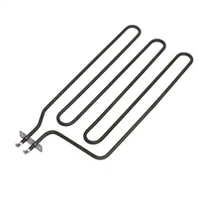
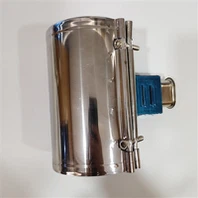
Mica and ceramic band heaters are both commonly used to heat barrels, nozzles and manifolds, however their different properties affect their performance, life expectancy and suitability. Here is a fundamental comparison of the differences:
1-Core Construction & Insulating Material:
Mica Band Heaters: Use layered sheets of natural mica mineral as an electrical insulator that is wrapped around the resistance wire (nichrome or similar). The heater element is likely sandwiched between layers of mica and ultimately housed inside a metal outer sheath (normally stainless steel). Mica provides electrical insulation but allows heat transfer.
Ceramic Band Heaters: Use molded high-temperature ceramic material (most often magnesium oxide - MgO, or alumina-based compounds) as the insulator. The resistance wire is cast directly in the dense, rigid ceramic core which is then housed inside a metal sheath (most often Incoloy or stainless steel)
2-Temperature Ability:
Mica: Generally rated to lower maximum temperatures, generally up to ~450°C - 500°C. Once you start to exceed this you risk degrading the mica.
Ceramic: Going to be rated considerably higher at ~650°C - 750°C for standard parts and perhaps even higher for special ceramics. This is most important for high-temperature engineering plastics (like PEEK, PPS, PEI) or processes that may use very high barrel temps.
3-Durability & Mechanical Strength:
Mica: Much more mechanically fragile. Mica sheets may crack or delaminate due to:
Physical impact during installation/removal.
Thermal distortion during construction or use (or repeated thermal cycling (also build-up from repeated expansion and contraction).
Vibration.
Moisture ingress can also be a source of degradation to mica over time.
Ceramic: Moulded ceramic core is much more robust and durable:
Highly resistant to physical damage and vibration.
Better thermal shock resistance (can handle repeated heating/cooling cycles somewhat better).
Less degradation from moisture or typical processing environments.
4-Thermal Efficiency & Heat Transfer:
Mica: With layered construction, there can be slightly higher heat loss through the ends/sides. Good heat transfer to the barrel normally, but can be less uniform than ceramic if damaged.
Ceramic: Has better thermal efficiency and lower heat loss. The dense ceramic is good insulation in directing heat more inward to the barrel. It's heat transfer is more uniform and generally consistent.
5 - Power density and wattage:
Mica: Generally has lower power density (watts per square inch/cm²) due to the thermal limits of the mica insulation.
Ceramic: Can handle much higher power densities due to the insulating properties and capability of the ceramic being much higher temperature. This allows for smaller heaters, or more rapid heating on a given barrel size.
6 - Flexibility vs rigidity:
Mica : Due to being layered sheets, these are in and of themselves ,more flexible.
This also can allow for slightly simpler installation on problematic barrel profiles, especially the smaller diameters or slightly out-of-round barrels.
Ceramic: Rigid due to the molded core.
This has to be sized exactly correct as to barrel diameter, and is not as forgiving on irregular surfaces. However, when sized perfectly, the ceramic cores will provide excellent, consistent contact.
7 - Cost:
Mica: Typically, lower initial cost.
Ceramic: typically higher initial cost, however usually offers better total cost of ownership (TCO) due to longer life, higher efficiency (energy savings), less downtime, and better performance on purpose built demanding applications.