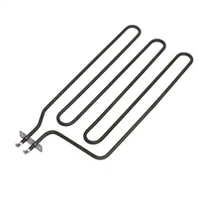
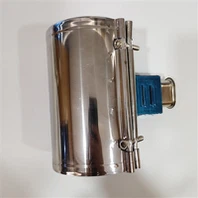
Finned heaters play a crucial role in various industrial and commercial applications where precise and efficient heating is essential. These heaters are designed with fins to enhance their surface area, facilitating better heat transfer. The thermal efficiency of finned heaters is a key factor in determining their performance and overall energy consumption. In this article, we'll explore the thermal efficiency ratings of different types of finned heaters.
1. Ceramic Finned Heaters:
Ceramic finned heaters are known for their excellent thermal efficiency. The ceramic material provides high-temperature resistance and uniform heat distribution. The fins are designed to maximize the surface area exposed to the surrounding medium, ensuring efficient heat transfer. These heaters are often used in applications where rapid and precise heating is required, such as in plastic molding and semiconductor processing.
2. Stainless Steel Finned Heaters:
Stainless steel finned heaters are commonly used in environments requiring corrosion resistance and high-temperature heating. The thermal efficiency of these heaters is influenced by the thermal conductivity of stainless steel and the design of the fins. Properly engineered stainless steel finned heaters can achieve high efficiency in transferring heat to the target medium. Applications include food processing, chemical industries, and HVAC systems.
3. Aluminum Finned Heaters:
Aluminum finned heaters are lightweight and offer good thermal conductivity. The fins are typically designed to enhance heat dissipation and improve overall efficiency. These heaters are often used in applications where quick response times and cost-effectiveness are crucial. Aluminum finned heaters find applications in air heating systems, drying processes, and space heating.
4. Tubular Finned Heaters:
Tubular finned heaters are versatile and can be customized for various applications. The efficiency of these heaters depends on factors such as the sheath material, fin design, and the watt density. Tubular heaters with fins are commonly used in air heating, convection ovens, and industrial drying processes. Proper selection of materials and design is essential to achieving optimal thermal efficiency.
5. Infrared Finned Heaters:
Infrared finned heaters utilize radiation for heating, offering a unique approach to thermal efficiency. These heaters emit infrared radiation that directly heats objects and surfaces without the need for a medium in between. The efficiency of infrared finned heaters is influenced by factors such as wavelength, surface emissivity, and the reflective properties of the surroundings. They are often employed in applications like paint curing, food processing, and space heating.
6. Copper Finned Heaters:
Copper is known for its excellent thermal conductivity, making copper finned heaters efficient in transferring heat. These heaters find applications in environments where high temperatures are required, such as in the manufacturing of chemicals and petroleum products. The design of the fins plays a crucial role in maximizing the surface area for efficient heat exchange.
Conclusion:
In conclusion, the thermal efficiency of finned heaters is influenced by various factors, including the material used, fin design, and the intended application. Understanding these factors is essential for selecting the most suitable finned heater for a specific heating requirement. Whether it's the rapid response of ceramic finned heaters, the corrosion resistance of stainless steel, or the cost-effectiveness of aluminum, each type of finned heater offers unique advantages based on the desired outcome. Proper sizing, installation, and maintenance are also critical in ensuring optimal thermal efficiency throughout the lifespan of the finned heater.
Know More about Finned Heaters