What are the Materials of the Electric Heating Tube According to the Working Environment?
Electric heating tube is a kind of heating element that is often used in our lives. It is understood that there are many situations that cause electric heating tube leakage, such as temperature problems, and long-term use without maintenance. Let's take a look at the material of the electric heating tube according to the working environment.
The materials of the electric heating tube according to the working environment:
1. Stainless steel heating tube. There are many different grades of stainless steel heating tube, such as stainless steel 304, stainless steel 321, stainless steel 316L and so on. The normal heating tube is mainly made of stainless steel 304, which is also the material that customers choose the most during work. The one that is better than stainless steel 304 is stainless steel 321. Stainless steel 316L is generally suitable for liquids with PH>7-14, that is, suitable for alkaline liquids, but it is generally not recommended to be used in strong acids and alkalis.
2. Titanium heating tube. Titanium heating tube is generally suitable for chromium plating, acid copper, nickel plating, passivation, filling, oxidation bath, chromic acid anodization, phosphating acid tin plating and other processes, so the price of titanium heating tube is relatively high.
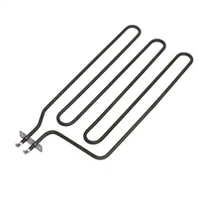
Single-head electric heating tube
3. Teflon heating tube. Teflon heating tube is also called Teflon heating tube, PTFE heating tube, commonly known as PTFE tube. Teflon heating tubes are generally suitable for corrosive liquids such as strong acids and alkalis. The general process temperature is ≦105℃. The advantages of Teflon heating tubes are non-sticking, non-scaling, uniform surface heat dissipation, but the price is also very high. .
4. Quartz heating tube. Quartz heating tubes are generally suitable for anti-corrosive liquids, except for hydrofluoric acid.