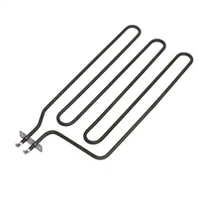
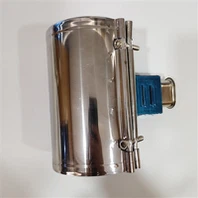
Choosing the right silicone rubber heater is critical for performance, safety, and cost-effectiveness. These heaters are not one-size-fits-all components, and their specifications must align precisely with your application. Here are the ten most critical factors to guide your selection process.
1. Power Density and Wattage
The Most Fundamental Specification
Power density (watts per square inch or cm²) directly determines how much heat the element can generate. Incorrect wattage can lead to failure or inefficiency.
Too Low: Fails to reach or maintain target temperature.
Too High: Can overheat, degrade materials prematurely, and create safety hazards.
Action Step: Accurately calculate the thermal load required to compensate for heat loss to the environment and warm the object itself.
2. Operating Voltage
The Primary Electrical Constraint
The heater must be designed for the voltage available in your system (e.g., 12V DC, 24V DC, 110V AC, 220V AC).
Using a heater with the wrong voltage will result in incorrect power output (too hot or not hot enough) and can be dangerous.
Action Step: Confirm your system's stable voltage supply and communicate this as a non-negotiable requirement.
3. Operating Temperature and Temperature Uniformity
Not Just Maximum Heat
Maximum Operating Temperature: The highest temperature the heater can safely reach.
Temperature Uniformity: How evenly heat is distributed across the heating surface. Critical for processes where hot spots can damage materials or cause inconsistent results.
Action Step: Define both the required temperature and the maximum permissible temperature for your application.
4. Heater Geometry and Conformability
Shape Dictates Performance
Silicone rubber's key advantage is flexibility, but design is crucial.
Size & Shape: Must fit the available space and heating surface area.
Flexibility/Rigidity: Will it be bonded to a flat surface or wrapped around a curved pipe?
Cutouts & Holes: Accommodating mounting screws, sensors, or other protrusions.
Action Step: Provide a precise dimensional drawing or CAD model of the target surface.
5. Thermal Interface and Attachment Method
How Heat Gets From A to B
The efficiency of heat transfer depends on the interface.
Bonding: High-performance adhesive (PSA) provides the best thermal contact.
Mechanical Clamping: Useful for removable or serviceable applications.
Air Gaps: Are the enemy of efficiency. Ensure the heater design promotes direct, full-surface contact.
Action Step: Specify the intended mounting method and surface material to your supplier.
6. Environmental and Operational Conditions
The Real-World Stress Test
The operating environment dictates material and construction choices.
Exposure: Moisture, chemicals, oils, UV radiation, or abrasion.
Atmosphere: Standard, vacuum, or explosive atmosphere (requiring UL or ATEX certification).
Physical Stress: Continuous vibration, flexing, or pressure.
Action Step: List all environmental factors and duty cycles (continuous vs. intermittent operation).
7. Lead Attachments and Electrical Terminations
The Weakest Link
The point where wires connect to the heater element is a common failure point if not properly engineered.
Exit Location and Strain Relief: Wires should exit where they won't be bent or pulled.
Connector Type: Spade terminals, pigtail leads, or industrial connectors. Match to your system.
Insulation and Jacketing: Protect wires from the same environmental hazards as the heater.
Action Step: Request a robust termination solution suitable for your assembly process and end-use.
8. Temperature Sensing and Control Integration
For Precise Thermal Management
Most applications require active temperature control, not just heating.
Integrated Sensors: NTC thermistors or RTDs can be embedded during manufacturing for the most accurate, responsive control.
Sensor Placement: Critical for feedback accuracy. Should be in thermal contact with the point of interest.
Action Step: Decide on the control strategy (on/off, PID) and discuss sensor integration with your manufacturer.
9. Certifications and Compliance
Safety and Market Access
Required certifications depend on the industry and region.
Electrical Safety: UL, CSA, CE markings.
Medical: ISO 13485, biocompatibility (if contacting skin).
Food Grade: FDA-compliant or NSF-certified materials.
Action Step: Identify the mandatory certifications for your market and application early in the design phase.
10. Manufacturer Capability and Support
Your Partner, Not Just a Supplier
The complexity of custom heaters makes the manufacturer a key partner.
Engineering Support: Do they help design the solution or just build to print?
Prototyping Speed: Can they provide fast-turnaround prototypes for testing?
Quality Systems: What are their testing and quality control processes?
Action Step: Choose a manufacturer like JAYE with proven expertise in customization and application engineering to guide you through these factors.
Selection Checklist Summary
| Factor | Key Question to Ask |
|---|---|
| 1. Power | What wattage is needed to achieve and maintain my target temperature? |
| 2. Voltage | What is my system's stable power supply voltage? |
| 3. Temperature | What are my min, target, and max temperature requirements? Is uniformity critical? |
| 4. Geometry | Do I have an accurate drawing of the space and surface to be heated? |
| 5. Attachment | How will the heater be mounted? What is the surface material? |
| 6. Environment | Will it face moisture, chemicals, vibration, or other stresses? |
| 7. Terminations | Where and how should wires exit, and what connector type is needed? |
| 8. Control | Do I need an integrated sensor for temperature feedback? |
| 9. Compliance | What safety or industry certifications are mandatory? |
| 10. Partner | Does the manufacturer offer the engineering support I need? |
Why JAYE is Your Optimal Partner Across All 10 Factors:
At JAYE, we specialize in transforming your thermal requirements into high-performance, reliable silicone rubber heaters. Our expertise ensures each of the ten selection factors is not a challenge, but a step we master together:
Precision Engineering: We don't just accept your power and voltage inputs; we analyze your thermal model to recommend the optimal watt density and electrical design for efficiency and longevity.
Tailored Solutions: Your unique geometry, environmental challenges, and attachment requirements are the starting point for our custom design process. We manufacture what you need, not an approximate stock item.
Integrated Systems Thinking: We design with the complete system in mind, offering robust lead attachments and seamlessly integrating temperature sensors (NTC) for precise control, turning a heater into an intelligent thermal management node.
Compliance & Quality Assurance: Our commitment to quality and understanding of international standards (CE) ensures your product meets the necessary safety and market access certifications.
End-to-End Partnership: From initial concept through prototyping to volume production, we provide the engineering support and responsive collaboration that complex projects demand.
Choose JAYE, and choose certainty. We are more than a manufacturer; we are your dedicated partner in thermal innovation, ensuring the silicone rubber heater at the heart of your product is a source of performance, not a point of failure.
Ready to engineer the perfect thermal solution? Contact JAYE today to begin the conversation with our technical team.