The difference between finned tube heater and far-infrared heater?
What is the difference between the finned tube heater and far-infrared heater? How to choose finned tube heater and far-infrared heater? Is there a difference in energy saving, application, and principle? Let us take a look today.
The principle difference between finned tube heater and far-infrared heater

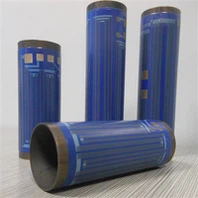
Far-infrared heater: Infrared rays with a wavelength greater than 2.5 microns are called far-infrared, and far-infrared heater refers to the use of wavelengths from 2.5 to 25 microns.
Radiant heating technology. The infrared heating element is made of a far-infrared radiation material processed by a special process, and is equipped with a resistance alloy wire as a heating element. Because the far-infrared radiation material can absorb almost all visible light and near-infrared light radiated by the heating wire, and can convert it into far-infrared radiation.
Therefore, the far-infrared radiation material is a kind of heating cattle with high conversion efficiency of far-infrared energy, and it has excellent far-infrared radiation characteristics. After being energized, 95% of the near-infrared light and visible light emitted by the heating alloy wire are blocked by the far-infrared radiating material, which absorbs the temperature increase in the tube to produce pure silicon-oxygen molecular vibration, which radiates 95% of the far-infrared light and near-infrared light Can be transformed into far-infrared light radiation.

Finned tube heater: The metal tube (including stainless steel, copper tube) is used as the shell, and the electric heating alloy wire (nickel-chromium, iron-chromium alloy wire) is uniformly distributed along the central axis of the tube. The gap filling and compaction has good insulation and thermal conductivity. The two ends of the nozzle are sealed with silica gel. At the same time, a metal heat sink (stainless steel sheet, iron sheet) is wound on the surface of the heater (electric heating tube). This structure combines the high surface load characteristics of the heating tube, the high heat conduction efficiency of the stainless steel fins (heat sink), and the good temperature resistance characteristics, so that the heater can emit more concentrated energy in a shorter time.