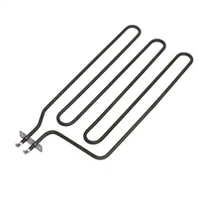
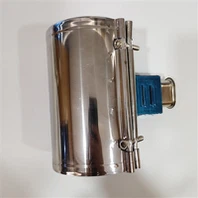
446 is also called SUS446, which is a high-chromium ferrite heat-resistant, oxidation-resistant, and sulfide-resistant alloy. Usually the applicable temperature is 1500-2100°F, but the gradient temperature intensity is relatively low. 446 is the only copper and brass heat-resistant alloy that can withstand melting. Compared with other high chromium ferritic stainless steels, 446 will become brittle in the 700-1000°F temperature range (885°F embrittlement). 446 cannot be used at this temperature unless the ductility reduction at room temperature is acceptable. The sigma phase shows that embrittlement occurs at a long-term use temperature of 1000-1300°F.
There is a ductile brittle transition temperature in the production of 446. Therefore, successful forming and bending require a low forming speed of the plate lock, edge finishing, and 250-400°F preheating, annealing, and if necessary, rapid air cooling at 1550-1650°F.
446 is welded in accordance with the conventional method. After preheating, you can add 300-600°F and then heating. Austenitic welding fillers such as AWS E310 or E312 can be used to maximize the ductility of surfacing.
Chemical composition, %
Cr C N Mn Si Ph S Fe
MIN 23.0-------
MAX 27.0 0.15 0.25 1.5 1.0 0.04 0.03 Balance
characteristic
-Oxidation resistance in the range of 2000°F
Resistance to vulcanization
Good thermal conductivity
Fusible copper
Low intensity
Usage
Neutral salt pot electrode
Regenerative heat exchanger
Melted copper alloy catheter
Oil burner parts
Combustion chamber
Industrial furnace and lining
Flue air lock
Boiler baffle
Glass mould
Soot blowing machine
Physical properties
Density: 0.270 lb/inch3
Melting point: 2640-2710°F
Temperature, °F 70 1200 1400 1600 1800
Thermal expansion rate, in/in°F x 10-6-6.3 6.4 6.7 7.3
Thermal conductivity
Btu • ft/ft2 • hr • °F 13.2 18.8 19.9 20.8 21.6
Modulus of Elasticity, psi x 106 30.4 20.0--
* 70°F to indicated temperature.