This is a compelling and strategic question that frames a key technological crossroads for the home of tomorrow. Here's a structured breakdown to explore the answer, suitable for an article, presentation, or product white paper.
Why This Question is Powerful
It immediately pits a humble, mature material against a futuristic vision, creating intrigue. It suggests a move beyond screens and voice control to ambient, physical intelligence-where our environments don't just inform us, but care for us through temperature.
The Case FOR Aluminum Foil as the Future
1. The Core Advantage: Unmatched Integration
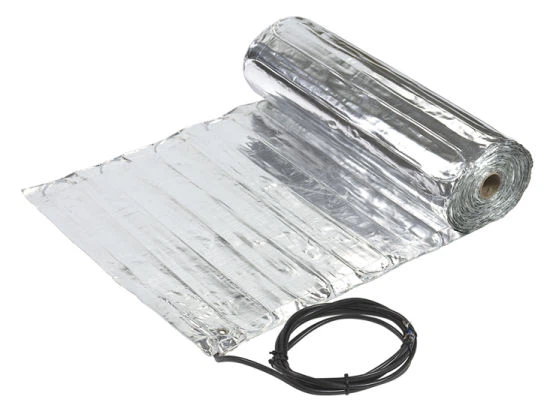
Traditional heaters (coils, ceramics) are components. Aluminum foil heaters are materials. They can be laminated, stamped, or embedded into:
Countertops (for zone-specific warming)
Mirror and glass panels (for demisting)
Flooring underlayers
Furniture surfaces (desks, cabinets)
Wall panels
This makes them the prime candidate for the "invisible intelligence" ethos of premium smart homes.
2. Performance Meets Pragmatism
Rapid & Even Heat: Excellent thermal conductivity ensures quick warm-up and uniform distribution-no cold spots.
Thin & Flexible: Adds functionality without altering industrial design or sacrificing space.
Highly Controllable: Perfectly suited for integration with IoT sensors and AI-driven climate zones (e.g., warming only the occupied section of a bathroom floor).
Cost-Effective Scalability: Mature manufacturing processes mean it can move from luxury to mainstream smart homes.
3. The Seamless Smart Home Synergy
Imagine:
Your bathroom mirror clears fog as you step in, triggered by a motion sensor.
Your kitchen countertop keeps your coffee mug warm, activated by a weight/presence sensor.
Your smart thermostat lowers air heating but warms your home office desk surface during work hours-a hyper-efficient personal comfort system.
Aluminum foil heating enables these context-aware, surface-level micro-climates.
Challenges and Competing Technologies
1. Perceived Limitations:
Durability Concerns: Addressing misconceptions about corrosion (modern anodized/treated foils) and fatigue from repeated flexing.
Heat Profile Limits: Best for low to medium-temperature applications (comfort heating, ~30-80°C), not for high-temperature cooking or industrial heating.
Integration Complexity: Requires careful engineering for thermal coupling, electrical safety (GFCI protection), and control logic.
2. The "Future" Might Be a Hybrid:
Graphene: Offers even better conductivity and flexibility but at a significantly higher cost. Likely for niche, high-performance applications first.
Printed Conductive Inks: Allow for more intricate, shape-adaptive patterns but can have lower power density.
Carbon Fiber: Excellent for larger areas like floors but less suitable for complex, small-surface integration.
Aluminum foil's strongest position is as the "workhorse" technology-reliable, understandable, and scalable.
The Verdict: A Foundational Future
The answer is a qualified Yes.
Aluminum foil heating may not be the only future, but it is poised to become a foundational and ubiquitous enabling technology for smart surfaces. It solves the "how" of adding warmth intelligently and unobtrusively to almost any material.
The future of smart home surfaces is multi-sensory. As we move from visual and auditory feedback to haptic and thermal feedback, aluminum foil heating provides the most viable path to make that thermal layer affordable, reliable, and seamless. It won't make headlines like AI, but it will quietly define the comfort of our living spaces.

One-stop Heating & Controllers Factory in China
Upgrade your heating systems with Jaye Heater's premium components. For reliable heating elements and precise thermal controllers that ensure performance and safety, contact our experts today for a quote and technical support. Let's find your perfect heating solution.