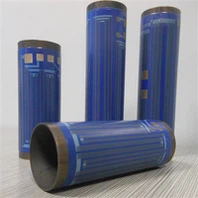
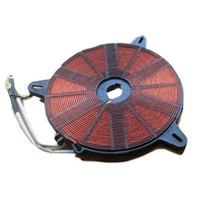
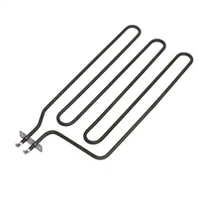
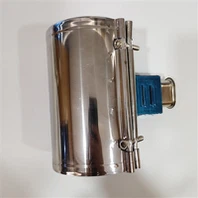
The typical setup involves:
- A water-to-water heat exchanger that separates the pool water from the clean, hot water in the boiler loop.
- The flange heater is installed on a dedicated buffer tank or hot water boiler that circulates hot water through one side of the heat exchanger.
- Pool water is pumped through the other side of the heat exchanger, picking up heat without ever contacting the water inside the boiler tank.
This separation is crucial for safety, corrosion control, and water chemistry management.
System Design and Components
A typical flange heater pool heating system consists of the following key components:
1. The Flange Heater Itself:
- Material: For freshwater pools, Incoloy-sheathed or 316 stainless steel elements are common. For saltwater pools or pools with high chlorine levels, Titanium-sheath elements are essential due to their exceptional corrosion resistance. Copper elements are not recommended.
- Configuration: Typically installed in an over-the-side (aka "top-side") orientation or sometimes sideways on the tank wall. They are bolted onto a tank nozzl

2. The Buffer/Boiler Tank:
- This is a pressurized ASME-rated tank where the flange heater is installed.
- It holds a closed loop of clean, treated water (often with anti-corrosion additives) that is continuously heated by the elements.

3. Plate Heat Exchanger:
- This device transfers heat from the closed hot water loop (from the boiler tank) to the separate pool water loop.
- It prevents pool chemicals from corroding the expensive heating elements and allows for easy isolation and maintenance.

4. Circulation Pumps:
- Primary Loop Pump: Circulates the hot water from the boiler tank, through the heat exchanger, and back to the tank.
- Pool Pump: The existing pool pump circulates pool water through the filter, then through the other side of the heat exchanger, and back to the pool.

5. Control System:
- Thermostat: A high-limit aquastat controls the temperature of the water inside the boiler tank (e.g., set to 180°F).
- Pool Temperature Controller: A separate controller with a sensor in the pool water return line modulates the system. It activates a diverting valve or pump to send pool water through the heat exchanger only when heat is demanded.
- Safety Devices: High-limit cutoffs, flow switches, and pressure relief valves are mandatory for safety.

Key Advantages for Pools/Spas
- High Efficiency: Nearly 100% of the electrical energy is converted directly into heat within the water.
- Rapid Heating: Electric resistance heating is very fast, making it good for bringing a spa up to temperature quickly or maintaining a constant pool temperature.
- Durability: When made with the correct materials (Titanium for saltwater), they are extremely robust and long-lasting.
- Compact and Integrated: The system can be built into a compact skid or equipment pad, saving space.