Introduction to Threaded Mounting Sleeve Heaters
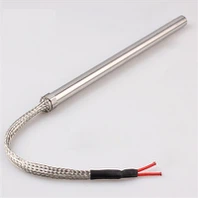
Cartridge heaters with integrated mounting sleeves represent a specialized category of industrial heating elements designed for secure mechanical installation and enhanced thermal transfer.
These heating devices feature a robust sleeve component, typically threaded for precision mounting, that enables direct integration into machined openings, plates, or fixtures.
The sleeve serves as both a mechanical anchor and a thermal interface, ensuring optimal heat transfer while providing reliable mounting stability across diverse industrial applications.
Mounting Sleeve Configuration and Material Selection
Threaded Sleeve Implementation
The threaded mounting sleeve transforms standard cartridge heaters into mechanically secure heating solutions. This design allows direct installation into pre-tapped openings, eliminating the need for additional clamping hardware or complex retention systems. The threaded interface ensures consistent thermal contact while resisting vibration and mechanical displacement during operation.
Material Compatibility Options
Manufacturers offer multiple sleeve material configurations to match specific application requirements:
- Carbon Steel Sleeves: Provide cost-effective solutions for general industrial applications where corrosion resistance is not critical. Carbon steel offers excellent thermal conductivity and mechanical strength for most standard heating requirements.
- Stainless Steel Sleeves: Recommended for applications requiring enhanced corrosion resistance, chemical compatibility, or food/pharmaceutical processing environments. Austenitic grades (304, 316) offer optimal performance in demanding conditions.
- Brass Sleeves: Selected for specialized applications where non-magnetic properties, superior thermal conductivity, or compatibility with specific mating materials is required. Brass provides excellent machinability and corrosion resistance in selected environments.
Customizable Power Distribution Configurations
Sectional Power Zoning Capabilities
Advanced cartridge heater designs incorporate non-uniform power distribution through segmented heating zones. This configuration divides the heater into discrete sections (designated P1, P2, P3, etc.) with independently controlled power outputs. Each zone maintains specific watt density characteristics tailored to the thermal profile requirements of the application.
Minimum Segment Specifications
The modular power zoning system maintains a practical minimum segment length of 50 millimeters. This dimension ensures adequate thermal mass for temperature stability while providing sufficient surface area for effective heat transfer. The standardized segment length facilitates predictable thermal performance and simplifies application engineering calculations.
Electrical Connection and Termination Systems
Direct Flexible Wire Terminals
The simplest termination method employs flexible, high-temperature insulated leads extending directly from the heater body. These leads typically extend up to 100 millimeters, providing sufficient length for connection to power sources or control systems while maintaining flexibility for installation in confined spaces.
Protective Conduit Systems
For applications requiring enhanced mechanical protection, spiral-wound steel conduit options are available. This protective covering shields electrical conductors from abrasion, impact, and environmental contaminants. Important application note: Conduit-protected terminals are not recommended for installations involving continuous motion or frequent flexing due to potential conductor fatigue.
Structural Connection Configurations
- Axial Connection Design: Features a centrally positioned steel tube welded to the heater body, with flexible conduit extending from this structural element. This configuration provides maximum mechanical strength and resistance to bending forces, particularly suited for applications involving thermal expansion stresses.
- Angular Connection Design: Incorporates a welded steel block at one terminal end, with the opposite end featuring the central steel tube and conduit assembly. This asymmetric configuration facilitates installation in space-constrained applications where linear terminal access is limited.
- Wire Braid Reinforcement: An additional protective layer consisting of interwoven metallic strands surrounds electrical terminals, providing enhanced resistance to mechanical damage, abrasion, and environmental exposure. This reinforcement is particularly valuable in applications involving vibration, incidental contact, or particulate contamination.
Application Engineering Considerations
Installation Parameters
Successful implementation requires attention to several critical factors:
- Hole Preparation: Mounting openings must maintain precise dimensional tolerances to ensure optimal thermal contact while accommodating thermal expansion differentials between heater and mounting material.
- Thread Engagement: Proper thread engagement depth is essential for both mechanical security and thermal transfer efficiency. Insufficient engagement risks loosening under thermal cycling, while excessive engagement may impede proper seating.
- Thermal Interface Management: Appropriate thermal compounds or interface materials should be selected based on operating temperatures, thermal conductivity requirements, and environmental conditions.
Performance Optimization
Maximum performance achievement requires systematic approach:
- Power Density Matching: Sectional power zones should be configured to match the thermal profile of the target application, considering both steady-state and transient heating requirements.
- Material Compatibility Verification: Sleeve material selection must consider galvanic compatibility with mounting materials, operating temperature ranges, and environmental exposure conditions.
- Termination System Selection: Appropriate terminal protection must be selected based on installation environment, service accessibility requirements, and anticipated mechanical stresses during operation.
Technical Specification Guidelines
Dimensional Customization
- Manufacturers typically provide customized dimensional solutions based on application-specific requirements:
- Standard thread specifications include metric, unified, and pipe thread configurations
- Custom lengths and diameters accommodate unique application geometries
- Special thread profiles available for specific mounting requirements
Electrical Performance Parameters
- Voltage ratings from 12V to 480V AC/DC
- Watt density configurations optimized for sleeve material and application
- Temperature capabilities matched to sleeve material limitations
- Insulation resistance specifications for specific environmental conditions
Quality and Compliance Standards
- Construction compliant with international electrical safety standards
- Materials certified for relevant industry-specific requirements
- Testing protocols including dielectric strength, insulation resistance, and thermal cycling
- Documentation including material certifications and performance test data
Maintenance and Operational Best Practices
Installation Verification Procedures
- Confirm proper thread engagement and torque specifications
- Verify electrical insulation integrity before energizing
- Check for proper grounding and electrical isolation
- Validate thermal interface application where specified
Operational Monitoring
- Regular inspection of terminal connections for signs of degradation
- Periodic verification of mounting integrity under thermal cycling conditions
- Monitoring of electrical parameters to detect insulation breakdown
- Visual inspection for sleeve corrosion or mechanical damage
Replacement Considerations
- Document original installation parameters for future reference
- Maintain records of operational hours and thermal cycles
- Establish preventive replacement schedules based on application severity
- Verify compatibility of replacement units with existing mounting configurations
Conclusion
Cartridge heaters with threaded mounting sleeves provide robust, reliable heating solutions for industrial applications requiring secure mechanical installation and efficient thermal transfer.
Through careful selection of sleeve materials, power zoning configurations, and termination systems, engineers can optimize these heating elements for specific application requirements.
Proper installation following manufacturer guidelines ensures maximum performance longevity and operational safety.
As thermal management requirements continue to evolve in industrial processes, these versatile heating components remain essential tools for precision temperature control across diverse manufacturing and processing applications.

One-stop Cartridge Heaters Factory in China
Jaye Heater Technology specializes in industrial heating elements, offering OEM/ODM services for global clients.