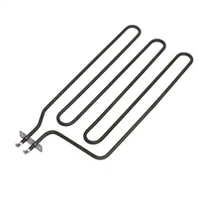
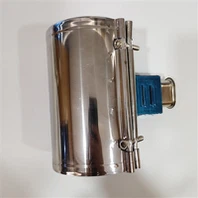
How to choose the material of stainless steel heating element?
let's talk about stainless steel 301 material first, hardening occurs when it is deformed in processing, and it is used in various high-strength occasions. In the process of manufacturing stainless steel heating pipes, stainless steel 304 material is widely used for heating liquids (without strong acid and alkali) and air heating. It has good comprehensive performance, easy to shape, moderate price, and is used in the manufacture of heating pipes. Stainless steel 302 is actually a variety with a carbon content higher than 304, with high strength after cold rolling.
Stainless steel 303 material, because it contains sulfur, is easy to cut. It is mainly used for convenient cutting and high requirements for stainless steel surface finish.
Compared with stainless steel 304L, stainless steel 304L has a lower carbon content. Low-carbon stainless steel decomposes fewer carbides due to heat during the welding process, so * reduce carbon emissions, because carbides will produce welding erosion. Due to the low work hardening rate, 305 material has a high nickel content and is easy to form. Stainless steel 308 material is generally used to make welding rods.
316 and 317 materials contain aluminum, which can be used for weak acid and alkali, and the acid and alkali resistance is better than stainless steel 304 material. 321 material contains high titanium content, and is generally used for welding high temperature and acid-base corrosion.
Stainless steel heating pipes can only choose different stainless steel materials according to different working environments.
Pay attention to the details of stainless steel heating element:
1. The components are allowed to work under the following conditions: a. The relative humidity of the air does not exceed 95%, and there is no explosive and corrosive gas. B. The working voltage should not exceed 1.1 times the rated value, and the shell should be effectively grounded. Insulation resistance ≥ 1Mω dielectric strength: 2KV/1min.
2. The stainless steel electric heating element should be positioned and fixed, and the effective heating area must be immersed in liquid or metal solid, and empty burning is strictly prohibited. When it is found that there is scale or carbon on the surface of the pipeline, it should be cleaned in time to avoid affecting heat dissipation and shortening the service life.
3. When heating fusible metals or solid nitrates, alkalis, bitumen, paraffin, etc., the operating voltage should be reduced first, and after the medium is melted, it should be increased to the rated voltage.
4. When heating the air, the components should be arranged crosswise and evenly, so that the components have good heat dissipation conditions, so that the air flowing through can be fully heated.
5. Safety measures should be taken into consideration when heating nitrate to prevent explosion accidents.
6. The wiring part should be placed outside the insulation layer to avoid contact with corrosive, explosive media and water; the lead should be able to withstand the temperature and heating load of the wiring part for a long time, and excessive force should be avoided when tightening the wiring screws.
7. The components should be stored in a dry place. If the insulation resistance is lower than 1ω for a long time, it can be dried in an oven at around 200°C, or the voltage can be reduced and heated until the insulation resistance is restored.
8. The magnesium oxide powder at the outlet end of the stainless steel electric heating element should prevent pollutants and moisture from penetrating into the place of use to prevent leakage accidents.
The above is the relevant information shared by stainless steel heating pipe manufacturers, I hope it will be helpful to you.