1. Core Working Principle: Resistive Heating
The core principle of the heating element is "Joule's First Law" (the heating effect of electric current).
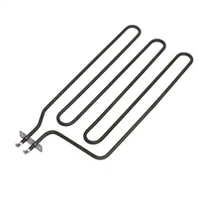
Conductivity and Resistance: Copper is a good electrical conductor, but the heating element is not made of pure copper. It consists of a copper alloy sheath encasing an internal high-resistance heating alloy wire.
Electrical to Thermal Energy Conversion: When electric current passes through the internal nickel-chromium wire, its high resistance strongly impedes the current, thereby efficiently converting electrical energy into thermal energy (heat).
Heat Transfer: The generated heat is transferred through an insulating but thermally conductive filler material (like magnesium oxide powder) to the outer copper tube. The copper tube then transfers this heat directly to the water surrounding it.
Simple Analogy: It functions like an "electric heating rod immersed in water" – it heats up when electricity flows through it, directly heating the surrounding water.

2. Why is Copper Used for the Outer Sheath?
The copper sheath offers irreplaceable advantages in water heater applications:
Excellent Thermal Conductivity: Copper has a very high thermal conductivity, allowing it to quickly transfer the internally generated heat to the water, resulting in high heating efficiency.
Good Corrosion Resistance: Compared to ordinary steel, copper is more resistant to corrosion from water (especially hot water), leading to a longer service life. This is particularly important in areas with hard water.
Some Antimicrobial Properties: Copper ions have a slight antimicrobial effect, which helps maintain better water quality inside the tank.
Ease of Manufacturing and Sealing: Copper tubes are ductile and can be reliably welded to mounting flanges, ensuring a watertight seal.
Relatively Good Scale Resistance: While scale (mineral deposits) can still form, the smooth surface of copper makes scale adhere less strongly. Furthermore, the difference in thermal expansion coefficients between copper and common scale can help cause some scale to flake off during temperature changes.

3. Complete Workflow within the Water Heater
Taking the most common storage-type electric water heater as an example:
Power On: The user sets the desired temperature, and the water heater is powered on.
Thermostat Detection: The thermostat detects that the water temperature inside the tank is below the setpoint (e.g., below 55°C).
Relay Engagement: The thermostat signals the control circuit to energize a relay, allowing current to flow to the heating element.
Heating Begins: Current flows through the internal resistance wire of the heating element, generating heat. This heat is transferred via the copper tube to the surrounding water.

Thermal Convection: The heated water becomes less dense and rises. Cooler water from the tank sinks to take its place around the heating element, creating a natural convection current. This gradually raises the temperature of all the water in the tank uniformly.
Temperature Reached: When the water temperature reaches the setpoint (e.g., 55°C), the thermostat cuts off the circuit, and heating stops.
Insulation & Reheating: The water heater enters (heat retention) mode. When the temperature drops a few degrees due to heat loss (e.g., to 52°C), the thermostat reactivates the heating. This cycle repeats to maintain the water temperature.