The Core Challenge: Why Conventional Methods Fall Short
Before exploring the solution, it's essential to understand the problem. Effective de-icing and defogging require two key actions:
- Rapid Response: The heater must reach the required temperature almost instantaneously to prevent initial condensation or ice accumulation.
- Uniform Heat Distribution: A single hot spot is insufficient and can cause thermal stress. The entire surface must be evenly warmed to ensure complete clearance and prevent localized cold spots where moisture can re-condense.
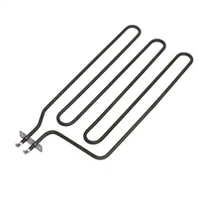
Conventional solutions like wire-wound or silicone rubber heaters often struggle with these demands due to their inherent mass and design limitations, leading to slower response times and uneven thermal profiles.

The Kapton Advantage: Engineered for Excellence
Kapton® polyimide film is the foundational material that makes our heaters exceptional. Its intrinsic properties directly address the shortcomings of older technologies:
- Exceptional Thermal Conductivity and Low Mass: Kapton film itself is an excellent thermal conductor and is incredibly thin-often less than 0.25mm. This minimal thermal mass allows the heating element to transfer heat to the target surface with extreme efficiency, resulting in startup-to-operating temperature times measured in seconds, not minutes.
- Unmatched Uniformity through Etched Foil Technology: Unlike coiled resistance wires, JAYE-HEATER utilizes a photochemical etching process to create a precise and complex circuit pattern from a single sheet of resistance alloy (such as Constantan or Nickel-Chromium). This etched-foil element is laminated between layers of Kapton. The result is a continuous, wide-area heating path that eliminates hot spots and delivers a perfectly uniform heat flux across the entire surface, ensuring consistent temperature distribution on your lens or sensor housing.
- Ultra-Thin and Conformable Profile: Our heaters are flexible and can be custom-cut to fit virtually any shape or surface contour. This allows for direct, intimate bonding to the component requiring protection, such as the inside of a lens barrel or the base of a sensor. This maximizes heat transfer efficiency and enables integration into the most space-constrained designs without adding significant bulk or weight-a critical factor in aerospace and robotics.

The JAYE-HEATER Methodology: A Systems Approach to Thermal Management
We go beyond simply manufacturing a component; we provide a engineered thermal solution.
- Precision Engineering and Customization: We work with your 3D models and thermal requirements to design a heater that fits your assembly perfectly. The circuit pattern is computationally optimized to achieve the desired watt density and thermal profile for your specific application, whether it's maintaining a +5°C to prevent condensation on a drone's gimbal or delivering higher heat flux for rapid de-icing on an aviation pitot tube.
- Integrated Sensor Feedback: For ultimate precision, we can integrate ultra-thin temperature sensors (like RTDs or thermocouples) directly into the heater assembly. This creates a closed-loop control system, allowing for real-time temperature monitoring and adjustment. This ensures the surface is maintained at the exact optimal temperature, preventing both under-heating (ineffective clearing) and over-heating (energy waste or potential damage to sensitive optics).
- Ruggedized for Reliability: The Kapton film is inherently resistant to moisture, chemicals, and radiation. We further enhance durability with high-temperature polyimide adhesives and robust lead wire strain relief to ensure long-term operational integrity in harsh environments, from high-vibration automotive LiDAR systems to the low-pressure conditions of high-altitude flight.

Conclusion
When the clarity of your optics and the reliability of your sensors are non-negotiable, a passive approach to thermal management is not an option. Kapton film heaters from JAYE-HEATER offer an active, precise, and highly efficient solution engineered to solve the complex challenges of de-icing and defogging. By leveraging the unique properties of polyimide and our advanced manufacturing capabilities, we deliver thermal solutions that are as fast and reliable as the technology they protect.