The Role of Ceramic Infrared Heaters in the Food Industry
I. Technical Advantages of Ceramic Infrared Heaters
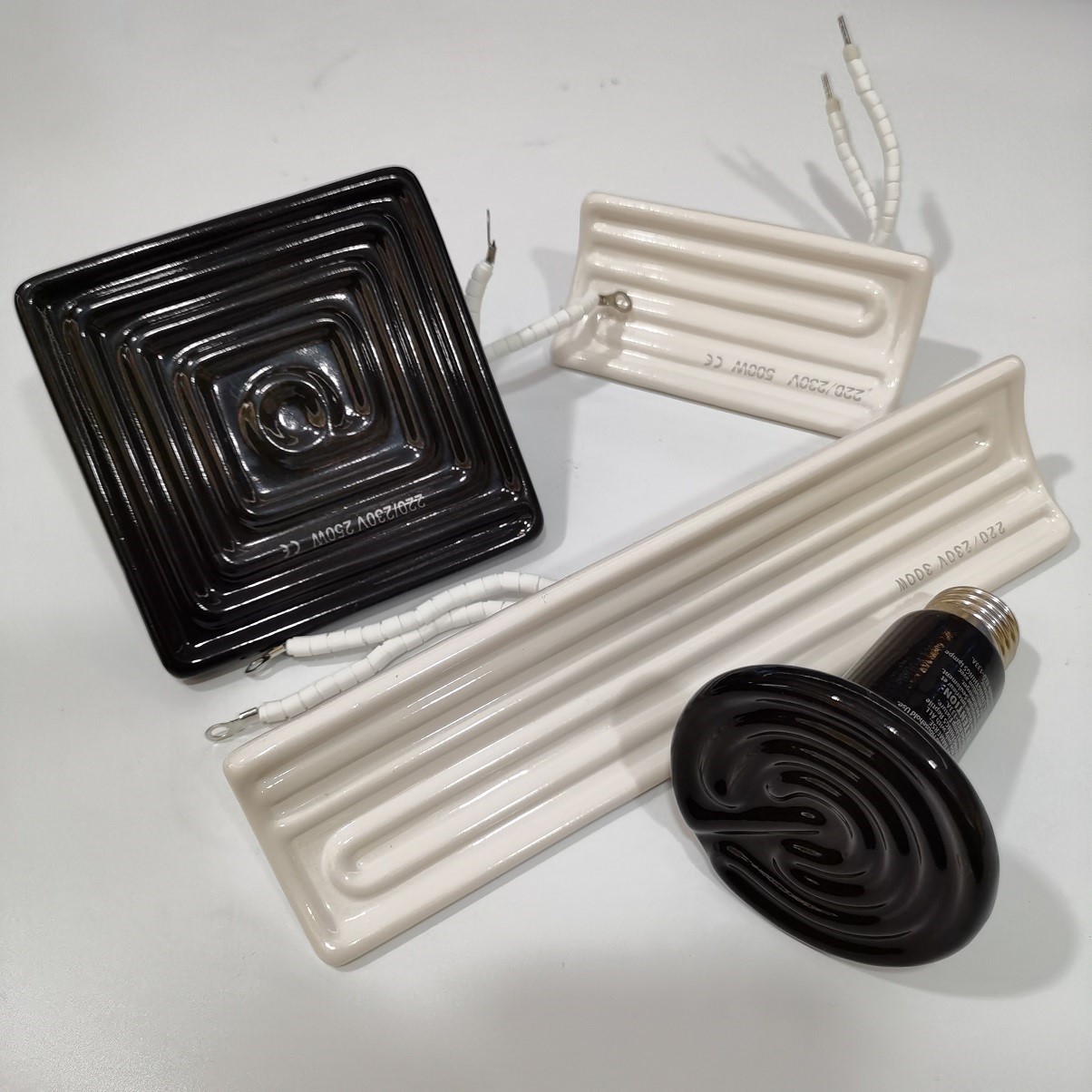
Ceramic infrared heaters are high-efficiency heating devices composed of ceramic substrates embedded with high-resistance heating wires. They convert electrical energy into infrared radiation, which directly transfers heat to target objects. Key features include:
High Energy Efficiency: Infrared radiation heats targets directly with minimal air heat loss, achieving 60-80% energy utilization (compared to 30-50% for traditional convection heating).
Rapid Response: Low thermal inertia of ceramic materials allows heaters to reach target temperatures within seconds, enabling precise temperature control.
Uniform Heating: Wavelengths (2-6μm) align with the absorption spectrum of most foods, ensuring deep penetration and even heat distribution.
Clean and Eco-Friendly: No open flames or exhaust emissions, complying with food safety and environmental regulations.

Key Applications in the Food Industry
Baking and Drying
Baked Goods (bread, cookies, pizza, etc.):
Ceramic infrared heaters penetrate food surfaces rapidly, enabling simultaneous internal and external heating. This prevents uneven results (e.g., burnt surfaces or undercooked interiors) and improves texture and color consistency.
Fruit/Vegetable Drying:
Gentle dehydration via mid-to-far infrared waves preserves nutrients (e.g., vitamin C) and natural flavors, ideal for producing dried snacks or herbs.
Sterilization and Pasteurization
Infrared radiation penetrates packaging materials (e.g., plastic films) to instantly neutralize surface microorganisms (e.g., E. coli, mold) on ready-to-eat foods or dairy products before packaging.
Thawing and Preheating
Frozen Food Thawing:
Infrared waves melt ice crystals internally, reducing thawing time by 30-50% compared to conventional methods. This minimizes moisture loss and preserves meat tenderness.
Ingredient Preheating:
Preheats raw materials (e.g., meat, dough) in production lines to streamline downstream processing.
Packaging Sealing and Shaping
Enables precise, rapid sealing of shrink-wrap films or plastic containers without overheating or damaging materials.
Specialty Processing
Smoke Flavor Simulation:
Heats lignin-based materials to release smoky compounds, replicating traditional smoking methods while reducing harmful byproducts (e.g., polycyclic aromatic hydrocarbons).

Why the Food Industry Chooses Ceramic Infrared Heaters
Enhanced Productivity
Rapid heating shortens production cycles, supporting high-speed automated processing lines.
Food Safety Assurance
Non-contact heating reduces cross-contamination risks, while precise temperature control prevents harmful compound formation (e.g., acrylamide).
Cost Savings
Energy-efficient operation lowers electricity bills, and long lifespan (typically over 10,000 hours) reduces maintenance costs.
Compliance with Trends
Aligns with global demands for low-carbon production and clean energy, aiding compliance with standards like ISO 50001 (energy management).

Case Studies
A Baking Company: Replaced gas ovens with ceramic infrared tunnel ovens, cutting energy consumption by 40% and reducing product defects from 5% to <1%.
Frozen Food Manufacturer: Infrared thawing systems reduced thawing time by 2 hours per ton of raw material, saving over $28,000 annually.
Future Outlook
Smart Integration: IoT-enabled systems for real-time temperature/power monitoring and adaptive adjustments.
Custom Wavelength Design: Optimize infrared spectra for specific food components (e.g., water, fat, protein) to maximize efficiency.