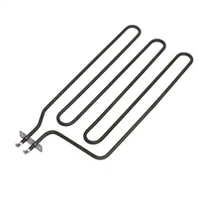
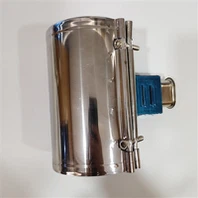
What is radiant (infrared) heating?
Infrared radiant heating is a method where heat is transferred through electromagnetic waves, mainly in the infrared spectrum.
Unlike conduction or convection, it does not require direct contact or air as a medium.
A simple way to understand it is the sun. The sun heats the Earth even though space is a vacuum. The energy travels through radiation, not air. Infrared electric heaters work on the same principle at a smaller, controlled scale.
How infrared heating works step by step
Infrared heating in electric heating systems typically follows three stages:
Step 1: Electrical resistance heating
Electric current passes through a resistive material such as:
Nichrome wire
Carbon fiber
Quartz heating elements
The electrical energy is converted into heat through Joule heating.
Step 2: Temperature rise and radiation emission
As the heating element temperature increases, it begins to emit infrared radiation. The higher the temperature, the stronger the infrared output.
Step 3: Energy absorption by the target object
The infrared waves travel directly to the surface of the object being heated, such as:
Plastic
Glass
Metal surfaces
Food or organic materials
The molecules of the material absorb the infrared energy, increasing molecular vibration and raising temperature.
Main types of infrared heating elements

In industrial electric heating systems, three common infrared technologies are widely used:
Quartz infrared tubes
Quartz tubes contain a heating wire that reaches high temperature and emits strong infrared radiation.
Typical applications:
Drying systems
Plastic thermoforming
Printing industry
Ceramic infrared heaters
Ceramic plates provide stable and uniform surface radiation.
Typical applications:
PET heating
Vacuum forming
Industrial drying lines
Carbon fiber infrared heaters
Carbon fiber elements heat up very quickly and provide fast response time.
Typical applications:
Medical heating devices
Therapy equipment
Fast industrial heating systems
Why material selection matters
Different materials absorb infrared radiation differently. This directly affects heating efficiency.
Dark or black surfaces: high absorption, fast heating
Polished metal surfaces: high reflection, low absorption
Because of this, some industrial processes require surface treatment such as black coating to improve efficiency.
This is an important design factor for heating element manufacturers when customizing solutions for different industries.
Real application case: Can infrared heaters be used in a sauna?
A common customer question is whether infrared heating can be used in sauna systems.
The answer is yes, it is absolutely feasible.
In fact, infrared saunas are already widely used in the market. The heating principle is the same: infrared radiation directly warms the human body instead of heating the surrounding air first.
Suitable heater types for sauna applications:
Quartz infrared tubes
Ceramic infrared heaters
Why they work well in saunas:
Fast heating response
Comfortable radiant heat
Energy efficient compared to traditional convection heating
Can operate at controlled low-to-medium temperatures suitable for human comfort
Design considerations:
- Temperature control system is essential (to avoid overheating)
- Uniform heat distribution must be ensured
- Safety insulation and shielding are required
- Proper wavelength selection improves comfort and penetration depth
- Infrared sauna systems demonstrate how radiant heating can be effectively used in wellness and health-related applications, not only in industrial environments.
Design considerations for industrial use
When designing infrared heating systems, several factors must be considered:
Power density
Higher power density means faster heating but requires better thermal control.
Distance to target
Infrared efficiency decreases with distance, so placement is critical.
Reflective environment
Metal surfaces or reflective chambers may require design optimization to reduce energy loss.
Temperature control
Precise temperature regulation (such as PID control systems) ensures stability and safety.
Material compatibility
Different applications require matching the correct wavelength and heating element type.
Conclusion
Infrared radiant heating is a highly efficient and flexible heating method that transfers energy directly through electromagnetic waves.
It eliminates the dependency on air as a heat transfer medium, making it faster and often more energy-efficient than traditional heating methods.
From quartz tubes to ceramic panels and carbon fiber heaters, each technology serves different industrial needs.
Applications range from plastic processing and drying systems to wellness products such as infrared saunas.
For manufacturers of electric heating elements, understanding radiation principles, material absorption behavior, and application environments is essential to designing effective and reliable heating solutions.
Infrared heating is not only a mature industrial technology but also an expanding solution in modern energy-efficient heating systems.

One-stop Infrared Radiant Heating Element Factory in China
If you require heating elements, Jaye Heater-as a long-standing manufacturer of heating elements-will assist you with our team of professional technicians and sales personnel.