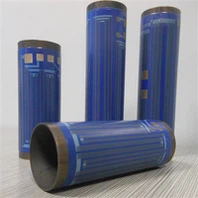
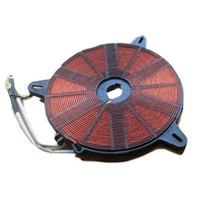
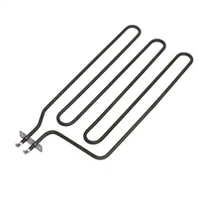
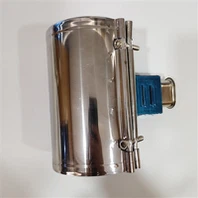
A flange heater is a type of electric immersion heater designed for heating liquids or gases in various industrial applications. It consists of a heating element encased in a protective housing with a flange that allows it to be easily mounted or inserted into a tank, vessel, or pipeline. Flange heaters are commonly used for processes like heating water, oils, chemicals, and gases.
Here's How Flange Heater Works
1. Heating Element: The core component of a flange heater is the heating element, typically made of materials like stainless steel, Incoloy, or other corrosion-resistant alloys. This element is shaped to maximize heat transfer and efficiency.
2. Flange and Mounting: The flange is a flat, circular plate with holes that align with corresponding holes in the tank or vessel where the heater will be installed. Bolts or studs are used to secure the flange heater in place. The flange provides a sealed connection, ensuring that the heater does not leak or come into direct contact with the substance being heated.
3. Electrical Connections: The heating element is connected to electrical terminals located outside the protective housing. These terminals are used to supply electrical power to the heating element. Typically, the power supply is controlled by a thermostat or temperature controller to maintain the desired temperature.
4. Heat Transfer: Once the flange heater is securely installed and connected to a power source, electricity flows through the heating element. As current passes through the resistance wire or element, it generates heat through resistive heating. The heat is then transferred to the surrounding liquid or gas through conduction, effectively raising its temperature.
5. Temperature Control: To regulate the temperature of the substance being heated, a thermostat or temperature controller is used. This device monitors the temperature and adjusts the power supply to the heating element accordingly. When the desired temperature is reached, the controller may cycle the heater on and off to maintain a consistent temperature.
6. Safety Features: Flange heaters often include safety features like over-temperature protection to prevent overheating and damage. Additionally, some models have a high-limit safety switch that shuts off the heater if the temperature exceeds a critical level.
In summary, a flange heater works by using electrical resistance to generate heat within a protective housing. The heat is transferred to a liquid or gas through conduction, effectively raising its temperature. Temperature control and safety features ensure the process is efficient and safe for industrial applications. These heaters are versatile and widely used in various industries where precise temperature control is essential.