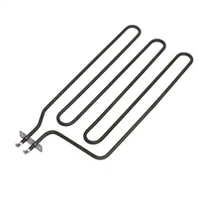
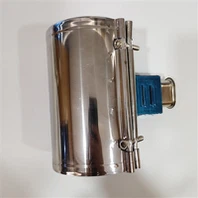
Silicone rubber heaters assist in the efficient removal of moisture during the freeze-drying cycle primarily by providing the necessary heat energy to facilitate sublimation. Here's how they contribute:
1-Sublimation facilitation: Silicone rubber heaters generate controlled and uniform heat distribution within the freeze dryer chamber. This heat energy is applied directly to the frozen materials, causing the ice to undergo sublimation. Sublimation is the process by which ice transitions directly from a solid to a vapor state without passing through the liquid phase. By applying heat, silicone rubber heaters promote the conversion of ice into water vapor, facilitating its removal from the materials being dried.
2-Rapid heat transfer: Silicone rubber heaters are designed to efficiently transfer heat to the frozen materials placed within the freeze dryer chamber. Their close proximity to the product ensures that heat is evenly distributed, allowing for rapid and uniform heating of the materials. This rapid heat transfer accelerates the sublimation process, leading to faster drying times and increased efficiency in moisture removal.
Temperature control: Silicone rubber heaters are equipped with temperature sensors and controllers that enable precise control over the heating process. By maintaining optimal temperature levels within the freeze dryer chamber, silicone rubber heaters ensure that the sublimation of moisture occurs at an efficient rate without causing thermal damage to the materials. This temperature control feature helps maximize the effectiveness of moisture removal during the freeze-drying cycle.
3-Energy efficiency: Silicone rubber heaters are designed to operate efficiently, consuming minimal energy while providing consistent and reliable heat output. Their energy-efficient performance contributes to the overall efficiency of the freeze-drying process, reducing operational costs associated with energy consumption.
In summary, silicone rubber heaters assist in the efficient removal of moisture during the freeze-drying cycle by providing the heat energy necessary for sublimation, promoting rapid heat transfer to the frozen materials, maintaining precise temperature control, and operating with high energy efficiency.