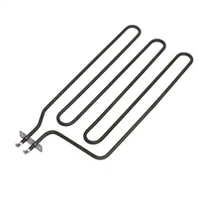
Halogen quartz heaters are increasingly popular in modern ovens due to their efficiency and speed in providing heat. Understanding how they work can help users appreciate their benefits in cooking applications.
Principle of Operation
Halogen quartz heaters operate on the principle of infrared radiation. Unlike conventional heating elements that rely on direct contact or convection to transfer heat, halogen heaters emit infrared radiation, which directly warms the objects in its path. This means that the heat is transferred quickly and efficiently, allowing food to cook faster while retaining moisture and flavor.
Components
A halogen quartz heater consists of several key components:
Halogen Bulb: The core component is a halogen bulb, which contains a small amount of halogen gas (such as iodine or bromine) along with a tungsten filament. When electricity flows through the filament, it heats up and emits light and infrared radiation.
Quartz Glass: The halogen bulb is encased in quartz glass, which is highly transparent to infrared radiation. This allows the heat to escape and radiate into the oven cavity without significant loss.
Reflector: Many halogen quartz heaters are equipped with a reflector that directs the emitted infrared radiation towards the food, maximizing efficiency.
Heating Process
When the oven is turned on, electricity flows through the tungsten filament, heating it to a temperature that produces infrared radiation. The halogen gas within the bulb helps to maintain the filament's temperature and increases its lifespan. This process is often referred to as "self-cleaning," as the halogen gas helps to eliminate any buildup on the filament.
The emitted infrared radiation travels through the quartz glass and directly heats the food placed in the oven. Because the heat is radiated directly rather than transferred through hot air, the food cooks evenly and more quickly. This results in shorter cooking times compared to conventional ovens.

Benefits of Halogen Quartz Heaters
Rapid Heating: One of the most significant advantages of halogen quartz heaters is their ability to reach high temperatures quickly. They can achieve maximum heat in a matter of seconds, reducing preheating time and improving cooking efficiency.
Even Cooking: The direct infrared radiation ensures that heat penetrates food uniformly. This helps to eliminate cold spots, resulting in more consistent cooking and browning.
Energy Efficiency: Halogen quartz heaters consume less energy compared to traditional heating methods. Their quick heating capabilities mean that they require less time to cook food, leading to lower energy bills.
Versatility: These heaters are suitable for various cooking methods, including baking, roasting, grilling, and broiling. They can be used effectively for a wide range of dishes, from meats to vegetables.
Moisture Retention: Cooking with halogen quartz heaters tends to preserve the moisture content in food. The rapid cooking process seals in juices, resulting in more flavorful and tender dishes.
Conclusion
Halogen quartz heaters are a cutting-edge technology in the world of ovens, combining speed, efficiency, and versatility. By emitting infrared radiation, they provide rapid and even heating that enhances cooking performance. Their advantages, including reduced cooking times and energy consumption, make them a preferred choice for both home cooks and professional chefs. As culinary technology continues to evolve, halogen quartz heaters are likely to play a significant role in the future of cooking appliances.