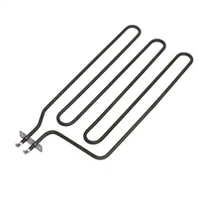
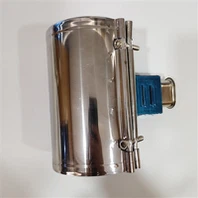
Cartridge heaters play a crucial role in rubber vulcanization, which is the process of curing rubber to enhance its strength, elasticity, and durability. Here's how they work in this application:
1. Heat Generation
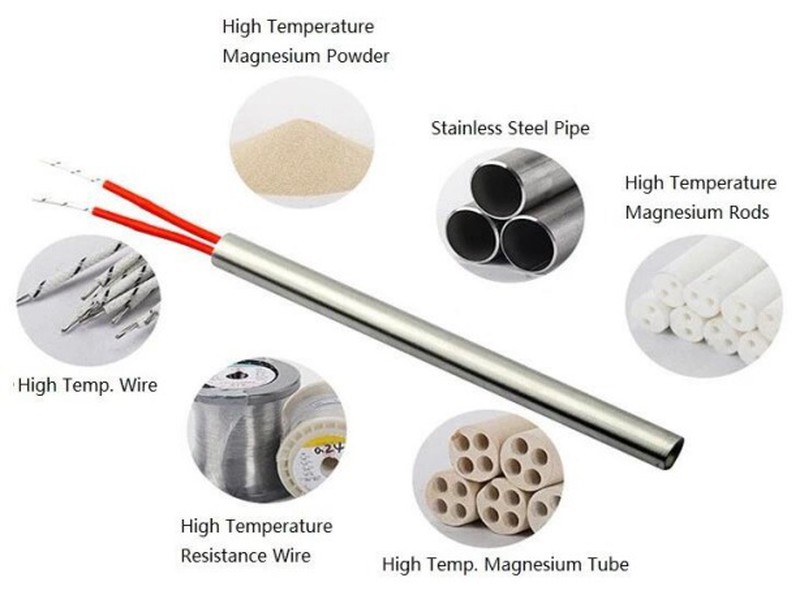
Cartridge heaters are cylindrical, high-watt-density heating elements that provide localized and controlled heating. They consist of a resistance wire wound around a ceramic core and encased in a stainless steel or Incoloy sheath. When electricity flows through the resistance wire, it generates heat.
2. Precise Temperature Control
Rubber vulcanization requires precise temperature control, typically between 140°C and 200°C (284°F - 392°F), depending on the rubber type. Cartridge heaters, often paired with temperature controllers and thermocouples, ensure accurate and consistent heating to achieve uniform vulcanization.
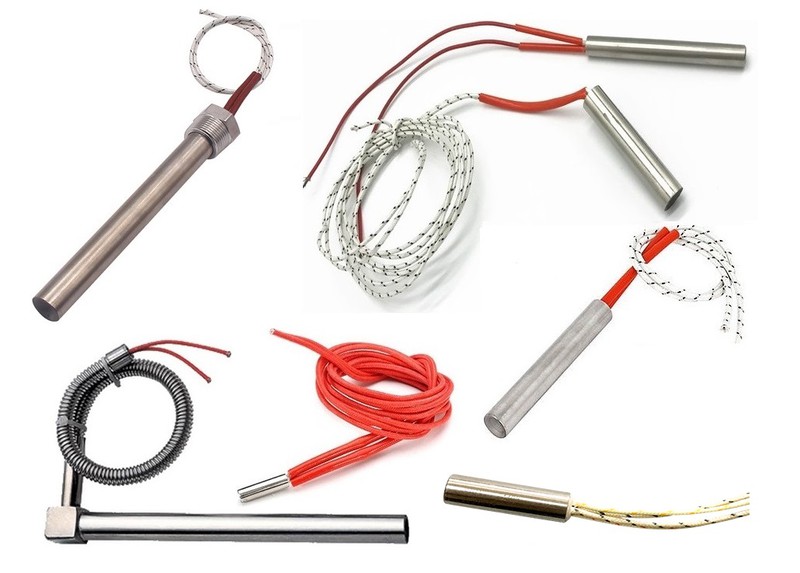
3. Direct & Indirect Heating Applications
Mold Heating: In compression molding, transfer molding, or injection molding, cartridge heaters are inserted into metal molds to heat the rubber evenly.
Platen Heating: In press vulcanization, cartridge heaters are embedded into platens (heated plates) to maintain the required curing temperature.
Die Heating: In extrusion processes, cartridge heaters heat the die, ensuring proper rubber flow and curing.
4. Efficient and Uniform Heating
The high watt density of cartridge heaters allows fast heat-up and uniform distribution, reducing cycle times and improving production efficiency. This uniform heating prevents defects such as under-cured or over-cured rubber.
5. Customization for Vulcanization Needs
Jaye Heater Technology provides custom cartridge heaters with specific wattages, voltages, and dimensions tailored for rubber vulcanization applications. Additional features like moisture resistance, high-temperature insulation, and corrosion-resistant sheaths enhance performance in demanding environments.
Conclusion
Cartridge heaters are indispensable in the rubber vulcanization process, ensuring precise, efficient, and uniform heating for high-quality cured rubber products. Whether used in molds, platens, or dies, their role in optimizing production speed and quality makes them a key component in the rubber industry.