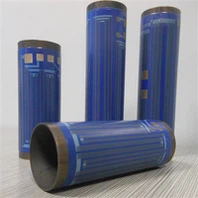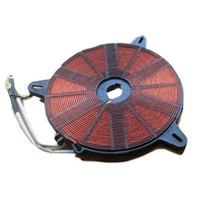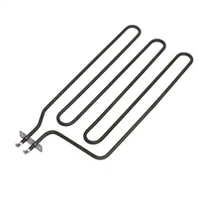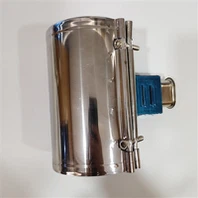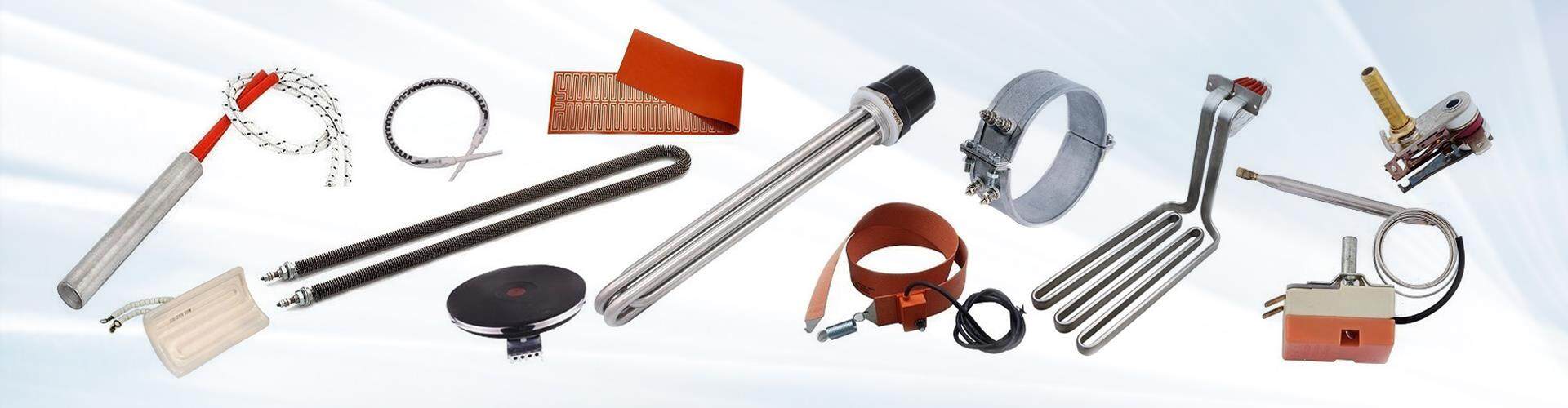
In a blown film machine, the primary goal is to melt, homogenize, and then precisely control the temperature of the polymer melt as it travels through the die head (specifically the circular die). Ceramic band heaters are crucial for maintaining the required temperature profile on this die.

How They Work: Step-by-Step
1. Location and Installation:
They are mounted externally around the circular die body and sometimes on the breaker plate housing.
They are typically clamped or strapped around the metal die, ensuring good physical contact for efficient heat transfer.
2. Internal Construction & Heating Principle:
A resistance wire coil (usually made of nickel-chromium alloy like Nichrome) is precisely wound to provide even heating.
This coil is embedded within a high-temperature ceramic insulator (often magnesium oxide - MgO). The ceramic electrically insulates the coil from the outer metal sheath while efficiently conducting heat.
The entire assembly is housed in a stainless steel or Incoloy sheath. The ceramic material holds the coil in place, prevents short circuits, and withstands extreme temperatures and physical vibration.

3. The Heating Process on the Die:
When powered on, electricity flows through the resistance wire, causing it to heat up (Joule heating).
The heat transfers through the ceramic insulator to the outer metal sheath.
The sheath then transfers heat through conduction directly to the metal body of the die.
The die, now hot, transfers heat to the polymer melt flowing inside it.
4. Role in Temperature Control ("Zoning"):
This is their most critical function. The circular die is divided vertically into multiple independent temperature zones (often 3 to 8 or more).
Each zone has its own ceramic band heater and a separate thermocouple (temperature sensor).
This allows the operator to set different temperatures for each zone (e.g., Zone 1 at 190°C, Zone 2 at 210°C, Zone 3 at 205°C).
A PID temperature controller constantly compares the thermocouple reading to the setpoint and switches the power to that specific band heater on/off to maintain the exact temperature.

Why Ceramic Band Heaters Are Specifically Chosen for Blown Film Dies:
- High Temperature & Even Heat: They can operate reliably at the high temperatures required for polymers (200°C - 300°C+). The ceramic ensures heat is distributed evenly around the circumference of the zone.
- Zoning Accuracy: Essential for controlling film thickness. By adjusting individual zone temperatures, operators can correct for "barrel" or "bow" variations in the bubble, leading to a more uniform film gauge. For example, if the film is thicker on one side, adjusting the temperature profile can change the melt viscosity and flow to correct it.
- Durability & Long Life: The ceramic and metal construction resists physical damage and thermal cycling fatigue, which is common in extrusion.
- Good Thermal Conductivity & Response: While not as fast as mica heaters, modern ceramic heaters provide a good balance of thermal mass and response time for the PID controller to work effectively.
- Ruggedness: They can withstand the industrial environment, including occasional polymer leakage or cleaning.