Here's the detailed English translation of the analysis on how drum heaters reduce oil viscosity through uniform heating and improve pumping efficiency, incorporating thermodynamic principles, fluid dynamics, and engineering design:
I. Relationship Between Oil Viscosity and Temperature
Temperature Dependency of Viscosity
Oil viscosity (e.g., lubricants, gear oils, asphalt) exhibits an exponential inverse relationship with temperature. For example:
A hydraulic oil with a viscosity of 120 cSt at 20°C drops to 30 cSt at 50°C, improving fluidity by 4x.
Every 10°C increase typically reduces viscosity by 50–70% (varies by oil type).
Impact of Viscosity on Pumping
Higher Energy Consumption: High viscosity increases flow resistance, requiring more pump power (power consumption ∝ viscosity).
Reduced Flow Rate: At constant pump speed, higher viscosity lowers flow rate, risking cavitation or dry running.
Mechanical Wear: Thick oils intensify friction in pumps and pipelines, shortening equipment lifespan.

II. Technical Implementation of Uniform Heating
Drum heaters ensure uniform heat distribution and precise temperature control through the following technologies:
1. Heater Structure and Materials
Flexible Heating Jacket Design:
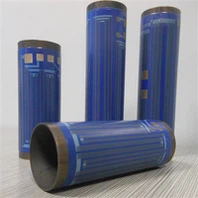
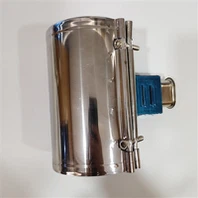
Silicone or fiberglass heating bands tightly conform to drum surfaces (e.g., 200L steel drums, IBC totes), minimizing heat loss.
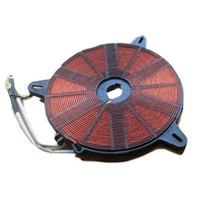
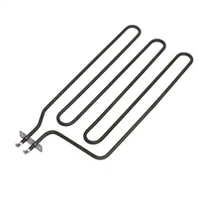
Multi-Layer Construction: Outer insulation (ceramic fiber/rock wool) retains heat, middle heating elements (nichrome wires) distribute heat evenly, and inner conductive layers (aluminum foil) transfer heat rapidly.
Zoned Temperature Control:
Divides heaters into independently controlled zones (e.g., upper/lower sections) with thermocouples monitoring real-time temperatures, maintaining a ±2°C variation.
2. Heat Distribution Optimization
Lateral Heat Diffusion: Conductive layers (e.g., aluminum plates or graphene coatings) spread point heat sources into uniform surface heating, eliminating hot/cold spots.
Vertical Thermal Convection: Heated oil rises due to density differences, driving natural convection for bulk temperature uniformity.
Case Study: A lubricant manufacturer reduced drum temperature variation from 15°C to 3°C using aluminum foil-enhanced heating jackets.
3. Intelligent Temperature Control
PID Algorithm: Dynamically adjusts heating power based on real-time feedback to prevent overshooting.
Remote Monitoring: IoT-enabled temperature setting (e.g., 40–60°C) via mobile/PC interfaces.
Safety Features: Over-temperature shutdown, leakage protection, and dry-fire prevention.

Industry Applications and Selection Guidelines
1. Key Scenarios
Extreme Cold: Arctic oil fields, winter storage (-30°C or below).
High-Viscosity Fluids: Asphalt, heavy fuel oil, polymer melts.
Precision Handling: Temperature-sensitive materials (e.g., pharmaceutical-grade oils, food-grade lubricants).
2. Selection Criteria
Heating Power: Calculated based on drum volume and ambient conditions (e.g., 800–1200W for a 200L drum at -20°C).
Temperature Precision: ±1°C for pharmaceuticals vs. ±5°C for industrial use.
Certifications: Explosion-proof (ATEX/IECEx), food-grade materials (FDA).

V. Advantages Over Traditional Heating Methods

| Metric | Drum Heater | Steam Coils | Open Flame |
|---|---|---|---|
| Uniformity | ±2°C (smart control) | ±10°C (thermal lag) | Highly uneven (localized scorching) |
| Energy Efficiency | >95% (electric conversion) | ~60% (steam generation) | <40% (heat loss) |
| Safety | Explosion-proof, no open flame | Steam leakage risk | Fire/explosion hazards |
| Environmental Impact | Zero emissions | CO₂/SO₂ from coal boilers |
Soot/CO emissions |
Summary
Drum heaters reduce oil viscosity to optimal pumping ranges (30–100 cSt) through uniform heating and precision temperature control, delivering:
Higher flow rates and lower energy consumption;
Extended equipment life;
Quantifiable cost savings (e.g., 60% lower pumping costs).