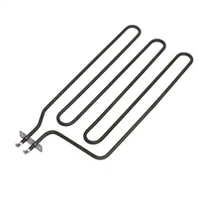
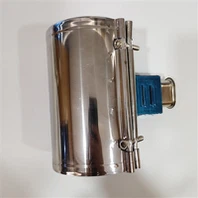
Finned heating tubes improve heat exchange in air conditioning systems by increasing thermal efficiency, which directly reduces energy consumption. Here's how:
1. Increased Surface Area for Heat Transfer
The addition of fins significantly expands the surface area of the heating tube, allowing more contact between the tube and the air.
Result: Faster heat exchange, enabling the system to reach target temperatures more quickly, reducing runtime and energy use.
2. Optimized Airflow Interaction
Fins create turbulence in the passing air, improving heat transfer efficiency by disrupting the insulating air boundary layer.
Result: Better heat dissipation without needing stronger or higher-energy fans.
3. Material Efficiency
Using high-conductivity materials like aluminum or copper for fins enhances thermal performance.
Result: Improved heat transfer per watt of energy, reducing the power needed for effective cooling.
4. Customizable Designs for Energy Savings
Finned tubes can be tailored to match specific airflow rates and system requirements, ensuring maximum efficiency without overloading the air conditioning unit.
Result: Systems operate within optimal parameters, avoiding energy waste.
5. Reduced Compressor Load
Efficient heat exchange lowers the workload on the compressor by maintaining better thermal balance.
Result: Prolonged compressor life and significant energy savings.
Example Application
In an air conditioning evaporator, finned heating tubes enable rapid absorption of heat from the air, allowing the refrigerant to evaporate more efficiently. This reduces the overall system energy demand while maintaining consistent cooling performance.