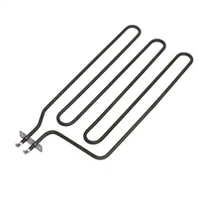
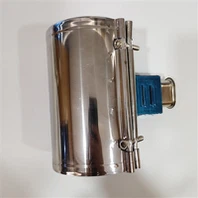
1. What Makes Copper Flange Immersion Heaters Unique?
Key Advantages
Superior Heat Transfer – Copper's thermal conductivity (~400 W/m·K) outperforms stainless steel (~16 W/m·K), ensuring faster, more efficient heating
Corrosion Resistance – Ideal for clean water, oils, and mildly corrosive solutions, though not recommended for highly acidic or hard water environments
Antimicrobial Properties – Naturally inhibits bacterial growth (e.g., Legionella), making it perfect for water storage and purification systems
Energy Efficiency – Direct immersion heating minimizes heat loss, achieving near 100% thermal efficiency
Limitations to Consider
Not for Extreme Conditions – Copper degrades in highly chlorinated or saltwater environments (titanium or Incoloy may be better)
Lower Max Temperature – Typically rated up to 350°F (177°C), whereas stainless steel or Incoloy can exceed 1,200°F (650°C)
2. Critical Applications: Where Do They Excel?
Copper flange heaters are workhorses in multiple industries, but their performance depends on correct usage:
Commercial Water Heaters (Hotels, Hospitals, Laundromats)
Rapid heating for large-volume tanks with minimal scaling
Problem Solved: Slow heating? Check watt density-copper's efficiency allows higher wattage without burnout risks compared to steel
Food & Beverage Processing
Used in cleaning tanks, pasteurization, and brewing (sanitary compliance is key) 69.
Problem Solved: Bacterial contamination? Copper's antimicrobial properties reduce biofilm formation 3.
Oil & Chemical Heating
Efficient for light oils, solvents, and non-corrosive chemicals 9.
Problem Solved: Sludge buildup? Avoid low tank placement where sediment accumulates 2.

3. Installation & Maintenance: Avoiding Costly Mistakes
Installation Best Practices
Proper Flange Sealing – Use ANSI-rated flanges and high-temp gaskets to prevent leaks 8.
Optimal Positioning – Install above sludge lines in oil tanks and ensure full liquid coverage 2.
Electrical Safety – Use copper conductors only and follow NEC wiring standards 2.
Maintenance Must-Dos
Descaling – Hard water causes mineral buildup; regular acetic acid flushes help 7.
Terminal Tightening – Loose connections cause arcing; torque-check every 6 months 2.
Insulation Checks – Moisture degrades resistance; megohmmeter tests prevent failures 2.
4. Future Trends: Smarter, More Durable Heaters
IoT Integration – Smart sensors for predictive maintenance (e.g., detecting scale buildup early).
Hybrid Sheath Materials – Copper-clad stainless steel for balanced cost/performance.
Energy-Efficient Designs – Variable watt-density elements to reduce power waste.
Conclusion: Are You Getting the Most from Your Copper Heater?
Copper flange immersion heaters are versatile, efficient, and cost-effective-if used correctly. By understanding their strengths, avoiding common pitfalls, and following best practices, you can extend lifespan, cut energy costs, and prevent downtime.
Final Question: Is your current setup optimized, or is it time for a redesign?
E-Mail: Cici@Jaye-Heater.Com
Whatsapp: +86 13480586962