A Comprehensive Guide to Electric Heating Tubes: Fundamentals, Structure, and Selection Best Practices
1. Introduction: The Ubiquitous Heating Element
Within countless modern appliances and industrial systems, the electric heating tube (often termed a cartridge heater or immersion heater) stands as a cornerstone of efficient thermal management.
Recognized for its direct energy conversion and compact design, this component is fundamental to operations ranging from brewing your morning coffee to facilitating precise industrial processes.
For OEM designers, procurement specialists, and engineers, a clear understanding of its operation, construction, and selection criteria is key to ensuring device reliability, safety, and performance.
This guide provides a foundational yet detailed overview of electric heating tube technology.
2. Understanding the Core Principle: How Electric Heating Tubes Work
At its core, an electric heating tube is a device that converts electrical energy into heat through the principle of Joule heating (resistive heating).
When an electric current passes through a high-resistance wire coil (the heating element) contained inside the tube, the electrical resistance of the wire generates heat.
This heat is then efficiently transferred through a dense, thermally conductive but electrically insulating powder (typically magnesium oxide) to the metal sheath of the tube.
Finally, the sheath dissipates the heat into the target medium-be it water, air, oil, or a metal surface.
Key advantages of this design include:
- Rapid Thermal Response: Compact design allows for quick heat-up times.
- High Thermal Efficiency: Direct energy conversion and minimal heat loss can yield efficiencies over 95%.
- Uniform Heating & High Power Density: Heat is generated evenly along the active length of the element.
- Robust and Compact: The sealed metal sheath protects the internal element from the environment, allowing for use in various media and confined spaces.
- Cost-Effective and Reliable: Simple principle and mature manufacturing lead to durable, low-maintenance components.
3. Deconstructing the Structure: Key Components and Materials
The performance, lifespan, and suitability for a specific application are determined by the materials and construction quality. A standard electric heating tube consists of the following critical parts:
- Metal Sheath (Outer Tube): This is the primary interface with the environment. Material choice is crucial for corrosion resistance, temperature tolerance, and compatibility.
- Stainless Steel (e.g., SUS304, 316L): The most common choice, offering excellent corrosion resistance and durability for water and many chemical applications.
- Copper: Excellent thermal conductivity; often used for faster heat transfer in water heating and certain industrial fluids.
- Aluminum: Lightweight with good conductivity; common in air heaters and cast-in applications.
- Titanium/Incoloy: Specialized alloys for highly corrosive environments (e.g., plating baths, certain chemicals).
- Heating Element (Resistance Wire): The heat source, typically a nickel-chromium (NiCr) or iron-chromium-aluminum (FeCrAl) alloy wire wound into a coil. NiCr alloys offer good oxidation resistance and stability, while FeCrAl can operate at higher temperatures.
- Magnesium Oxide (MgO) Insulation: This mineral powder is densely packed between the coil and the sheath. It serves a dual vital function: providing excellent electrical insulation to prevent short circuits while maintaining superior thermal conductivity to transfer heat to the sheath.
- Terminal Seals: The ends of the tube are sealed to prevent moisture ingress, which would compromise the MgO's insulation properties. Seals can be made with high-temperature epoxy, silicone rubber, ceramic beads, or glass. The choice depends on the maximum operating temperature.
- Terminals/Lead Wires: Provide the electrical connection. Options include threaded studs, spade connectors, or high-temperature insulated lead wires, selected based on the electrical load and installation method.
4. Types and Variations: Matching Form to Function
Electric heating tubes are engineered into various shapes and configurations to solve specific spatial and thermal challenges.
|
Type |
Characteristics & Typical Applications |
|---|---|
|
Straight / Single Bend Tubes |
The most basic form. Used in water heaters, boilers, industrial tanks, and liquid immersion heating where space allows for linear installation. |
|
U-Shaped / Multiple-Bend Tubes |
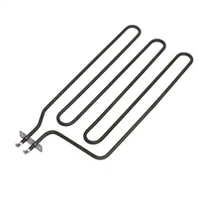
Bent into specific shapes (U, W, other custom bends) to increase heated surface area within a confined footprint. Common in washing machines, dishwashers, and compact water tanks. |
|
Finned Heating Tubes |
Metal fins (typically aluminum or steel) are bonded to the sheath. Fins dramatically increase the surface area for convective heat transfer, making them ideal for air heaters, duct heating, and space heaters. |
|
Cast Aluminum Heaters |
The heating tube is cast into an aluminum block. This creates a high-integrity, efficient heating surface for applications requiring precise temperature control and fast response, such as in espresso machines, commercial griddles, and film processing equipment. |
|
Flange / Screw Plug Heaters |
The heating tube(s) are welded or threaded into a metal flange. Designed for easy installation and removal from tanks, pipes, or vessels via a standard bolt pattern, used in industrial process heating of oils, chemicals, and water. |

U-shaped heating tube
5. Wide-Ranging Applications Across Industries
The versatility of electric heating tubes drives their adoption across sectors:
- Consumer & Commercial Appliances: Instant water dispensers, coffee makers, washing machines, dishwashers, garment steamers, deep fryers.
- HVAC & Climate Control: Air handling unit (AHU) heaters, duct boosters, fan heaters, dehumidifiers.
- Industrial Process Heating: Immersion heating for chemical tanks, oil reservoirs, electroplating baths, plastic molding machinery, packaging equipment.
- Medical & Laboratory Equipment: Sterilizers, analyzers, incubators, where precise and clean heat is required.
6. A Practical Guide to Selection and Procurement
Selecting the correct heating tube is critical for performance and safety. Consider these key parameters:
- Operating Environment (Medium): What is being heated? Water, oil, air, or a surface? This dictates sheath material (corrosion resistance) and, for air, often necessitates fins.
- Power (Watts) & Voltage: Determine the required heat output. Ensure your power supply (e.g., 120V, 240V, 480V AC) matches the heater's rated voltage. An incorrect voltage will drastically affect power output and lifespan.
- Dimensions & Watt Density: The physical size (diameter, length, bends) must fit your assembly. Watt density (watts per square inch of sheath surface) is crucial. A density too high for the medium can cause sheath overheating and failure.
- Temperature & Controls: What is the required operating temperature? Is a built-in thermostat, thermal fuse, or separate temperature sensor (e.g., thermocouple) needed for control and safety?
- Certifications & Compliance: For target markets, verify compliance with relevant safety standards (e.g., UL, CE, RoHS) and any industry-specific certifications.
- Supplier Capability: Partner with a manufacturer offering technical support, custom design services, and OEM/ODM flexibility. Their ability to tailor sheath material, terminal type, and shape to your exact specifications is invaluable.
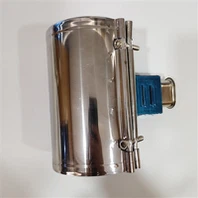
Stainless Steel Industrial
Commercial Heating Tubes

7. Conclusion: Partnering for Optimal Thermal Solutions
Electric heating tubes are deceptively simple components that play a complex and vital role in thermal system design. Success hinges on a deep understanding of the interplay between materials, construction, and the specific application demands. By methodically defining your requirements-medium, power, space, and environment-you can specify a heating solution that delivers optimal efficiency, longevity, and safety.
- Jaye Heater specializes in the design and manufacture of high-quality, customized electric heating tubes and elements.
- With over 10 years of expertise, we support our partners from concept through production, offering:
- Full Customization: Bespoke solutions for power, voltage, sheath materials, shapes, and terminals.
- Technical Collaboration: Engineering support for integration and optimization.
- Quality Assurance: Manufacturing adherence to ISO 9001 and other relevant standards.
- Proven Reliability: A history of supplying durable components for demanding applications.

One-stop Cosmetic Heater Tube Factory in China
Contact us to discuss how we can provide the precise thermal solution for your next project.