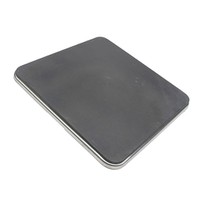
JAYE Heater has successfully completed the production and delivery of 500 pieces of PTC Film Heaters to a European customer for battery heating applications.
The European customer specializes in battery-related equipment and requires reliable heating components to help maintain suitable battery operating temperatures, particularly in low-temperature environments.
The supplied PTC film heaters are designed to provide controlled heating for battery systems. With their positive temperature coefficient (PTC) characteristics, these heating elements can automatically reduce their heating output as their temperature increases, offering an additional level of temperature regulation.
This successful delivery demonstrates JAYE Heater's manufacturing capabilities and commitment to providing customized electric heating solutions for battery manufacturers and energy-related equipment companies.
Customer Industry & Application Scenarios
Customer Industry: Battery Manufacturing & Battery Equipment
Batteries, particularly lithium-ion battery systems, are sensitive to operating temperatures. Low temperatures can reduce battery performance, limit charging efficiency, and affect overall system operation.
In cold environments, battery heating systems are often used to bring battery cells or modules to a suitable operating temperature before or during operation.
The 500 PTC film heaters supplied by JAYE are intended for battery heating applications, helping provide a stable and efficient heat source for battery temperature management.
Typical applications include:
Lithium Battery Heating: Helping maintain suitable operating temperatures for lithium battery systems in cold environments.
Battery Module Heating: Providing distributed heating for battery modules and assemblies.
Electric Vehicle Battery Systems: Supporting battery thermal management in electric vehicles and related equipment.
Energy Storage Systems (ESS): Helping maintain battery temperature in outdoor and low-temperature energy storage installations.
Portable Battery Equipment: Providing compact heating solutions for battery-powered devices that require temperature management.
PTC Film Heater Technical Specifications
| Parameter | Description |
|---|---|
| Product Name | PTC Film Heater |
| Product Type | Flexible PTC Heating Film |
| Heating Technology | Positive Temperature Coefficient (PTC) |
| Quantity | 500 Pieces |
| Heating Application | Battery Heating |
| Installation | Integrated into battery heating systems |
| Temperature Control | Self-regulating PTC characteristics |
| Heating Function | Battery Temperature Maintenance |
| Customization | Dimensions, voltage, power and connections |
| Destination | Europe |
Note: Final technical specifications depend on the customer's customized design and application requirements.
JAYE's Technical Solution
To meet the customer's battery heating requirements, JAYE provided 500 customized PTC film heaters with a focus on heating efficiency, temperature regulation, flexibility, and reliable operation.
Key Technical Advantages of PTC Film Heaters for Batteries
1. Self-Regulating Heating Characteristics
One of the main advantages of PTC heating technology is its positive temperature coefficient.
As the temperature of the PTC heating material increases, its electrical resistance also increases, resulting in reduced heating current and power output under a constant-voltage supply.
This self-regulating characteristic helps reduce the risk of overheating and makes PTC film heaters suitable for battery heating applications where temperature management is important.
2. More Uniform Heat Distribution
PTC film heaters can be designed with a relatively large and thin heating surface, allowing heat to be distributed across the battery module or designated heating area.
Uniform heating helps reduce temperature differences between different areas of a battery assembly, supporting more consistent thermal conditions.
3. Energy-Efficient Heating
PTC materials adjust their heating output according to temperature changes.
When the heating material approaches its designed equilibrium temperature, its power consumption can decrease. This can help reduce unnecessary energy consumption during temperature maintenance, depending on the system design and operating conditions.
4. Flexible and Lightweight Structure
Compared with traditional rigid heating components, PTC film heaters feature a thin and lightweight structure.
They can be customized to fit different battery shapes and installation spaces, making them suitable for compact battery modules and integrated heating systems.
5. Improved Low-Temperature Battery Performance
Low temperatures can negatively affect battery charging and discharging performance.
By helping bring battery cells or modules to an appropriate temperature, PTC film heaters can support battery thermal management and improve the operating conditions of battery systems in cold environments.
The actual operating temperature must be designed according to the battery manufacturer's requirements.
PTC Film Heater vs. PI Heating Film: Which Is Better for Battery Heating?
Both PTC film heaters and PI (Polyimide) heating films are thin, lightweight electric heating solutions that can be integrated into battery systems.
However, they use different heating technologies and have different temperature control characteristics.
Understanding these differences helps battery manufacturers select the right heating solution for their applications.
1. Working Principle
PTC Film Heater
PTC film heaters use materials with a positive temperature coefficient. As the temperature rises, electrical resistance increases, reducing the heating output under constant-voltage operation.
This provides an inherent self-regulating heating characteristic.
PI Heating Film
PI heating films typically use a resistive heating circuit laminated within polyimide insulation material.
They generate heat through electrical resistance. Their heating output is generally determined by the applied voltage and circuit resistance, so an external temperature controller or thermostat is commonly used for accurate temperature regulation.
2. Technical Comparison
| Comparison | PTC Film Heater | PI Heating Film |
|---|---|---|
| Heating Principle | PTC self-regulating resistance | Fixed resistive heating circuit |
| Temperature Characteristics | Resistance increases as temperature rises | Generally stable resistance |
| Self-Regulation | Yes, inherent PTC characteristic | No inherent PTC regulation |
| Temperature Control | Can reduce reliance on active control | Usually requires external control |
| Heating Output | Changes with temperature | Generally more consistent at fixed voltage |
| Structure | Flexible film structure | Thin polyimide film structure |
| Flexibility | Customizable | Excellent flexibility |
| Main Advantage | Self-regulating heating | Thin structure and precise circuit design |
| Typical Applications | Battery heating, temperature maintenance | Battery heating, electronics, instruments |
3. Which One Is More Suitable for Battery Heating?
The choice depends on battery design, operating temperature, installation conditions, and temperature control requirements.
Choose PTC Film Heaters When:
Self-regulating heating characteristics are important.
The application requires reduced heating output as temperature increases.
A relatively simple heating control arrangement is preferred.
The battery system operates in environments with significant temperature changes.
Choose PI Heating Films When:
A very thin and flexible heating element is required.
Precise heating circuit layouts are needed.
The application requires a customized heating pattern.
The battery system already has an independent temperature control system.
JAYE's Recommendation:
For battery heating applications where self-regulating heating characteristics are a priority, PTC film heaters can be a suitable solution.
For applications requiring precise heating patterns and independent temperature control, PI heating films may also be worth considering.
The final selection should be based on the battery manufacturer's thermal design, required temperature range, power consumption, and safety requirements.
Why Choose JAYE Heater?
Professional Manufacturing: Experience in manufacturing approximately 30 types of electric heating elements for industrial and commercial applications.
OEM & ODM Customization: Flexible customization of heating dimensions, voltage, power, structure, and electrical connections.
Application Experience: Heating solutions for battery systems, industrial equipment, commercial appliances, and other applications.
Quality Management: Quality control throughout key manufacturing processes to ensure product consistency.
Global Supply Experience: Supplying customized electric heating products to customers in Europe, Asia, North America, and other international markets.
Cost-Effective Solutions: Factory-direct manufacturing and competitive pricing for equipment manufacturers.
FAQs
Q1: What is a PTC film heater?
A PTC film heater is a flexible electric heating element that uses positive temperature coefficient materials. Its electrical resistance increases as its temperature rises, naturally reducing its heating output under constant-voltage operation.
Q2: Can PTC film heaters be used for lithium battery heating?
Yes. PTC film heaters can be integrated into lithium battery heating systems to help maintain suitable battery temperatures in cold environments. The heating design should match the battery manufacturer's temperature and safety requirements.
Q3: What are the advantages of PTC film heaters for battery applications?
Their main advantages include self-regulating heating characteristics, flexible structure, lightweight design, distributed heating capability, and reduced heating output as temperature increases.